Choosing the right Quartz Rods requires more than comparing prices or polished product photos. Global buyers must examine purity, diameter tolerance, surface finish, thermal resistance, and documented performance. These details affect laboratory heating, optical equipment, chemical processing, and high-temperature production.
This guide evaluates ten Quartz Rods suppliers through practical purchasing criteria. It considers material traceability, manufacturing experience, inspection methods, packaging quality, and international shipping capability. Supplier certificates may look convincing, but buyers should still request recent test reports, dimensional records, and clear product specifications. A 10-millimeter rod with uneven ends can create installation problems. Small defects matter.
Reliability also depends on application fit. Fused quartz may tolerate sudden temperature changes better than ordinary glass, yet every grade has limits. Buyers should confirm working temperatures, chemical exposure, load requirements, and machining options before ordering. Ask direct questions. Compare evidence.
The selection process is not perfectly simple. Some suppliers provide stronger technical documents, while others offer better customization or shorter lead times. Ratings can change when production batches, shipping routes, or quality controls change. This article therefore presents a practical comparison, not an unquestionable verdict. It encourages buyers to verify claims, inspect samples where possible, and choose Quartz Rods that match real operating conditions. Careful sourcing reduces waste, delays, and avoidable equipment damage.
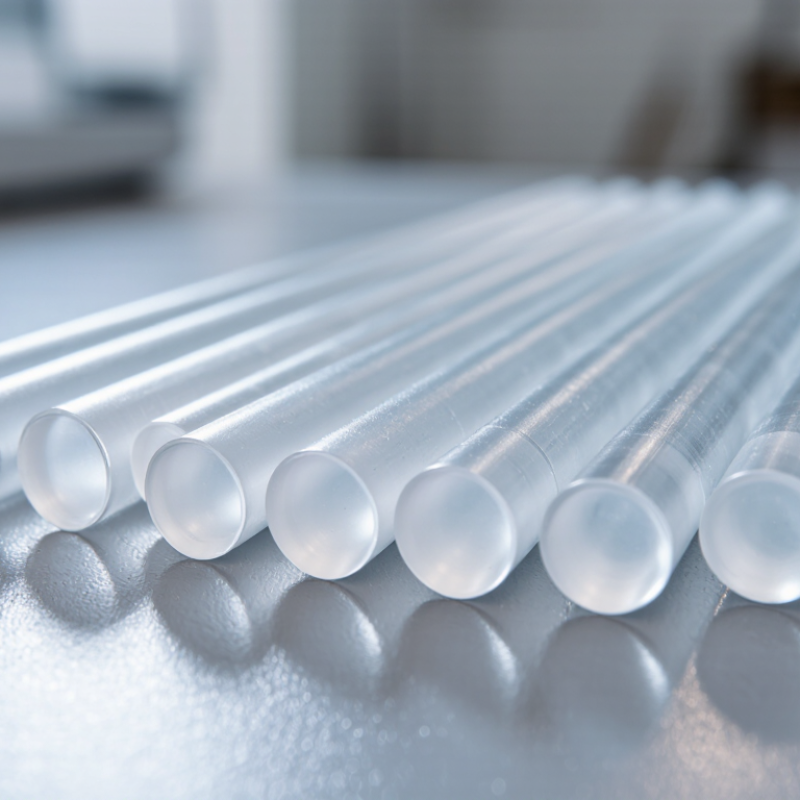
Quartz Rod Grades: 99.95–99.99% SiO₂ and ASTM E438 Type I Standards
Choosing among the 10 best quartz rods requires more than comparing diameter and price. Buyers should verify 99.95–99.99% SiO₂ content, dimensional tolerance, surface finish, and documented testing. At 99.99% purity, trace impurities total approximately 100 parts per million. That difference matters in high-temperature laboratory work, optical processing, and semiconductor-related applications.
ASTM E438 Type I deserves careful interpretation. It classifies laboratory glass by chemical durability and thermal performance, but it is not a direct certification for fused-quartz purity. Type I glass commonly contains boron and alkali components, while high-purity quartz relies mainly on SiO₂. Therefore, a supplier claiming both standards should provide separate evidence: an ASTM E438 test report and an elemental analysis, preferably using ICP-OES or equivalent methods. Ask for lot numbers.
Industry data also needs context. The U.S. Geological Survey’s Mineral Commodity Summaries 2025 estimated U.S. industrial sand and gravel production at roughly 96 million metric tons in 2024. That figure shows the scale of silica-related supply, but it does not prove rod quality. Industrial sand is not automatically laboratory-grade quartz. This is an easy mistake. In practice, I would inspect chipped ends, cloudy bands, bubbles, and measured straightness before ordering. Some specifications look precise, yet the inspection method remains unclear.
Quartz Rod Purity Reference: 99.95–99.99% SiO₂
Comparative reference levels for high-purity quartz rods. The corresponding theoretical non-SiO₂ content is calculated as 100% minus the stated SiO₂ purity.
How to read the chart: Higher SiO₂ content generally indicates lower total impurity content and is commonly preferred for demanding thermal, optical, laboratory, and semiconductor-related applications. ASTM E438 Type I refers to borosilicate glass laboratory ware and is not a quartz-rod SiO₂ purity grade; compliance should therefore be verified separately through the applicable product specification and test report.
Heat Performance: 1,683°C Softening Point and 0.55×10⁻⁶/K Expansion
For global buyers, a quartz rod’s heat performance deserves close attention. A softening point near 1,683°C supports demanding furnace, laboratory, and process applications. This value does not mean the rod can remain dimensionally stable at that temperature. Shape, load, heating time, and surface condition still affect performance.
The expansion coefficient is approximately 0.55×10⁻⁶/K, which is exceptionally low for a transparent engineering material. A 1-meter rod may expand only about 0.55 millimeters after a 1,000°C temperature increase. That limited movement helps protect alignment in heating assemblies and reduces stress during repeated cycles. Small errors grow.
In practical inspections, buyers should examine diameter tolerance, straightness, bubbles, inclusions, and polished ends. A rod with clean surfaces can reduce particle release and improve optical or laboratory handling. Yet no specification sheet tells the whole story. Different quartz grades may show different results, especially when impurities or manufacturing methods vary.
Ask for lot-specific certificates, test methods, and dimensional records before placing a large international order. Confirm whether the stated softening point is measured under a recognized method or presented as a typical value. My own preference is to test a sample through several heating and cooling cycles. A single successful heating test can be misleading. Packaging also matters, because chipped ends may create failure points before the rod reaches service.
Dimensional Selection: Diameter, Length, Tolerance, and ISO 3585 Compliance
For global buyers, selecting the best quartz rod starts with dimensions, not appearance. Measure the working diameter at several points, because small variations can affect furnace spacing and clamp fit. Choose the shortest practical length to reduce sagging during heating. Longer rods may need better support, especially above 1,000°C. Specify diameter, length, straightness, and allowable tolerance on the purchase drawing.
Tolerance must match the application. A laboratory stirrer may accept wider variation, while a heating assembly often requires tighter control. Ask how measurements are taken, including temperature, instruments, and sampling frequency. Clear records improve supplier accountability. I have seen attractive rods fail because the diameter was measured only near one end. That detail matters.
Tips: Confirm the material standard before approving a quotation. ISO 3585 defines borosilicate glass 3.3, not fused quartz. Therefore, a quartz rod should not automatically be advertised as ISO 3585 compliant. Request a material certificate, dimensional inspection report, and test method. If the project requires borosilicate glass, state ISO 3585 directly. If it requires quartz, use a suitable quartz specification and confirm purity, thermal behavior, and tolerance separately. This distinction is easy to miss.
10 Best Quartz Rods for Global Buyers — Dimensional Selection: Diameter, Length, Tolerance, and ISO 3585 Compliance
| Rank |
Quartz Rod Profile |
Nominal Diameter |
Standard Length |
Diameter Tolerance |
Length Tolerance |
Typical Straightness |
Material Grade |
ISO 3585 Status |
Recommended Use |
| 1 |
Precision Micro Rod |
2 mm |
100–300 mm |
±0.03 mm |
±0.5 mm |
≤0.5 mm per 300 mm |
Clear fused quartz |
Available with certification |
Optical holders, laboratory probes, miniature heating assemblies |
| 2 |
Fine Laboratory Rod |
3 mm |
100–500 mm |
±0.04 mm |
±0.5 mm |
≤0.5 mm per 300 mm |
Clear fused quartz |
Available with certification |
Stirring, laboratory fixtures, small furnace components |
| 3 |
General Laboratory Rod |
5 mm |
100–1,000 mm |
±0.05 mm |
±1.0 mm |
≤0.8 mm per 500 mm |
Clear fused quartz |
Available with certification |
Laboratory supports, sample handling, chemical processing |
| 4 |
Thermal-Process Rod |
6 mm |
200–1,000 mm |
±0.06 mm |
±1.0 mm |
≤0.8 mm per 500 mm |
High-purity fused quartz |
Available with certification |
High-temperature jigs, furnace fixtures, thermal cycling |
| 5 |
Industrial Support Rod |
8 mm |
200–1,500 mm |
±0.08 mm |
±1.5 mm |
≤1.0 mm per 500 mm |
High-purity fused quartz |
Available with certification |
Process equipment, support pins, thermal insulation assemblies |
| 6 |
Heavy-Duty Process Rod |
10 mm |
200–1,500 mm |
±0.10 mm |
±1.5 mm |
≤1.0 mm per 500 mm |
High-purity fused quartz |
Available with certification |
Semiconductor tooling, furnace hardware, chemical reactors |
| 7 |
Large-Diameter Thermal Rod |
12 mm |
300–1,500 mm |
±0.12 mm |
±1.5 mm |
≤1.2 mm per 500 mm |
Clear fused quartz |
Available with certification |
High-temperature structural supports and furnace components |
| 8 |
Reactor and Tube-Support Rod |
16 mm |
300–2,000 mm |
±0.16 mm |
±2.0 mm |
≤1.5 mm per 500 mm |
High-purity fused quartz |
Available with certification |
Large process reactors, quartz tube supports, heat-treatment systems |
| 9 |
Large Structural Rod |
20 mm |
300–2,000 mm |
±0.20 mm |
±2.0 mm |
≤1.5 mm per 500 mm |
High-purity fused quartz |
Available with certification |
Load-bearing thermal fixtures and industrial furnace assemblies |
| 10 |
Extra-Large Custom Rod |
25 mm |
500–2,000 mm |
±0.25 mm |
±2.5 mm |
≤2.0 mm per 500 mm |
High-purity fused quartz |
Available with certification |
Custom thermal tooling, large furnace systems, demanding industrial fixtures |
|
Dimensional values are representative procurement specifications for fused-quartz rods and should be confirmed by the supplier before ordering. ISO 3585 compliance refers to the material quality requirements for high-quality borosilicate glass and fused silica; request a material certificate and inspection report for each production batch. Actual tolerances may vary according to diameter, manufacturing method, end finish, straightness requirement, and total order length.
|
Application Ranking: Laboratory, Semiconductor, UV, Optical, and Industrial Uses
10 Best Quartz Rods for Global Buyers
Application Ranking: Laboratory, Semiconductor, UV, Optical, and Industrial Uses
The best quartz rod depends on application, not appearance. In laboratory work, clear fused-quartz rods rank first for stirring, heating, and furnace fixtures. They tolerate sudden temperature changes better than ordinary glass. Check diameter tolerance, surface smoothness, and visible bubbles before ordering. Small defects can affect repeated experiments.
For semiconductor processing, ultra-high-purity rods take the top position. Low metallic contamination and stable dimensions matter inside high-temperature equipment. Laboratory-grade rods follow closely, especially for less demanding supports and handling tools. UV applications rank third, but only rods with strong ultraviolet transmission should be considered. Ask for wavelength data, hydroxyl content, and transmission testing. A rod can look perfectly clear and still perform poorly below 250 nanometers.
Optical quartz rods rank fourth when low scattering and consistent refractive behavior are essential. Their ends need careful polishing. Industrial rods rank fifth for furnace supports, sight windows, and chemical handling systems. They may offer stronger practicality, but cosmetic marks deserve inspection. My experience is that sellers often describe “high purity” without giving test limits. That wording is not enough. Request material certificates, batch identification, dimensional reports, and packaging details. Keep it documented.
The remaining choices suit educational equipment, lighting components, sensor housings, general heating tools, and custom fabrication. Some rods are excellent for one task and unsuitable for another. This is where buyers often overspend. I would compare thermal expansion, operating temperature, chemical exposure, and machining requirements before comparing price. Be careful with assumptions. Supplier data still needs independent verification when the process is sensitive.
Global Buying Criteria: Purity Certificates, MOQ, Lead Time, and Pricing Data
10 Best Quartz Rods for Global Buyers?
For global buyers, the best quartz rod is not always the cheapest or the highest-purity option. Match the grade to the application, temperature, and optical requirements. Request a current certificate of analysis for every production lot. It should state SiO₂ purity, hydroxyl content, dimensions, and test methods. Traceability matters. The certificate should connect clearly to the shipment, not just to a general product page. Paperwork matters.
MOQ can change the real purchase cost. A low unit price may become unattractive when the supplier requires several hundred kilograms. Ask whether mixed diameters or trial quantities are possible. Lead time also needs careful checking. Confirm production days, inspection time, export preparation, and transport separately. A quoted “two weeks” may exclude packaging and port handling. Ask twice.
Pricing data should be compared with the same specifications. Record diameter tolerance, length, surface finish, packaging, Incoterms, and freight assumptions. A simple spreadsheet can reveal hidden differences. In my own evaluation process, I once focused too heavily on purity and overlooked inconsistent end polishing. That mistake affected assembly yield. It was preventable. Request sample photos, dimensional reports, and a small inspection batch before placing a large order. Also confirm replacement terms for damaged or nonconforming rods. Reliable sourcing requires evidence, not confident promises.
Conclusion
Quartz Rods are essential materials for laboratories, semiconductor processing, UV equipment, optical systems, and demanding industrial applications. This guide compares grades containing 99.95–99.99% SiO₂ and considers ASTM E438 Type I expectations for chemical purity and consistency. Their excellent thermal performance, including a softening point of approximately 1,683°C and a very low thermal expansion coefficient of about 0.55 × 10⁻⁶/K, supports reliable use under rapid temperature changes and high-heat conditions.
Choosing the right quartz rod requires careful attention to diameter, length, dimensional tolerance, and ISO 3585 compliance. Application priorities may differ: laboratories often emphasize cleanliness, semiconductor users require strict contamination control, UV and optical systems need strong transmission performance, while industrial buyers may focus on durability and custom dimensions. Global purchasers should also verify purity certificates, minimum order quantities, production lead times, packaging standards, and transparent pricing data before placing an order. These factors help balance technical performance, supply reliability, and total procurement cost.

