Explore our top precision engineered stock: high-temperature oversized furnace tubes, plasma ingots, and high-purity laboratory vessels.
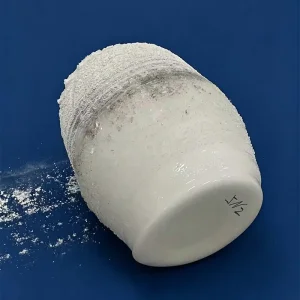
Ultra-pure raw boule for ring fabrication & optical substrates.
View Product
Ideal for high-temp PV diffusion & semiconductor processes.
View Product
Heavy-wall lab & industrial processing tubes with flanged joints.
View Product
Thermal-shock resistant chambers for severe CVD environments.
View Product
Precision ground silica rods for semiconductor fiber & handles.
View Product
Optimized structural stability for horizontal furnace liners.
View Product
Superior sagging resistance up to 1250°C operational loads.
View ProductStrategic positioning of plasma-fusion technology across the worldwide semiconductor supply chain.
As the microelectronics industry aggressively transitions into Angstrom-era nodes and high-numerical-aperture Extreme Ultraviolet (High-NA EUV) systems, traditional oxy-hydrogen fused silica encounters fundamental structural barriers. Plasma-fused quartz ingots eliminate hydroxyl-related micro-voids, providing the exact optical homogeneity (Δn < 1×10⁻⁶) required for ultra-low expansion photomask blanks and core projection mirror carriers.
Modern advanced dry-etching chambers utilizing fluorine and chlorine plasmas (such as CF₄, CHF₃, and Cl₂) subject reactor inner components to severe surface bombardment. Conventional electric-melt quartzware degrades rapidly, inducing particle shedding. Plasma-fused quartz exhibits a fully consolidated amorphous glass lattice with ultra-low micro-bubble inclusions, extending component lifecycle within 3D NAND and Gate-All-Around (GAA) etch steps by more than 35%.
High-purity raw quartz sands historically sourced solely from Spruce Pine, North Carolina are under global quota pressures. Manufacturers have engineered dual-track purification regimens in Donghai, China, merging advanced chemical beneficiation with inductively coupled plasma (ICP) torches. This provides fab equipment OEMs across North America, Europe, and the Asia-Pacific with an anti-fragile, traceable supply of high-grade raw silica boules.
How advanced materials science is overcoming physical boundaries in ultra-clean manufacturing.
Thermal budgets in vertical diffusion furnaces and epitaxial growth reactors routinely exceed 1200°C for hours. Standard quartz tubes experience viscous deformation and structural sagging due to elevated -OH content. The plasma fusion method generates ultra-dry fused silica with OH levels tunable below 5 ppm, raising the strain and annealing points significantly to resist thermal stress warp under mechanical load.
High-energy excimer lasers operating at 193nm (ArF) and 248nm (KrF) trigger color-center generation (E' centers) in inferior materials, leading to severe transmission drop and thermal lensing. Plasma-fused synthetic quartz ingots feature stoichiometric silicon-oxygen bonding that maintains transmission rates exceeding 99.8% per centimeter, minimizing non-linear absorption even under gigawatt pulsed lasers.
Traditional electric-arc or oxy-hydrogen systems produce significant volatile emissions and carbon soot contamination from graphite dies. Inductively coupled electrodeless plasma torches eliminate graphite contact entirely. This zero-carbon, clean-energy melting dynamic slashes manufacturing energy overhead by 22% while guaranteeing absolute zero carbon contamination within the boule core.
From single-crystal silicon pulling to extreme vacuum processes, plasma-fused ingots are the bedrock of high-precision component machining.
Ingots are precision CNC core-drilled, sliced, and polished into dielectric focus rings and edge rings for Lam, Applied Materials, and TEL etchers, ensuring laminar gas velocity and uniform sheath potential over 300mm wafers.
Large cross-section plasma ingots provide homogenous stock for turning multi-channel gas injector nozzles and monolithic furnace tube welding flanges, preventing gas leakages during low-pressure LPCVD and atomic layer deposition (ALD).
Synthetic plasma-fused blanks are ground and chemical-mechanical planarized to sub-nanometer surface roughness (Ra < 0.15nm), serving as the ultra-flat reflection foundation for EUV pellicles and advanced reticle masks.
Granulated plasma-fused ingot fragments are utilized as high-purity synthetic quartz dopants for inner layer synthetic crucibles, preventing dislocation slip during N-type TOPCon and heterojunction (HJT) silicon ingot pulling.
Certified metrics illustrating the compositional superiorities of Southeast Quartz plasma-fused boules over conventional flame-melted stock.
| Analytical Parameter | Plasma-Fused Silica (SQ-P01) | Standard Electric Fused | Oxy-Hydrogen Flame Melt | Testing Protocol |
|---|---|---|---|---|
| Purity (SiO₂ w/w) | > 99.9992% (5N5) | > 99.990% (4N) | > 99.995% (4N5) | GDMS / ICP-OES |
| Alkali Elements (Li, Na, K) | < 0.15 ppm | < 1.20 ppm | < 0.80 ppm | ICP-MS Spectrometry |
| Transition Metals (Fe, Cu, Ni, Cr) | < 0.05 ppm | < 0.65 ppm | < 0.35 ppm | ICP-MS Spectrometry |
| Hydroxyl (-OH) Content | < 5 ppm to < 30 ppm (Custom) | < 30 ppm | 150 - 450 ppm | FTIR Infrared Absorption |
| Bubble Class (DIN 58927) | Class 0 (Zero Visible Inclusions) | Class 1 to 2 | Class 1 | Laser Scattering Scan |
| Refractive Index Homogeneity (Δn) | ≤ 2 × 10⁻⁶ | ≤ 1 × 10⁻⁵ | ≤ 4 × 10⁻⁶ | Zygo Laser Interferometry |
| Annealing Point | 1,215 °C | 1,140 °C | 1,120 °C | ASTM C598 Beam Bending |
How Southeast Quartz is architecting the next era of high-entropy silica matrices and multi-meter ingot synthesis.
Scaling our RF plasma synthesis torches to achieve single-ingot diameters exceeding 650mm with monotonic thermal gradients. This breakthrough provides native, weld-free stock for next-generation 450mm silicon fabrication chambers and monolithic astronomical telescope mirrors without internal seam stress.
Integrating chemical vapor plasma synthesis (CVD-Plasma) to deposit titania-doped fused silica (ULE - Ultra Low Expansion Glass) with a zero coefficient of thermal expansion (±5 ppb/K) across 10°C to 45°C. This advancement is critical for next-generation EUV mask blanks and laser fusion optics.
Deploying automated spectrographic AI sensor arrays directly into the plasma arc column to modulate oxygen-argon precursor feeds in sub-millisecond intervals. This closed-loop process ensures atom-by-atom structural homogeneity, eradicating trace striae and achieving ultimate isotropic index symmetry.
Overcoming macroeconomic challenges across procurement cycles, geopolitical trade barriers, and component yields.
Rather than shipping unworked raw cylindrical ingots that incur high shipping freight and tool wear for customers, Southeast Quartz provides rough-machined near-net-shape rings, pre-drilled plates, and core-drilled cylinders directly inspected to customer DWG/STEP CAD files, reducing downstream milling losses by over 40%.
Located in the heart of China's premium quartz refining cluster in Qinghu Industrial Park, Donghai, our raw supply pipeline is backed by deep institutional supply alliances. We guarantee complete batch purity certificates, ICP element logs, and optical interferograms per individual ingot.
By shifting consumable focus ring replacements from flame-fused quartz to plasma-fused matrixes, semiconductor wafer fabs minimize chamber preventative maintenance (PM) frequency, mitigating chamber re-qualification down-times and boosting annual fab output yields.
Comprehensive engineering clarifications addressing crystal growth dynamics, purity metrics, and custom processing constraints.
Electric fusion relies on refractory metal resistance coils or graphite crucibles, which inevitably introduce trace carbon, tungsten, or molybdenum impurities into the molten matrix. Inductively coupled high-frequency plasma torches heat the quartz sand using an ionized gas arc without electrode contact, producing boules of higher chemical purity with exceptionally lower bubble density.
Hydroxyl groups act as terminal modifiers within the three-dimensional silica network, breaking Si-O-Si bonds and creating open silanol (Si-OH) groups. This lowers the glass transition temperature and viscosity. Plasma-fused quartz exhibits extremely low OH levels (< 10–30 ppm), maintaining its full network connectivity and shifting the sagging threshold up to 1250°C under continuous service.
Our manufacturing facility produces monolithic plasma-fused cylindrical ingots up to 550mm in diameter, with standard lengths ranging from 800mm to 1800mm depending on specific cross-sectional mass. Custom square boules and oversized machined blocks can be engineered per equipment envelope specifications.
Every plasma-fused quartz ingot shipment includes a material inspection certificate featuring comprehensive Glow Discharge Mass Spectrometry (GDMS) or ICP elemental analysis, laser scattering bubble grade verification, optical birefringence stress mapping, and dimensional verification reports.
Explore our downstream precision fabricated quartz solutions engineered from our premier ingot stock.
Optical transmission grade silica rods with high chemical inertness.
View Product
Slotted wafer carriers designed for diffusion and oxidation lines.
View Product
High-purity viewing windows with exceptional UV/IR transmission.
View Product
Ground and polished substrates with minimal wavefront distortion.
View Product
Tailored CNC-machined components built to engineering drawings.
View Product
High-grade natural & synthetic raw quartz stock for chip processing.
View Product
High-temperature welded assemblies offering tight pitch precision.
View Product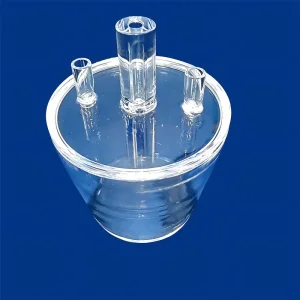
Helium leak-tested bubblers and wet-oxidation glassware.
View Product