Precision-manufactured directly within our Donghai processing facility. Fully compliant with rigorous dimensional tolerances, ultra-low hydroxyl (OH⁻) concentrations, and high-voltage dielectric criteria.




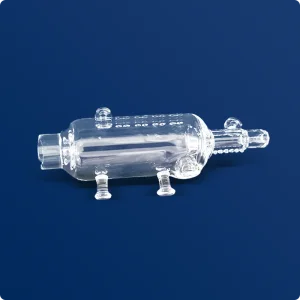

In modern industrial thermal processing and ultraviolet emission equipment, the lamp holder is no longer a passive electrical bracket. It represents a mission-critical thermal barrier, electrical insulator, and precision geometric locator operating under relentless thermal cycling.
In high-intensity industrial lighting, infrared drying, and semiconductor-grade UV disinfection systems, the operating environment regularly pushes thermal boundaries beyond 900°C, frequently sustaining continuous exposure up to 1,150°C. Conventional steatite or standard industrial ceramic sockets succumb to micro-cracking, contact oxidation, and localized dielectric breakdown when exposed to these combined extremes. Fused silica (amorphous silicon dioxide, SiO₂ ≥ 99.99%) quartz lamp holders and specialized hybrid quartz-steatite fixtures solve this vulnerability by offering a coefficient of thermal expansion (CTE) of merely 5.5 × 10⁻⁷ / °C—roughly one-twentieth that of standard electrical porcelain.
Top-tier quartz lamp holder manufacturers are shifting design architectures to address severe thermo-mechanical stresses. The integration of CNC micro-milled fused quartz blocks, flame-polished silica sleeves, and vacuum-annealed nickel-chromium / molybdenum spring contacts guarantees electrical continuity even under rapid ON/OFF thermal pulses. By eliminating the disparity in thermal expansion rates between the lamp envelope and its mounting fixture, precision quartz holders mitigate catastrophic pinch-seal fractures—the single most common failure mode documented in 1,000-hour continuous halogen and medium-pressure mercury lamp burn tests.
Evaluating physical, thermal, and electrical performance parameters for industrial engineering sourcing specifications.
| Performance Metric / Engineering Attribute | High-Purity Fused Quartz (SiO₂) | High-Frequency Steatite (C-220) | Alumina Ceramic (Al₂O₃ 95%) | PTFE / High-Temp Resin |
|---|---|---|---|---|
| Maximum Continuous Temperature | 1,100 °C – 1,200 °C | 1,000 °C | 1,450 °C | 260 °C |
| Thermal Shock Resistance (ΔT Quench) | > 1,000 °C to 20 °C (No Spalling) | ∼ 160 °C – 200 °C | ∼ 200 °C – 250 °C | High ductility (deforms) |
| Coefficient of Thermal Expansion (CTE) | 0.55 × 10⁻⁶ / K | 7.5 – 8.5 × 10⁻⁶ / K | 6.5 – 8.2 × 10⁻⁶ / K | 100 – 160 × 10⁻⁶ / K |
| Volume Resistivity at 500 °C (Ω·cm) | 10¹⁰ – 10¹² | 10⁷ – 10⁸ | 10⁸ – 10⁹ | Decomposes / Degrades |
| Dielectric Loss (tan δ at 1 MHz) | < 0.0001 (Ultra-low) | 0.0012 – 0.0020 | 0.0003 – 0.0006 | 0.0002 |
| Optical / Deep UV Transmittance Range | 185 nm – 3,500 nm (Transparent) | Opaque (Zero transmittance) | Opaque (Zero transmittance) | Opaque / UV Degradable |
| Chemical Outgassing in High Vacuum | Zero VOC, Zero Moisture Outgassing | Trace Binder Release | Minimal Outgassing | Hydrocarbon Outgassing |
While alumina ceramic offers elevated mechanical stiffness and high bulk refractory endurance, its thermal expansion rate is more than ten times higher than fused quartz. In applications where the lamp tube itself is composed of pure quartz glass, clamping an alumina socket directly to a hot quartz envelope induces immense mechanical shearing force at startup. This shear is caused by differential thermal expansion rates, resulting in hairline fractures at the lead wire terminal seals. By utilizing quartz-on-quartz interfaces or quartz-lined retaining clips, systems achieve uniform dimensional expansion across all thermal states.
Enterprise buyers, OEM illuminator designers, and process plant managers evaluate suppliers across five non-negotiable vectors to minimize unplanned downtime in high-throughput production lines.
Sub-millimeter CNC tolerances (±0.05 mm) on socket slot widths, pin insertion centers, and collar flanges. In automated robotic assembly and pick-and-place burner rigs, improper alignment yields contact resistance spikes and premature arcing across high-voltage ignition leads (5 kV – 25 kV pulses).
Zero volatile binder residues. Semiconductor photolithography stepper chambers and cleanroom UV-C disinfection modules require holders free of zinc, iron, copper, and alkali metals that volatilize under intense UV irradiation, preventing optic fogging and optical surface degradation.
Compliance with IEC 60400, UL 94 V-0 flame spread, and high-pot dielectric test parameters. High-frequency ballast igniters induce localized electrical strain; precision fused quartz provides a dielectric breakdown threshold surpassing 25 kV/mm, isolating line voltages safely.
Spring-loaded terminals constructed from gold-plated beryllium copper, pure nickel, or specialized Inconel alloys. These materials maintain elastic clamping force at temperatures exceeding 400°C, eliminating terminal relaxation, electrical chatter, and resistance heating.
Low-hydroxyl fused silica formulations (< 5 ppm to < 20 ppm OH) prevent structural devitrification during continuous high-temperature exposure. Standard lamp glass with high OH content crystallizes into cristobalite rapidly above 1,000°C, leading to mechanical embrittlement.
Comprehensive traceability documentation including spectrographic chemical analysis (ICP-MS), optical polariscopic strain inspections, and helium mass-spectrometry leak-tightness certification on welded joints and sealed quartz feedthroughs.
How localized mineral refining, automated CNC cold machining, and high-temperature hydrogen-oxygen flame work combine to reduce international OEM lead times by up to 60%.
Lianyungang Southeast Quartz Products Co., Ltd. operates inside the industrial epicentre of high-purity silica: Donghai County, Jiangsu Province. Donghai represents the world's most concentrated silicon material industrial base, processing over 70% of China's high-purity silica products. This geographic positioning gives our manufacturing ecosystem immediate, unhampered access to premium plasma-fused ingots, standard fused silica tubes, and precision rods without supply chain latency or international raw-material import tariffs.
By pairing Donghai's vast raw-material mineral reserve with modern Industry 4.0 manufacturing methods, we have transformed custom quartz fabrication from a historically manual craft into an automated, repeatable industrial discipline. Our integrated facility executes all processing stages under one roof:
Multi-axis diamond tooling mills complex wire grooves, mounting holes, and locating notches with micron-level tolerances directly from solid fused quartz blocks.
Automated computerized glass lathes combine precise temperature profiles with automated torches, preventing envelope deformation and thermal stress concentrations.
Automated ultrasonic baths using hydrofluoric (HF) and nitric acid stripping clean surface impurities, followed by resistivity-monitored deionized water cascade rinsing.
Vacuum integrity and internal hermetic sealing of quartz sleeves and lamp holder housings are verified down to 1 × 10⁻¹⁰ mbar·L/s leakage thresholds.
This localized vertical integration eliminates multi-tier subcontractor markups, optimizes raw quartz yield, and shields international buyers from lead-time volatility. Whether procurement teams require a standard R7s, G12, or Fa4 base replacement or entirely bespoke modular brackets for a new high-speed industrial printing line, our Donghai engineering team provides rapid CAD-to-prototype validation within 72 hours.
Across global high-temperature manufacturing sectors, precision quartz lamp holders provide essential thermal isolation, electrical safety, and accurate optical positioning.
Rapid Thermal Processing (RTP) chambers utilize arrays of high-flux halogen lamps running at continuous temperatures above 1,000°C. Quartz mounting rings and custom quartz socket brackets hold lamps in precise focus while preventing trace metal cross-contamination across sensitive silicon wafers.
Municipal and industrial water sterilization systems employ amalgam UV-C lamps in non-stop, enclosed wet reactor environments. Fused quartz lamp holders provide reliable electrical isolation and corrosion resistance against wet, ozone-rich atmospheres.
Automotive paint lines and high-speed coil coating plants rely on short-wave infrared emitter banks. Thermal vibrations and high airflow cooling cause standard sockets to fail. Quartz mounting assemblies stabilize the emitters, absorbing mechanical vibrations and preventing thermal fatigue.
Solar cell production requires precise firing tunnels where conductive pastes are sintered onto solar wafers within seconds. Fused quartz lamp holders endure repetitive thermal surges without cracking, keeping infrared radiation fields uniform across high-volume production lines.
Scientific xenon arc solar simulators rely on quartz lamp holders for both mechanical mounting and electrical transmission. The complete chemical inertness and dimensional consistency of quartz maintain optical focal alignments across thousands of test cycles.
High-vacuum thermal radiation test facilities simulate atmospheric reentry and direct solar exposure. Custom quartz lamp blocks provide secure terminal anchoring in vacuum without gas condensation on cold cryo-shrouds.
Field-proven design solutions to mitigate common lamp-base failure vectors based on real-world factory data.
In high-power infrared systems drawing 10 A to 30 A per lamp, electrical terminal contact resistance is a frequent point of failure. If an inferior base material relaxes at high temperature, spring tension against the lamp lead drops. This loose connection leads to micro-arcing and rapid terminal oxidation. Our fused quartz holders integrate recessed nickel-plated alloy springs within quartz thermal shielding walls, ensuring the metal spring stays safely below its annealing point, maintaining steady mechanical clamping force throughout thousands of thermal hours.
Fused silica is an amorphous glass. When exposed to temperatures above 1,000°C in the presence of trace alkali contamination (like sodium from human fingerprints or airborne dust), the surface structure begins crystallizing into cristobalite. This phase shift introduces microscopic structural cracks upon cooling. Southeast Quartz safeguards holder reliability through automated acid passivation that chemically strips microscopic free ions from the glass surface, followed by hermetic clean-room packaging.
Standard lamps use molybdenum foil pinch seals to bridge heavy external copper pins with internal tungsten filaments. When held in rigid, high-expansion ceramic sockets, differences in thermal expansion exert severe shear forces against the pinch seal. By using precision-slotted quartz sleeves that flex along the axis of thermal growth, our assemblies let the lamp expand and contract naturally, eliminating pinch fracturing.
Explore our full line of specialized industrial quartzware: high-temperature furnace boats, optical fused silica sheets, vacuum tubes, and custom precision-machined fixtures.


Direct technical clarifications regarding manufacturing parameters, material purity grades, custom tooling, and global logistics lead times.
