Top 10 Quartz Raw Material Suppliers Worldwide?

Time:2026-10-15 Author:Ethan
0%

Choosing the right Quartz Raw Material supplier affects purity, processing efficiency, and product consistency. This decision matters in glass, engineered stone, ceramics, electronics, and construction applications. A supplier may look competitive on paper, yet small differences in iron content can change the final color. Particle size also influences melting behavior, surface quality, and production waste.

This guide examines the Top 10 Quartz Raw Material Suppliers Worldwide through practical purchasing criteria. These criteria include mineral quality, processing capacity, laboratory testing, supply stability, certifications, and export experience. We also consider whether suppliers provide clear technical data sheets and traceable origin information. Reliable companies should explain their mining methods, washing processes, grading standards, and packaging options. Samples matter. A 25-kilogram trial shipment can reveal moisture, dust levels, inconsistent sizing, or unexpected impurities.

No list is perfect. Supplier rankings can change.

Market conditions, transport costs, mine output, and regional regulations may affect availability. Public information is also uneven, and some companies disclose more than others. Therefore, readers should verify certificates, inspect recent test reports, and request independent analysis before signing contracts. Experience from one factory may not apply to another. A quartz grade suitable for countertops may fail in high-purity glass production. That difference deserves careful attention.

The suppliers discussed here represent notable options, not automatic recommendations. Their suitability depends on application requirements, annual volume, delivery destination, and quality tolerance. A thoughtful comparison can reduce costly surprises and support a more dependable sourcing strategy.
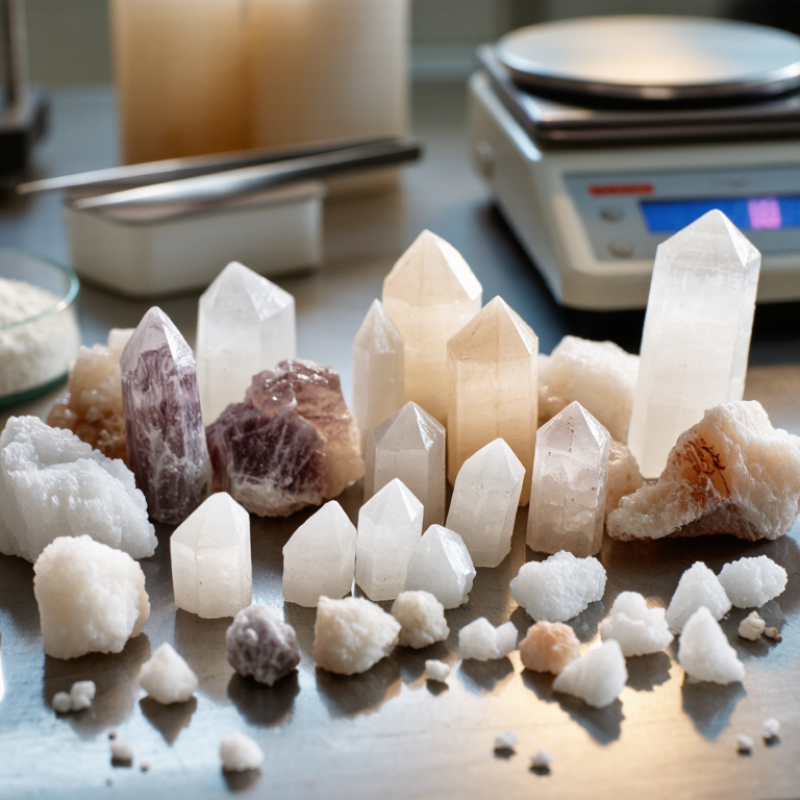
Top 10 Quartz Raw Material Suppliers Worldwide?

Quartz Raw Materials: Types, Grades, and Industrial Applications

Quartz raw materials differ sharply in chemistry, grain size, and thermal behavior. Industrial silica sand supports glass, foundry molds, ceramics, and hydraulic fracturing. Vein quartz and quartzite are processed for silicon metal, engineered stone, and high-temperature products. High-purity quartz demands the strictest controls, often requiring iron, aluminum, and alkali impurities below parts-per-million levels.

The U.S. Geological Survey’s Mineral Commodity Summaries 2025 identifies industrial sand and gravel as a major nonmetallic mineral sector, with construction and manufacturing driving demand. The International Energy Agency reported that global solar photovoltaic additions exceeded 400 gigawatts in 2023. This expansion increases interest in quartz-based silicon supply chains. Yet volume alone can mislead. A supplier offering low-iron sand may still lack stable particle sizing, furnace data, or reliable shipment records. That is an uncomfortable gap.

Tips: Request a recent laboratory certificate, particle-size curve, moisture result, and traceability statement. Compare at least three production lots. Test samples under your actual furnace or molding conditions. The best grade on paper may fail in production. Supplier audits should also review mine consistency, dust controls, packaging, and backup logistics. Reports from USGS and the International Energy Agency provide useful market context, but buyers still need independent testing and documented operating experience. Geological purity is only one part of industrial performance.

How the Top 10 Global Quartz Suppliers Are Selected

Selecting the top 10 quartz raw material suppliers requires more than comparing annual output. Quality consistency matters more. The USGS Mineral Commodity Summaries 2024 reported about 96 million metric tons of U.S. industrial sand and gravel production in 2023. However, that figure includes many grades, not only high-purity quartz. A credible supplier must therefore disclose quartz purity, trace metals, particle size, moisture, and processing methods.

Our selection framework gives priority to verified laboratory results, stable mine reserves, and repeatable delivery performance. Suppliers serving semiconductor, solar, and engineered-stone manufacturers should provide batch-level certificates and independent testing. The International Energy Agency reported that global solar photovoltaic capacity grew by nearly 420 gigawatts in 2023. This growth increases pressure on quartz processors to deliver cleaner and more uniform feedstock. Logistics also matter. A technically strong supplier can still fail when port delays, packaging damage, or regional transport risks interrupt production.

Tips: Request three recent test reports, not one. Check iron, aluminum, titanium, and moisture levels separately. Ask how rejected batches are handled. Site audits add useful evidence, although they cannot replace long-term delivery records. Public data remains incomplete, and some supplier claims are difficult to compare fairly. That is a weakness in this ranking approach. A careful review should combine technical evidence, customer references, reserve transparency, environmental reporting, and total delivered cost.

Top 10 Quartz Raw Material Suppliers Worldwide: Selection Benchmarks

Quartz suppliers are commonly screened by the purity level they can consistently document for different end-use applications. The reference thresholds below show typical SiO₂ benchmarks used when comparing industrial, high-purity, and ultra-high-purity quartz materials. Final supplier selection should also consider traceability, particle-size consistency, processing capability, certifications, and delivery reliability.

Profiles of the Top 10 Quartz Raw Material Suppliers Worldwide

The top 10 quartz raw material suppliers worldwide differ by purity, mine access, and processing depth. Their profiles should begin with geology, not marketing claims. Suppliers serving photovoltaic and semiconductor customers usually document SiO₂ content, iron levels, moisture, and particle distribution. High-purity quartz may require repeated crushing, magnetic separation, and thermal treatment. Small defects matter.

The U.S. Geological Survey’s 2024 Mineral Commodity Summaries reported more than 100 million metric tons of U.S. industrial sand and gravel production in 2023. This figure shows the scale of silica supply, but it does not represent high-purity quartz alone. A useful supplier profile should separate ordinary industrial sand from feedstock suitable for crucibles, optics, engineered stone, or electronics. That distinction is often blurred.

Across the ten leading supplier profiles, several patterns appear. Large mining groups offer stable volumes and multimodal logistics. Regional processors may provide tighter grading and faster technical support. Specialized producers focus on low-iron material, calibrated grains, or custom powder sizes. The International Energy Agency’s 2024 clean-energy technology analysis also highlights rising material demand from solar manufacturing. However, demand forecasts can be optimistic. Buyers should verify recent assay certificates, quarry continuity, annual capacity, and rejected-batch procedures. A polished brochure is not evidence. Supplier rankings also deserve caution because public production data remains incomplete, especially for privately held operations.

Regional Distribution and Production Strengths of Leading Suppliers

The global quartz raw material market is regionally concentrated, but supply strength varies by grade and processing depth. The USGS Mineral Commodity Summaries 2024 reported about 96 million metric tons of U.S. industrial sand and gravel production in 2023. This figure includes silica-rich materials, not only quartz feedstock. China remains a major force in quartz processing and downstream silicon capacity. India and Brazil provide substantial natural quartz resources, supported by large mining regions and export networks. Turkey and Norway are also important for high-quality silica materials, especially where purity and consistent particle size matter.

Production volume can mislead. A supplier may offer abundant quartz but lack optical sorting, magnetic separation, or laboratory certification. High-purity buyers should examine impurity levels, annual capacity, mine life, and port access. The International Energy Agency’s Global Critical Minerals Outlook 2024 also highlights growing supply-chain concentration in mineral processing. That concentration creates price and logistics risks.

Tips: Request a recent chemical analysis, not an old brochure. Check iron, aluminum, titanium, and moisture levels. Ask for mine-to-port lead times. Sample testing is essential. A ranking is only a starting point. It may overlook smaller suppliers with better consistency, and reported capacity does not always equal dependable shipment volume.

Top 10 Quartz Raw Material Suppliers Worldwide? – Regional Distribution and Production Strengths of Leading Suppliers

Indicative ranking based on regional quartz resource availability, industrial processing capacity, export connectivity, product diversity, and suitability for glass, foundry, engineered stone, ceramics, silicon, and photovoltaic applications.

Rank Supplier Region Regional Position Main Raw Material Forms Primary Production Strengths Typical End-Use Markets Export Reach Resource & Processing Score
1 East Asia Largest integrated quartz-processing base Quartz sand Quartz powder Quartz lumps High-purity feedstock Broad product range, large-scale crushing and classification, strong downstream manufacturing, and extensive domestic industrial demand. Glass, ceramics, foundry, engineered stone, electronics, silicon, and photovoltaic materials. Very high 5.0 / 5
2 South Asia Large resource base with expanding beneficiation Quartz lumps Silica sand Quartz powder Strong availability of crystalline quartz and silica resources, competitive labor costs, and growing washing, grading, and micronizing capacity. Glass, ceramics, construction materials, foundry, paints, fillers, and engineered stone. High 4.7 / 5
3 Anatolia and the Eastern Mediterranean Important supplier of industrial minerals Quartz sand Silica flour Quartzite Well-developed quarrying and mineral-export infrastructure, with competitive production of silica-based materials for construction and manufacturing. Glass, ceramics, construction, refractory products, foundry, and engineered surfaces. High 4.4 / 5
4 South America Major source of crystalline quartz and specialty grades Quartz crystals Quartz lumps Silica sand Large geological occurrence of quartz, established mining activity, and availability of both industrial and specialty-grade material. Silicon metal, ferrosilicon, glass, ceramics, abrasives, decorative stone, and specialty applications. High 4.3 / 5
5 Northern Europe High-quality industrial quartz producer High-purity quartz Quartzite Silica products Consistent geological quality, advanced purification, reliable environmental controls, and strong production of feedstock for silicon-related industries. Silicon, ferrosilicon, specialty glass, ceramics, refractories, and advanced materials. High 4.3 / 5
6 North America Highly developed silica and industrial sand market Industrial sand Quartz sand Frac-grade sand Specialty silica Large-scale open-pit mining, advanced screening and coating technologies, strong quality control, and integrated logistics. Foundry, glass, oil and gas, construction, filtration, chemicals, and engineered materials. Very high 4.2 / 5
7 Southern Africa and Indian Ocean Recognized source of crystalline and specialty quartz Quartz crystals Quartz lumps Silica sand Notable natural crystal quality and geological diversity, with supply suited to industrial, decorative, and selected specialty applications. Decorative stone, glass, ceramics, silicon-related materials, abrasives, and mineral collections. Medium to high 3.8 / 5
8 Iberian Peninsula Established European silica and quartzite supplier Quartzite Silica sand Quartz powder Strong quarrying tradition, good road and port infrastructure, and dependable processing for glass, ceramics, and construction applications. Glass, ceramics, refractories, construction, foundry, and fillers. High 3.8 / 5
9 Oceania Resource-rich supplier with strong bulk-mineral logistics Silica sand Quartzite Quartz lumps Large mineral reserves, modern mining practices, and efficient bulk handling through established export terminals. Glass, foundry, construction, silicon, ceramics, and industrial filtration. High 3.7 / 5
10 Canada and Northern North America Specialized supplier of silica and high-quality quartz materials Quartzite Silica sand High-purity feedstock Stable mining regulations, strong technical standards, and access to high-quality deposits for industrial and advanced-material applications. Glass, silicon, ceramics, foundry, construction, and specialty materials. Medium to high 3.6 / 5
Note: Quartz production is reported inconsistently across countries because statistical agencies often classify quartz under broader categories such as industrial sand, silica, quartzite, or other nonmetallic minerals. The ranking therefore represents a regional market assessment rather than a verified company-by-company production league table.

How to Compare Quartz Suppliers for Quality, Price, and Reliability

Comparing quartz raw material suppliers starts with testable quality, not polished brochures. The USGS Mineral Commodity Summaries 2024 reported about 96 million metric tons of U.S. industrial sand and gravel production in 2023. That scale makes consistency difficult to assume. Request recent certificates of analysis for SiO2, Fe2O3, Al2O3, moisture, loss on ignition, and particle-size distribution. Check whether results come from each shipment or one old sample. Small differences matter during melting, casting, or engineered-stone production.

Price needs a landed-cost calculation. Include mining, screening, packing, freight, duties, storage, and expected rejection rates. A lower quotation may hide excessive fines or unstable moisture. I once trusted the headline price too quickly. The spreadsheet looked efficient. The production line disagreed. Ask for three comparable lots, not one ideal sample, and calculate usable kilograms after processing losses.

Reliability requires evidence over promises. Review delivery records, reserve capacity, emergency procedures, and change-control practices. The ISO Survey 2022 recorded more than 1.2 million ISO 9001 certificates worldwide, but certification alone does not prove mineral consistency. Audit the facility when practical. Confirm independent laboratory results and retain sealed reference samples. Test a pilot shipment before signing a long contract. This costs more initially. It can prevent costly reformulation later. Suppliers should also explain quarry variation, seasonal interruptions, and packaging controls in plain language. If an answer stays vague, treat that vagueness as data.

FAQS

What are the main types of quartz raw materials?

Common types include silica sand, vein quartz, quartzite, and high-purity quartz. Their chemistry and grain size differ.

Which industries use industrial silica sand?

Glass plants, foundries, ceramic factories, and construction-related production use industrial silica sand. Molding sand needs stable grains.

Why is high-purity quartz more difficult to supply?

It requires extremely low iron, aluminum, and alkali impurities. Small contamination can affect high-temperature processing.

Does low iron guarantee good quartz performance?

No. Particle size, moisture, furnace behavior, and shipment consistency also matter. Paper quality can disappoint.

What documents should buyers request?

Request recent laboratory certificates, particle-size curves, moisture results, and traceability records. Ask for three production lots.

How should quartz samples be tested?

Test samples under actual furnace, molding, or processing conditions. A clean sample may still behave poorly in production.

Which regions have strong quartz resources or processing capacity?

Major supply regions include China, India, Brazil, Turkey, and Norway. Strength varies by grade and processing depth.

What logistics details affect quartz purchasing?

Review mine-to-port timing, packaging, transport routes, and backup plans. Port delays can stop a factory quickly.

How can buyers evaluate a supplier fairly?

Compare laboratory data, reserves, delivery records, customer references, and total delivered cost. Rankings are only starting points.

What weakness should buyers remember when comparing suppliers?

Reported capacity may not equal dependable shipments. Public data can be incomplete, and smaller suppliers may perform better.

Conclusion

This guide presents a practical overview of the global quartz supply market, beginning with the main types and grades of Quartz Raw Material used in glassmaking, engineered stone, foundry processes, electronics, solar technology, and other industrial applications. It explains how suppliers are evaluated through factors such as mineral purity, particle size, processing capabilities, production capacity, quality control, supply consistency, and commitment to responsible operations. The selection approach is designed to provide a balanced comparison rather than focus solely on company size or output.

The profiles of the top ten worldwide suppliers highlight differences in regional resources, mining conditions, processing strengths, logistics networks, and product specialization. The article also compares major production regions and explains how geography can affect availability, lead times, pricing, and export reliability. Finally, it offers a clear framework for buyers to assess quartz suppliers by comparing technical specifications, pricing structures, quality certifications, delivery performance, customization options, and long-term reliability, helping industrial purchasers make informed sourcing decisions.


Ethan

Ethan

Ethan is a seasoned marketing professional with a deep expertise in our company's innovative product line. With a passion for sharing knowledge and insights, he takes the lead in regularly updating our corporate blog, where he explores industry trends, product features, and effective marketing......