Standard & Custom Fabricated High-Purity Fused Silica and Quartz Solutions for High-Thermal Applications.




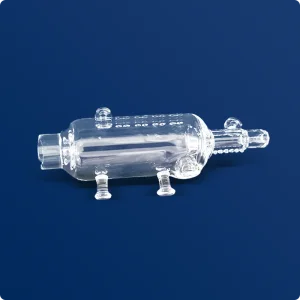


How next-generation sub-nanometer wafer processing and gigawatt-scale solar TOPCon cell diffusion have transformed quartz boat fabrication from artisan torch work into precision micro-machining science.
"In thermal diffusion, low-pressure chemical vapor deposition (LPCVD), and rapid thermal annealing (RTA), the quartz boat is not merely an inert carrier. It is an active micro-environment barrier. A structural defect of just five microns or trace metal contamination measured in parts per billion can cascade into lattice slip lines, non-uniform sheet resistance, and catastrophic multi-million-dollar wafer scrapping events."
Fabrication of semiconductor-grade quartz boats requires natural crystalline quartz synthesized through plasma fusion or continuous electric fusion. Alkali elements (Li, Na, K) must be held strictly under 0.1 ppm to prevent accelerated devitrification and mobile-ion gate dielectric breakdown during 1,150°C drive-in cycles.
Thermal gradients inside a horizontal or vertical batch furnace can reach up to 100°C/minute during rapid furnace insertion and extraction. Superior boat fabrication relies on finite element analysis (FEA) to balance weld junctions, slot radiuses, and structural ribs against cyclic thermal fatigue.
With silicon wafer diameters scaling up to 300 mm (12-inch) and solar wafers shifting to rectangular M10/G12 form factors, quartz carrier bodies withstand severe gravitational torque at temperatures near fused silica's annealing point (1,120°C) without dimensional creeping.
Technical engineering data outlining fused silica purity levels, physical-chemical characteristics, and mechanical tolerance ceilings delivered by our Donghai manufacturing center.
| Performance Parameter | Semiconductor Grade (Standard) | Advanced Semi (Sub-28nm) | Photovoltaic (N-Type TOPCon) | Testing Metrology |
|---|---|---|---|---|
| SiO2 Chemical Purity | ≥ 99.995% | ≥ 99.999% (5N5) | ≥ 99.99% | ICP-OES / ICP-MS Analysis |
| Alkali Elements (Li, Na, K) | < 0.50 ppm total | < 0.10 ppm total | < 1.20 ppm total | Trace Metal Spectrometry |
| Heavy Metals (Fe, Cu, Ni, Cr) | < 0.35 ppm total | < 0.05 ppm total | < 0.80 ppm total | Atomic Absorption Spectroscopy |
| Hydroxyl (OH-) Content | ≤ 20 - 30 ppm | ≤ 5 ppm (Dehydroxylated) | ≤ 35 ppm | FTIR Infrared Absorption |
| Softening Point / Annealing Pt | 1,683°C / 1,120°C | 1,710°C / 1,140°C | 1,670°C / 1,110°C | Dilatometer / ASTM C336 |
| Thermal Expansion (0-1000°C) | 5.5 × 10^-7 / K | 5.4 × 10^-7 / K | 5.5 × 10^-7 / K | Interferometric Dilatometry |
| Slot Pitch Tolerance | ± 0.05 mm | ± 0.015 mm | ± 0.08 mm | 3D CNC Optical Coordinate System |
| Slot Surface Roughness (Ra) | Ra ≤ 0.4 μm (Fire Polished) | Ra ≤ 0.1 μm (Laser/Flame) | Ra ≤ 0.8 μm | White Light Interferometry |
Continuous-drawn plasma high-purity quartz rods and tubes verified by laser flaw detection for micro-bubbles and seed inclusions.
Multi-axis diamond gang-sawing and ultra-precision CNC micro-milling carving wafer slots with controlled draft angles.
Master glassblowers using oxy-hydrogen micro-torches execute structural joint welds inside Class 1,000 clean airflow booths.
Programmed multi-stage annealing in computer-controlled electric kilns up to 1,180°C removes all internal lattice shear strains.
Multi-stage ultra-pure hydrofluoric (HF) acid decontamination and 18.2 MΩ·cm DI water rinsing in cleanrooms.
Why international semiconductor foundries, solar conglomerates, and scientific equipment fabricators partner directly with Lianyungang Southeast Quartz Products Co., Ltd.
Situated in Donghai County, Jiangsu—the undisputed global silicon-material refining hub—our factory maintains zero-delay supply pipelines for premium synthetic quartz, plasma ingots, and precision redrawn clear quartz tubes, slashing procurement raw material lag to virtually zero.
By coupling in-house CNC wire sawing, ultrasonic deep-hole coring, and semi-automated fire-polishing with skilled artisan hot-glass masters, we bypass costly western subcontractor markups. Global buyers achieve 35% to 55% procurement cost improvements without sacrificing metallographic integrity.
Every drawing passes directly from CAD/CAM modeling through our certified ISO 9001 quality infrastructure. From helium-leak testing flanged connections to optical slot pitch verification, our engineers maintain non-destructive batch records and chemical certificates of analysis (COA) for every shipment.
How custom quartz boats are engineered to perform in specialized, highly corrosive, and extreme thermodynamic factory environments across the globe.
Operates in horizontal and vertical diffusion furnaces at 950°C - 1,150°C under POCl3 (phosphorus oxychloride) and BBr3 (boron tribromide) atmospheres. Demands zero-flake fire polishing to prevent particulate contamination on 150mm, 200mm, and 300mm device wafers.
Supports multi-hundred wafer batches of ultra-thin (110-130μm) silicon substrates during boron emitter diffusion and tunnel oxide passivation. Features high-density slot pitch geometries designed to resist thermal shadowing and high gas flows.
Subjected to high-temperature silane (SiH4) and ammonia (NH3) gas cracked under low vacuum pressures for silicon nitride (SiNx) deposition. Boats feature specialized expansion reliefs preventing film peeling and carrier warpage caused by differential film-to-quartz CTE stress.
Exposed to infrared tungsten-halogen lamps driving temperature ramps exceeding 50°C/s. Quartz boats here feature ultra-low hydroxyl (OH) counts to minimize optical energy absorption, eliminating localized hot spots and thermal distortion.
Analysis of technical transitions and manufacturing paradigms reshaping quartz hot-working over the 2026–2030 horizon.
As PV silicon wafers thin below 100 microns to save raw polysilicon, physical wafer breakage rates increase exponentially during high-velocity gas turbulence. Modern boats integrate parabolic slot entries, proprietary dual-curved tooth profiles, and micro-machined backstops to dissipate aerodynamic drag during high-temperature injection.
Manual boat loading has been replaced by cleanroom atmospheric robots and AGVs. Fabrication now demands extreme positional datum accuracy across quartz carrier feet, side locator notches, and optical end-stops (±0.05 mm cumulative) to safeguard robotic end-effector gripping mechanisms.
Standard electric fusion quartz struggles to withstand operating temperatures higher than 1,200°C without devitrifying (forming white cristobalite patches). Next-generation boats use high-purity synthetic fused silica and customized dopants (such as trace aluminum stabilization) to elevate structural viscosity and delay devitrification kinetics by over 300%.
A practical qualification framework for equipment engineers, process managers, and sourcing executives acquiring mission-critical quartz carriers.
Always designate the critical pitch cumulative tolerance (ΣPitch) across the full length rather than solely tooth-to-tooth spacing. Confirm wafer tilt angle (typically 1° to 3° rearward lean) to avoid substrate rattling and forward tipping during thermal gas surges.
Demand lot-specific ICP-MS impurity sheets. Confirm that transition metals (Fe, Cu, Ni) are below customer fab defect limits and that the OH (hydroxyl) concentration matches your vacuum environment requirements to avoid unwanted outgassing during high-temp runs.
Quartz boats must undergo ultrasonic DI acid cleaning and heat drying, followed by double vacuum-sealed anti-static cleanroom bag containment. Shock-absorbing suspended foam cradles prevent brittle shear damage during transoceanic transit.
Direct answers from our senior quartzware glass technicians and quality assurance engineers.
Specialized Quartz Boats, Precision Furnaces Tubes, and High-Temperature Laboratory Components.

Send your 2D PDF or 3D STEP drawings directly to our engineering division in Donghai County. Receive complete DFM manufacturability feedback, material purity certification options, and cost-optimized quotations within 24 hours.
