Custom High Purity Quartz Rod / Fused Silica Rod - China Suppliers & Factory for Semiconductors and Laboratory Applications Manufacturers, Factory

,
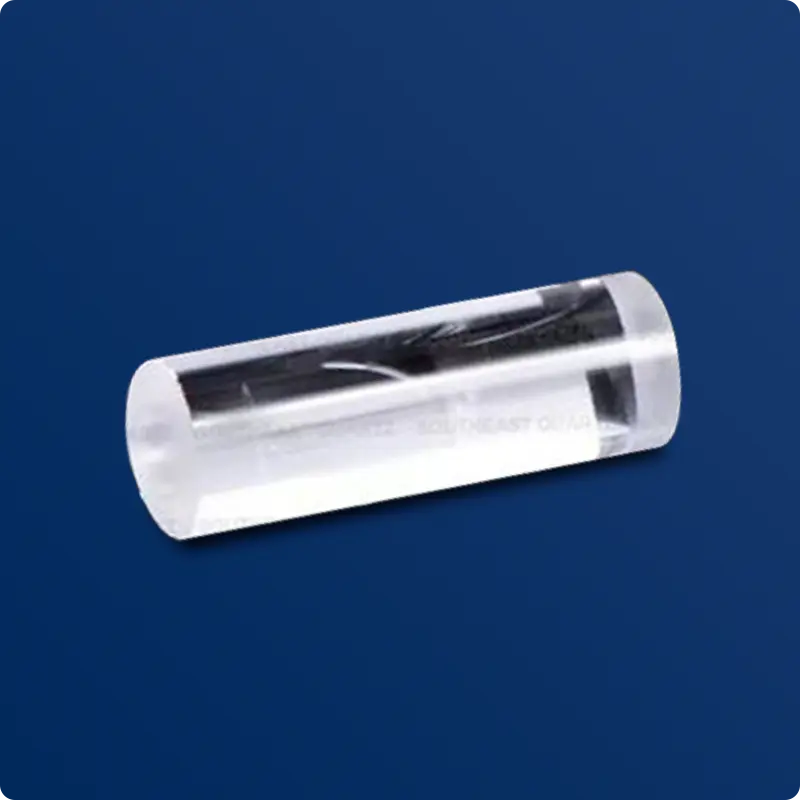
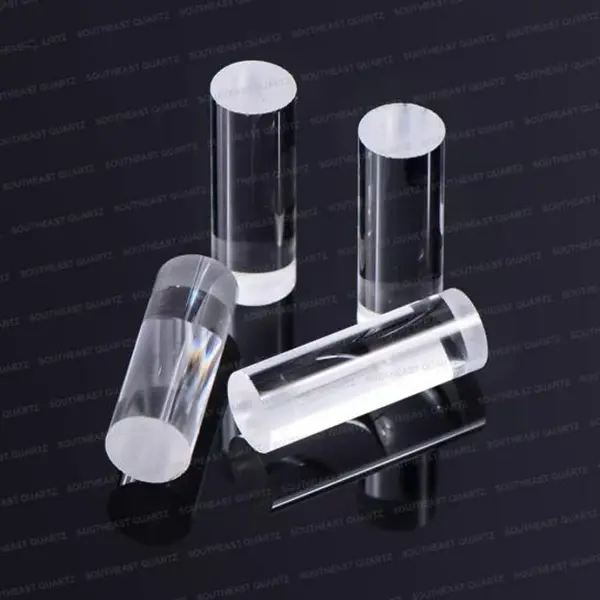
Our high-performance quartz rods, crafted from fused silica (SiO₂ ≥ 99.99%), are produced in our state-of-the-art factory in China. These cylindrical products boast exceptional high-temperature resistance, with a softening point of approximately 1730°C and the capability for prolonged use at 1100°C. They offer excellent UV-IR transmittance, low thermal expansion, and remarkable chemical inertness, making them resistant to most acids (excluding HF). Additionally, these rods provide outstanding electrical insulation, making them ideal for various applications.
,
,

Manufactured by leading suppliers, our quartz rods serve as essential semi-finished materials, ideal for further fabrication into tubes, supports, or optical components. These products are widely utilized in optics, semiconductors, lasers, lab instruments, and high-temperature equipment, meeting the demands of precision and harsh-environment applications.

,
,

Product Description

Product Specifications
Cross-sectional Dimensions Tolerances Standard Lengths
3×3 ±0.1 100–1000
4×4 ±0.1 100–1000
5×5 ±0.1 100–1000
6×6 ±0.15 100–1000
8×8 ±0.15 100–1000
10×10 ±0.2 100–1000
15×15 ±0.2 100–500
20×20 ±0.25 100–500
? Frequently Asked Questions
Q What do the cross-sectional dimensions in the table represent?
A The cross-sectional dimensions (e.g., 3×3, 5×5) refer to the width and height of the material's cross-section measured in millimeters. These dimensions define the profile size of the component.
Q What does the tolerance value (±) indicate?
A The tolerance value indicates the allowable deviation from the specified cross-sectional dimension. For example, a tolerance of ±0.1 mm means the actual dimension can be 0.1 mm larger or smaller than the stated size.
Q Why do larger cross-sectional sizes have higher tolerance values?
A Larger cross-sectional dimensions inherently require slightly wider tolerances due to the increased material volume and the natural variation in manufacturing processes at larger scales. This is a standard practice in precision manufacturing.
Q What are the standard lengths listed in the table, and what unit are they in?
A The standard lengths listed (e.g., 100–1000, 100–500) are expressed in millimeters. They represent the available length range for each cross-sectional size that can be supplied as standard stock.
Q Why are the maximum standard lengths shorter for the 15×15 and 20×20 sizes?
A Larger cross-sectional sizes (15×15 and 20×20) are typically available in shorter standard lengths (up to 500 mm) due to material weight, handling constraints, and manufacturing limitations associated with larger profiles.
Q Can custom lengths or dimensions outside the standard range be ordered?
A Yes, custom dimensions and lengths beyond the standard ranges listed in the table may be available upon request. It is recommended to contact the supplier directly to discuss specific requirements and feasibility for custom orders.

Related Products