Product Specifications
📋
Mechanical & Physical Properties — Standard Values
| Mechanical Behavior |
Standard Values |
| Density |
2.2 g/cm³ |
| Compressive Strength |
1100 MPa |
| Flexural Strength |
67 MPa |
| Poisson's Ratio |
0.14 ~ 0.17 |
| Young's Modulus |
72,000 MPa |
| Modulus of Rigidity |
31,000 MPa |
| Mohs Hardness |
5.5 ~ 6.5 |
| Transformation Point Key |
1280 °C |
| Softening Point Key |
1780 °C |
| Annealing Point |
1250 °C |
| Specific Heat (20 ~ 350 °C) |
670 J/kg·°C |
| Thermal Conductivity (20 °C) |
1.4 W/m·°C |
| Index of Refraction |
1.4585 |
| Low Thermal Expansion Coefficient |
5.5 × 10⁻⁷ cm/cm·°C |
| Thermal Processing Temperature Key |
1750 ~ 2050 °C |
| Short-Term Use Temperature |
1300 °C |
| Long-Term Use Temperature |
1100 °C |
| Material |
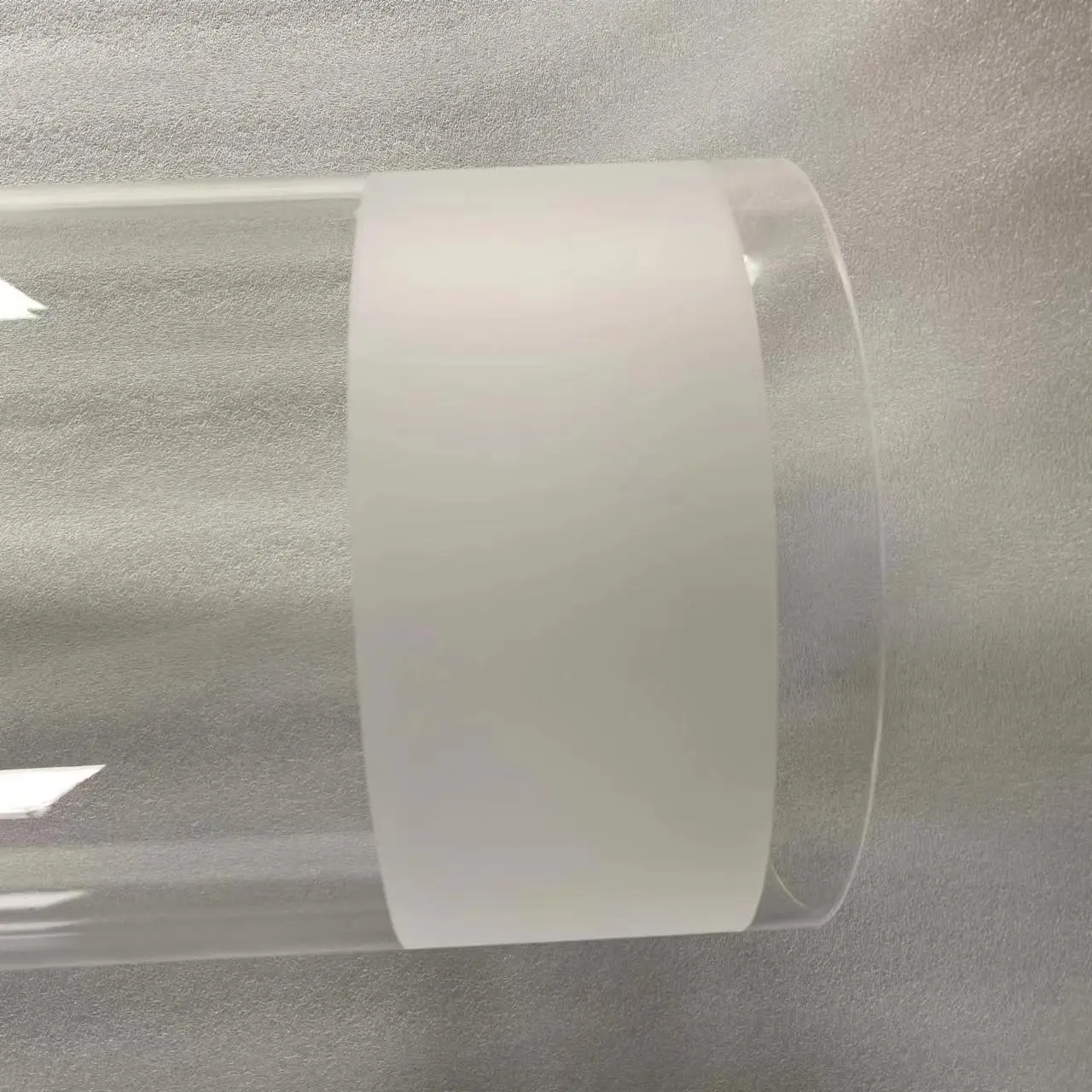
Silicon Dioxide (Natural Quartz) |
| Color |
Transparent or Colorless |
| Surface |
No Air Bubble, No Line |
| Strain |
1270°C Fused Quartz Glass Brick |
| PPM Grade |
Controlled 10 / 20 / 100 PPM |
| Shape |
Circle |
| Thickness |
2 MM – 20 MM |
❓
Frequently Asked Questions
Q
What is the maximum operating temperature for fused quartz glass?
Fused quartz glass can withstand a short-term use temperature of up to 1300 °C and a long-term continuous use temperature of up to 1100 °C. Its thermal processing temperature ranges from 1750 °C to 2050 °C, making it suitable for high-temperature industrial applications.
Q
Why does fused quartz glass have such a low thermal expansion coefficient?
The exceptionally low thermal expansion coefficient of 5.5 × 10⁻⁷ cm/cm·°C is due to the amorphous silicon dioxide (SiO₂) network structure of natural quartz. This makes it highly resistant to thermal shock and dimensional changes under extreme temperature variations.
Q
What does PPM grade mean for quartz glass, and which grades are available?
PPM (parts per million) grade refers to the level of metallic impurity content within the quartz glass. Lower PPM values indicate higher purity. This product is available in controlled grades of 10 PPM, 20 PPM, and 100 PPM, allowing customers to select the appropriate purity level for their specific application.
Q
What thickness options are available for the quartz glass?
The quartz glass is available in a thickness range of 2 mm to 20 mm. The circular shape and wide thickness range make it versatile for optical, semiconductor, laboratory, and industrial applications.
Q
How does the compressive strength of quartz glass compare to its flexural strength?
Fused quartz glass exhibits a very high compressive strength of 1100 MPa, which is significantly greater than its flexural (bending) strength of 67 MPa. This is typical of glass materials — they perform excellently under compression but are more susceptible to fracture under bending or tensile loads.
Q
What is the difference between the transformation point and the softening point of quartz glass?
The transformation point (1280 °C) is the temperature at which the glass transitions from a rigid solid to a viscoelastic state, where internal stresses can begin to relax. The softening point (1780 °C) is the much higher temperature at which the glass becomes sufficiently fluid to deform under its own weight. Both values highlight the outstanding thermal stability of fused quartz compared to standard glass.