
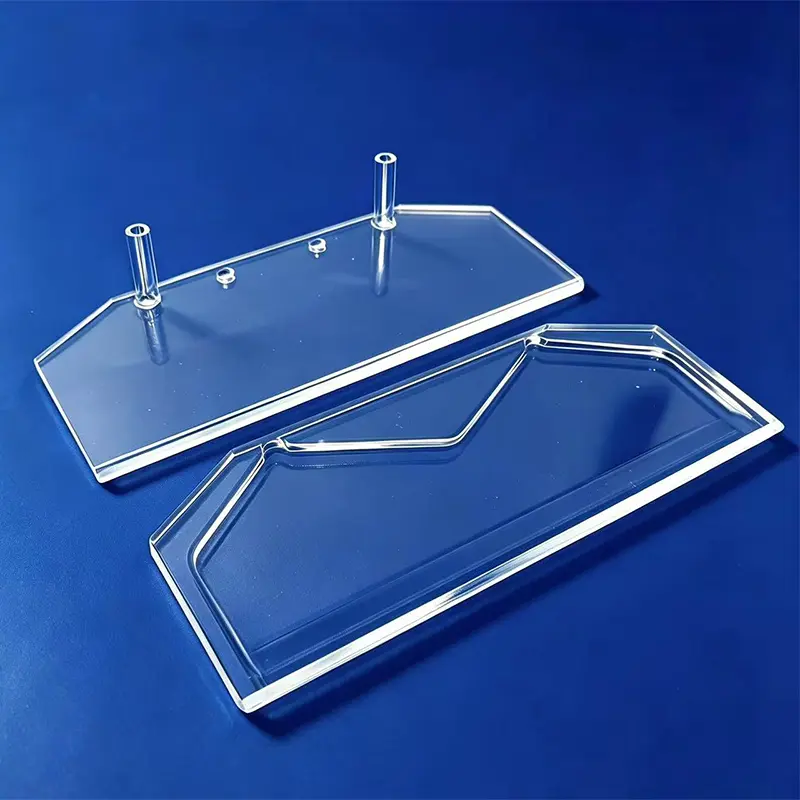
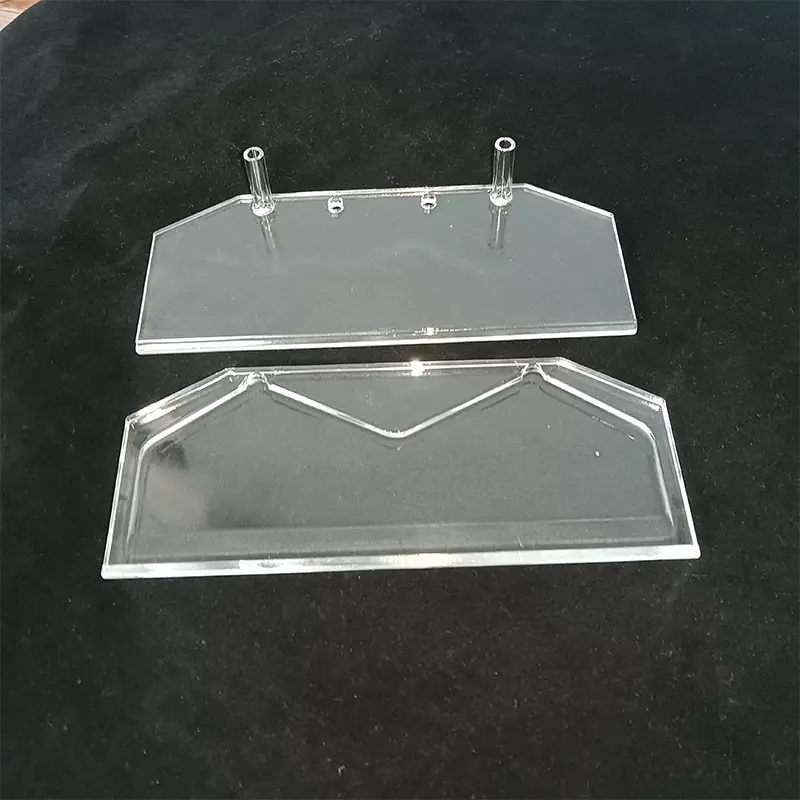
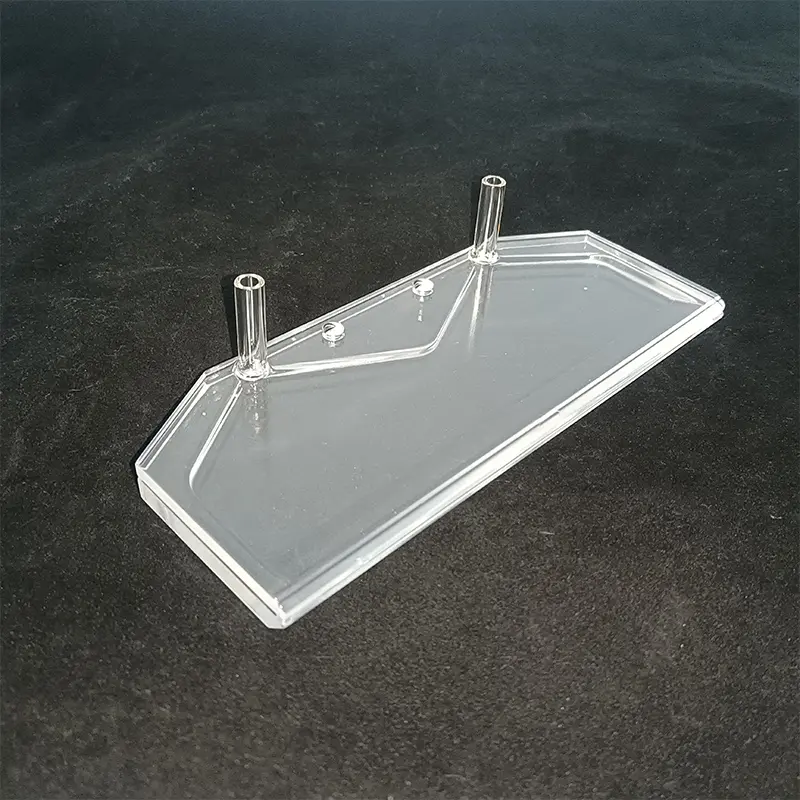
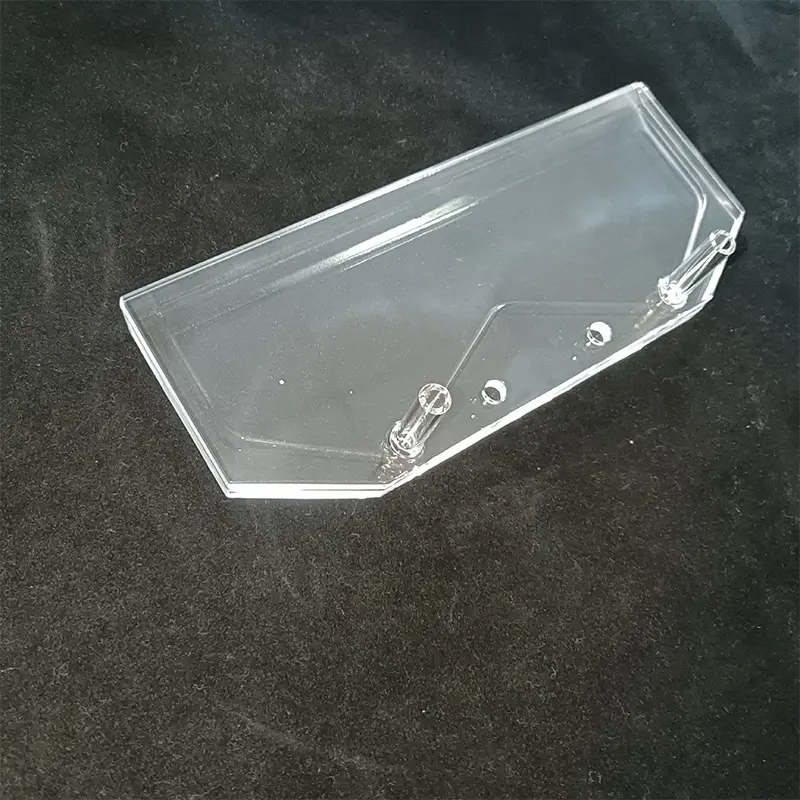
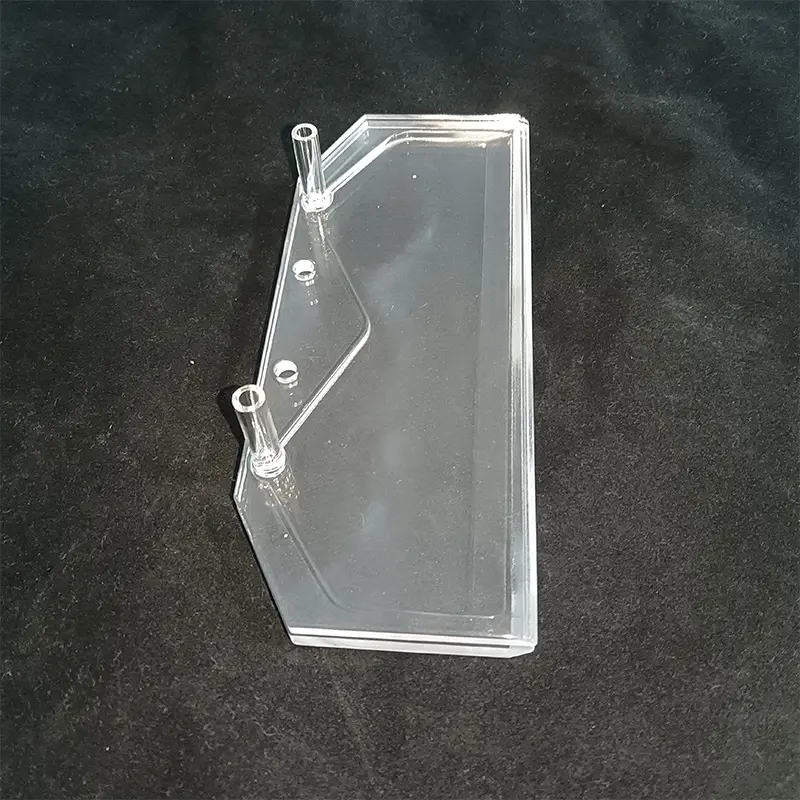
1 / 5
| Base Material | JGS1 / JGS2 Fused Silica |
| Tech Processing | CNC grooving, double-sided optical polishing, high-temperature quartz welding |
| Thermal Working Temperature | -20℃ ~ 1100℃ |
| Chemical Medium Compatibility | Aqueous solution, acid & alkali resistance, gas, organic solvents |
| OEM/ODM Custom Options | Profile, channel design, tube diameter, cavity thickness |
JGS1 offers superior optical transmission in the deep ultraviolet (UV) and visible light spectra with virtually no bubble inclusions. JGS2 provides excellent transmission across the continuous ultraviolet to visible range and represents a cost-effective choice for standard optical and chemical fluidic applications.
High-temperature quartz fusion welding bonds the materials directly without chemical adhesives or glues. This ensures molecular-level integration capable of withstanding extreme thermal shock up to 1100℃ without leakage or adhesive degradation.
Yes. Fused silica offers outstanding chemical inertness. It is fully resistant to organic solvents, neutral solutions, and nearly all concentrated acids (except hydrofluoric and hot phosphoric acid), making it optimal for microchemical handling.
Custom options include channel geometry (micro-channels, straight, curved, or multi-branch), tube diameters, cavity depths, and specialized external profiles precision-machined via diamond CNC grooving.
Double-sided optical polishing ensures high surface parallelism, low roughness (Ra < 0.5 nm), minimal light scattering, and maximum visual clarity for precise spectroscopy, measurement, and microscopy detection.






