High-Quality High Purity Quartz Rod / Fused Silica Rod for Semiconductor & Laboratory - China Suppliers & Factory Products Manufacturers, Supplier

,
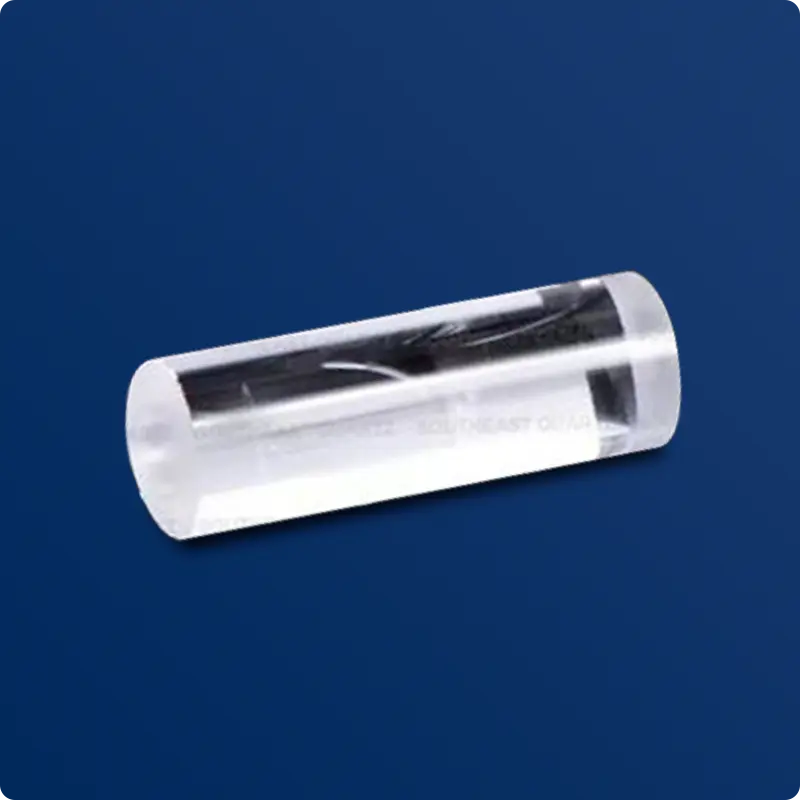
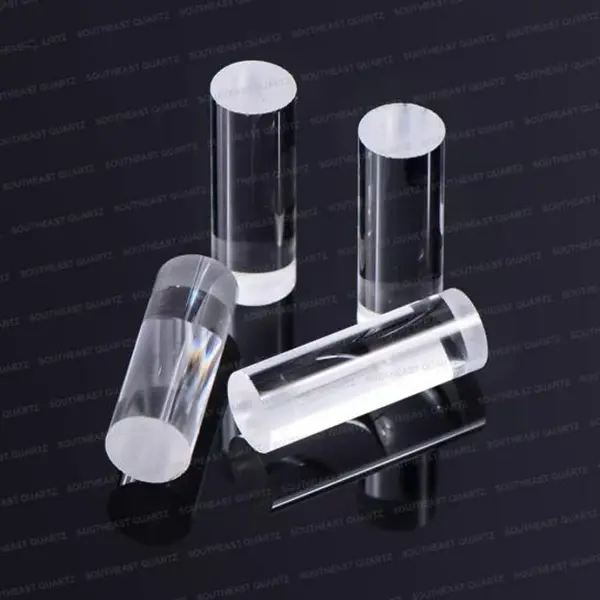
Our high-performance quartz rods are manufactured from premium fused silica (SiO₂ ≥ 99.99%), making them a top choice among suppliers in China. These cylindrical products are renowned for their exceptional high-temperature resistance, with a softening point of approximately 1730°C and long-term stability at temperatures up to 1100°C. Additionally, they boast excellent UV-IR transmittance, low thermal expansion, and remarkable chemical inertness, resisting most acids except hydrofluoric acid (HF). With outstanding electrical insulation properties, these quartz rods are indispensable in various applications, including optics, semiconductors, lasers, laboratory instruments, and high-temperature equipment. Sourced directly from our factory, they serve as essential semi-finished materials for the manufacturing of tubes, supports, and optical components, ensuring precision and reliability in harsh environments.
,
,

As a leading supplier in China, our quartz rods are produced by melting high-purity natural or synthetic quartz. The resulting solid rods are crafted through advanced drawing or molding techniques, offering unmatched quality for various industrial applications.

,
,

Product Description

Product Specifications

Cross-Sectional Dimensions, Tolerances & Standard Lengths
Cross-sectional Dimensions Tolerances Standard Lengths
3×3 ±0.1 100–1000
4×4 ±0.1 100–1000
5×5 ±0.1 100–1000
6×6 ±0.15 100–1000
8×8 ±0.15 100–1000
10×10 ±0.2 100–1000
15×15 ±0.2 100–500
20×20 ±0.25 100–500
All dimensions are in millimeters (mm). Tolerances may vary depending on material grade and manufacturing process. Standard lengths are indicative; custom lengths may be available upon request.
Frequently Asked Questions (FAQ)
❓ What do the cross-sectional dimensions refer to?
The cross-sectional dimensions (e.g., 3×3, 10×10) refer to the width and height of the material's cross-section in millimeters. These are the standard square profiles available for selection.
❓ What does the tolerance value (±) mean?
The tolerance value indicates the permissible deviation from the nominal dimension during manufacturing. For example, ±0.1 mm means the actual size may be up to 0.1 mm larger or smaller than the specified dimension.
❓ Why do larger sizes have higher tolerance values?
As dimensions increase, slight variations in material expansion, machining, and processing become more pronounced. Larger cross-sections therefore carry slightly wider tolerances to account for these natural manufacturing variables.
❓ Why are standard lengths shorter for larger cross-sections (15×15 and 20×20)?
Larger cross-sections are heavier and more difficult to handle in longer lengths. The maximum standard length is reduced to 500 mm for 15×15 and 20×20 profiles to ensure safe handling, structural integrity, and practical usability.
❓ Can I order custom lengths outside of the standard range?
Custom lengths may be available upon request depending on the material and production capacity. Please contact us directly to discuss your specific requirements and confirm availability for non-standard lengths.
❓ Are all dimensions listed in millimeters?
Yes, all cross-sectional dimensions, tolerances, and standard lengths in the table are expressed in millimeters (mm), which is the standard unit used for precision component specifications.

Related Products