
1 / 5
| Mechanical & Physical Properties | Standard Values |
|---|---|
| Density | 2.2 g/cm³ |
| Compressive Strength | 1100 MPa |
| Flexural Strength | 67 MPa |
| Poisson's Ratio | 0.14 ~ 0.17 |
| Young's Modulus | 72,000 MPa |
| Modulus of Rigidity | 31,000 MPa |
| Mohs Hardness | 5.5 ~ 6.5 |
| Transformation Point | 1280°C |
| Softening Point | 1780°C |
| Annealing Point | 1250°C |
| Specific Heat (20 ~ 350°C) | 670 J/kg·°C |
| Thermal Conductivity (20°C) | 1.4 W/m·°C |
| Index of Refraction | 1.4585 |
| Low Thermal Expansion Coefficient | 5.5 × 10⁻⁷ cm/cm·°C |
| Thermal Processing Temperature | 1750 ~ 2050°C |
| Short-Term Use Temperature | 1300°C |
| Long-Term Use Temperature | 1100°C |
| Material | Silicon Dioxide (Natural Quartz) |
| Color | Transparent or Colorless |
| Surface | No Air Bubble, No Line |
| Strain | 1270°C Fused The Quartz Glass Brick |
| PPM Grade | Controlled 10 / 20 / 100 PPM |
| Shape | Circle |
| Thickness | 2MM – 20MM |
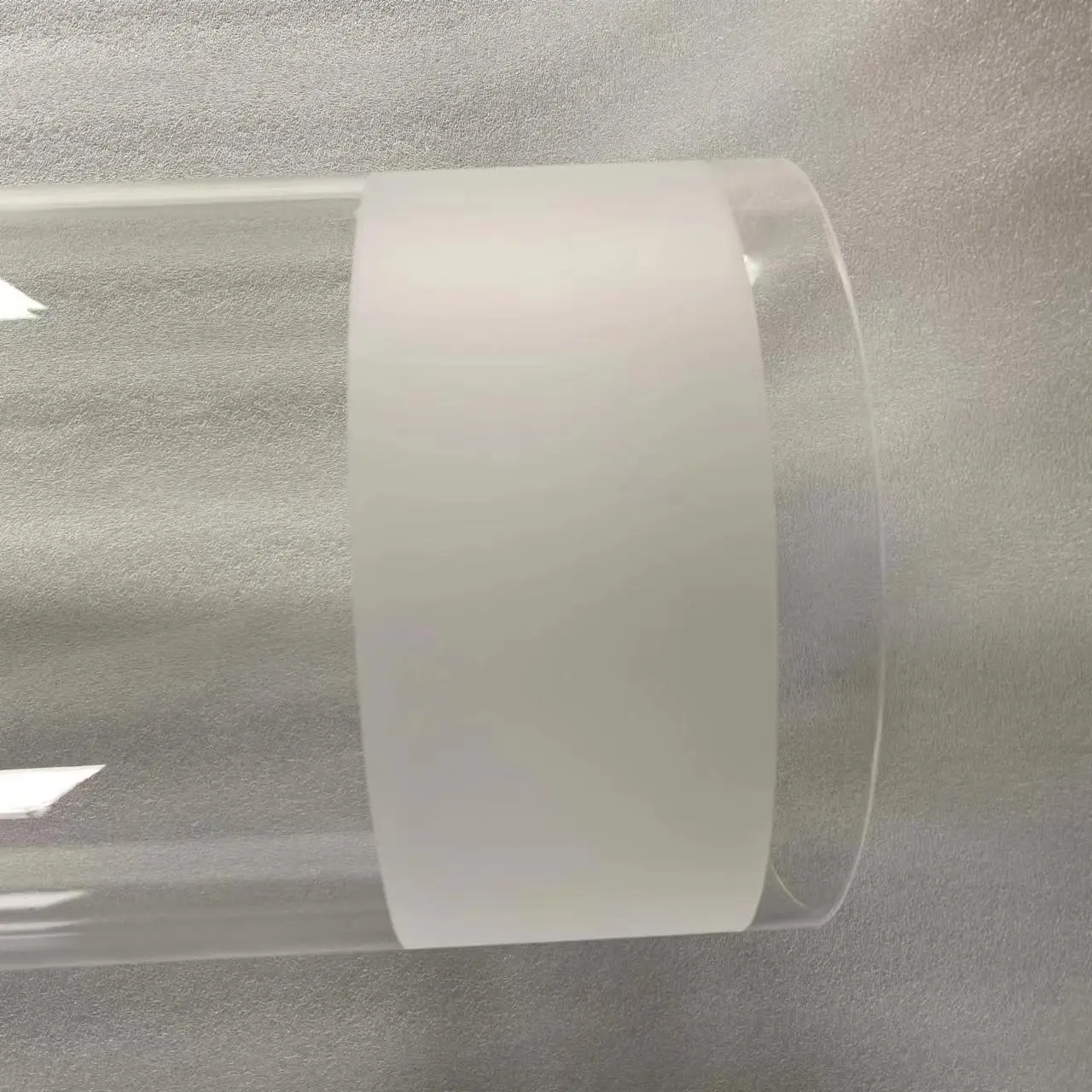
This quartz glass is made from Silicon Dioxide (Natural Quartz), offering a transparent or colorless appearance with no air bubbles or surface lines, ensuring exceptional optical clarity.
The quartz glass can withstand a short-term use temperature of up to 1300°C and a long-term use temperature of up to 1100°C. Its softening point reaches as high as 1780°C, making it ideal for high-temperature applications.
The quartz glass is available in thicknesses ranging from 2MM to 20MM, and is produced in a circular shape to suit various industrial and optical applications.
The quartz glass features an extremely low thermal expansion coefficient of 5.5 × 10⁻⁷ cm/cm·°C, which minimizes dimensional changes under temperature fluctuations and ensures excellent thermal stability.
The quartz glass is available in controlled purity grades of 10 PPM, 20 PPM, and 100 PPM, allowing customers to select the appropriate grade based on their precision and application requirements.
This quartz glass has a compressive strength of 1100 MPa and a Mohs hardness of 5.5 to 6.5, providing excellent resistance to mechanical stress and surface scratching in demanding environments.






