Engineered to handle thermal shock, high chemical corrosiveness, and tight mechanical tolerances required for TOPCon, HJT, and Perovskite-Silicon tandem solar manufacturing cells.





The photovoltaic industry is undergoing a structural paradigm shift toward N-type cell architectures (TOPCon, Heterojunction, and Tandem), radically redefining quartz consumable specifications.
Modern TOPCon boron diffusion and polysilicon deposition cycles push processing temperatures up to 1,000°C–1,200°C for extended cycles. Standard industrial glass suffers from thermal creep and micro-sagging. Fused quartz with an OH content controlled below 20-30 ppm and trace alkali metals (Li, Na, K) below 1 ppm is now vital to prevent wafer contamination and maintain structural stability over hundreds of thermal shock cycles.
The universal adoption of 182mm (M10) and 210mm (G12) wafer dimensions requires furnace tubes with outer diameters exceeding 350mm to 550mm, and quartz boats capable of maintaining pitch tolerances within ±0.05mm. Any dimensional variance leads to robotic transfer handling jams, non-uniform sheet resistance (Rsheet), and severe carrier lifetime degradation across industrial wafer batches.
Surface devitrification—the phase transformation from amorphous silica to crystalline cristobalite—compromises quartzware lifespan and generates airborne particulate defect risks inside diffusion chambers. Advanced flame polishing and automated hydrofluoric acid etching regimens ensure zero surface micro-fractures, drastically extending operational uptime in 24/7 continuous gigawatt fabs.
Tier-1 PV module makers and EPC contractors demand predictable lead times, rigorous material traceability, and reduced total cost of ownership (TCO) across complex international supply networks.
Global procurement directives now mandate full batch-level spectral and GDMS (Glow Discharge Mass Spectrometry) impurity verification. Component failure in multi-megawatt cell processing causes astronomical yield loss; hence, procurement teams prioritize suppliers capable of providing exhaustive certificates of analysis (COA) for metallic impurities including Fe, Cu, Ni, Cr, and B.
With proprietary wafer chuck designs, automated boat-loading systems, and varied thermal profiles, "off-the-shelf" components are no longer sufficient. EPCs and fab managers require agile manufacturing facilities that translate CAD/STEP engineering models into finished, stress-relieved quartzware within tight project commissioning windows.
Geopolitical trade policies and logistics unpredictability have spurred international solar cell producers across Southeast Asia, North America, and Europe to seek robust direct-from-factory partnerships in integrated quartz clusters, eliminating intermediate distributors and securing direct engineering escalation channels.
| Property / Specification | Standard Laboratory Glass | Commercial Grade Quartz | High-Purity PV Grade Fused Quartz |
|---|---|---|---|
| SiO₂ Content | ~80% - 85% | ≥99.9% | ≥99.995% - 99.999% |
| Maximum Working Temp (Continuous) | ~450°C - 500°C | ~950°C - 1,000°C | 1,150°C - 1,200°C (Short term 1,300°C) |
| Coefficient of Thermal Expansion | 32 - 40 ×10⁻⁷/K | 5.5 ×10⁻⁷/K | 5.4 - 5.5 ×10⁻⁷/K (Zero thermal shock failure) |
| Total Metallic Impurities | > 5,000 ppm | < 50 ppm | < 8 - 15 ppm (Ultra-trace GDMS verified) |
| Vacuum Integrity & Leak Rate | Moderate (Uncertified) | 1×10⁻⁶ mbar·l/s | < 1×10⁻⁹ mbar·l/s (Helium Mass Spectrometry) |
Located in Donghai County—the crystal and quartz capital of China—our automated manufacturing hub converges material proximity, robotic glassblowing, and multi-axis CNC cold machining.
Large-bore quartz furnace tubes and flanged reaction vessels are processed on automated dual-spindle glassblowing lathes. Digital temperature pyrometry guarantees uniform wall thickness distribution, preventing localized stress concentrations during long thermal runs.
Photovoltaic wafer boats demand precision pitch spacing to prevent wafer touching, uneven gas distribution, or micro-cracking during automatic loading. Our computerized diamond CNC grinding centers hold slot tolerances to within ±0.03mm.
Every welded joint, flange connection, and machined quartzware piece undergoes multi-stage program-controlled annealing cycles up to 1,200°C followed by slow ramping to eliminate all residual internal mechanical and thermal stresses.
Comprehensive pre-shipment validation protocols include laser optical micrometer surface mapping, helium mass spectrometer vacuum testing, polarimetric stress analysis, and cleanroom acid ultrasonic cleaning.
Engineered quartz configurations custom-built to withstand real-world operational challenges across mission-critical fabrication nodes.
Equipped inside horizontal and vertical diffusion furnaces operating at continuous temperatures between 850°C and 1,050°C. High-purity quartz furnace tubes isolate POCl₃ and BBr₃ process chemistries, preventing active dopant cross-contamination while ensuring flat radial temperature uniformity across the hot zone.
Used as protective liner tubes, gas injector lances, and substrate carriers in Low-Pressure and Plasma-Enhanced Chemical Vapor Deposition lines. Resists aggressive silane (SiH₄) and ammonia (NH₃) reaction environments, eliminating pinhole formations and micro-delamination in passivation films.
Serving as precision quartz guide rings, observation windows, thermal shields, and support plates during single-crystal silicon boule pulling. Withstands continuous contact with molten silicon vapors, ensuring high crystal growth rates and preventing slip dislocation defects.
Explore our complete spectrum of ISO 9001 certified fused silica products engineered for industrial high-temperature furnaces, optics, and solar research facilities.

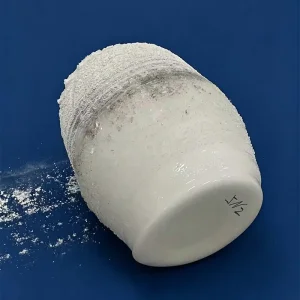
In-depth insights into material science, fabrication limits, lead times, and quality assurance protocols for enterprise buyers.
