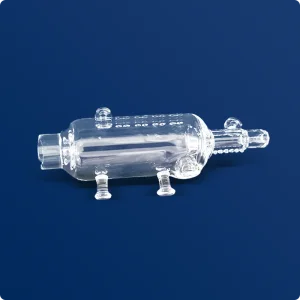
Engineered from raw crystal matrices and plasma-fused silicon dioxide to meet tight wafer processing, optical spectroscopy, and ultra-high temperature standards.


From microcrystalline rose quartz formations to plasma-purified silica matrices: unpacking optical transparency, mineral inclusions, and thermal mechanics.
Natural rose quartz obtains its characteristic blush pink through micro-inclusions of aligned fibrous dumortierite-like borosilicate or trace aluminum-phosphorus color centers. For industrial and gemological transparency grade certification, transparency indicates the absence of heavy cross-cleavage clouds and gas-liquid two-phase inclusions.
In high-temperature and photonic manufacturing, "transparency" denotes optical transmissivity exceeding 92% across ultraviolet, visible, and near-infrared bands. When natural high-silica crystal deposits undergo electro-thermal reduction or oxyhydrogen flame fusion, all mineral lattice trace elements are controlled down to ppm-level purity.
Whether fashioning precision transparent quartzware, optical windows, or laser cavitation chambers, high-grade transparent quartz components withstand rapid temperature differentials without fracturing. With a coefficient of thermal expansion near 5.5 × 10⁻⁷ /K, parts survive repeated quenching from 1100°C directly into cold water.
| Material Classification | Transparency Level (T%) | Predominant Trace Impurities | Max Operating Temp | Primary Industrial / Commercial Purpose |
|---|---|---|---|---|
| Optical Grade Crystalline Quartz | > 92.5% (400–700 nm) | Fe < 0.5 ppm, Al < 8 ppm | 573 °C (α-β phase boundary) | Waveplates, Polarizing Prisms, Piezoelectric Oscillators |
| Natural Rose Quartz (Gem Grade A+) | Translucent to Semi-Transparent (60–80%) | Ti, Fe, Mn sub-micron fibers | 350 °C (color fading threshold) | Precision Carving, Wellness Prisms, Luxury Architectural Panels |
| JGS1 Synthetic Fused Silica | > 99.8% (Deep UV 185–2500 nm) | Metals < 0.1 ppm total, OH ~ 1200 ppm | 1,150 °C Continuous / 1,300 °C Peak | Excimer Laser Windows, Microchannel Flow Cells, Semiconductor Optics |
| JGS2 Electrically Fused Natural Quartz | > 91.0% (Visible & NIR 260–3500 nm) | Total impurities < 15 ppm, OH < 30 ppm | 1,100 °C Continuous / 1,250 °C Peak | Furnace Reaction Tubes, Oversized Epitaxial Chambers, Quartz Boats |
Centering our high-temperature production in Donghai County, Jiangsu — the world's most concentrated silicon material industrial corridor — creates unmatched delivery speed, raw mineral abundance, and economies of scale.
Donghai acts as the global trading clearinghouse for both natural colored quartz boulders (including Brazilian rose quartz deposits) and premium quartz vein ore. Direct quarry-to-kiln relationships cut logistics markups by up to 35%, ensuring high stability in billet sourcing.
Key Benefit: Raw batch consistency with documented chemical provenance and minimal feedstock volatility.
Our plants operate high-precision ultrasonic drilling, CNC 5-axis surface planar milling, and laser micro-slicing right beside proprietary oxyhydrogen quartz glassblowing lathes capable of spinning oversized tubes up to Φ600mm.
Key Benefit: Micro-tolerances down to ±0.02 mm combined with seamless glass-welded flanges and fittings.
Every furnace tube, carrier boat, and optical plate leaves the factory verified against stringent internal standards: helium mass spectrometer leak detection (leak rate < 1 × 10⁻⁹ Pa·m³/s), spectral UV-Vis spectrophotometry, and laser interferometer surface wave testing.
Key Benefit: Zero thermal degassing, zero pinhole micro-cracks, and factory-certified dimension reports.
Standardized manufacturing processes backed by over a decade of continuous precision processing.
Bridging cross-border procurement gaps through certified materials, regional tariff optimization, and turnkey technical consultation.
All quartz products and rose quartz components meet stringent international frameworks including EU RoHS (Restriction of Hazardous Substances), REACH compliance (EC 1907/2006 for SVHC chemical inertness), and US TSCA requirements. Each shipment includes full heavy metal analysis (Pb, Cd, Hg, Cr VI < 2 ppm).
We provide bilingual application engineers assigned directly to account teams across North America, the European Union, Japan, Korea, and Southeast Asia. We review customer CAD models, STEP files, and dimensional tolerances within a guaranteed 24-hour window to minimize fabrication iterations.
Quartz glass is inherently brittle. Our logistics engineers utilize custom CNC cut high-density closed-cell EPE foam cradles, moisture barrier vacuum sealing, and fumigated reinforced wooden crates with dual tilt and shock indicators (ShockWatch® and TiltWatch®) to ensure zero-defect maritime or air deliveries.
Analysis of shifting raw material dynamics, microelectronic wafer demands, and high-purity transparency requirements across the global tech sector.
Tier-1 semiconductor equipment manufacturers and solar cell giants are increasingly bypassing intermediaries to partner directly with primary quartz converters in Donghai. Direct factory alignment eliminates 15–25% distributor premiums while unlocking comprehensive material batch traceability back to raw silica ingots.
With TOPCon, HJT, and Perovskite-Silicon tandem solar cells requiring higher furnace temperatures, quartz thermal tubes must exhibit zero devitrification at 1150°C. Concurrently, sub-5nm semiconductor lithography requires fused silica with hydroxyl (OH) content tailored below 10 ppm to eliminate thermal lensing during laser pulses.
Biotechnology and microfluidics increasingly rely on transparent fused quartz flow cells with internal microchannels measuring down to 50 μm. Meanwhile, optical sensor designers are leveraging pure natural rose quartz prisms for specialized optical polarization tests and laser harmonic crystal cavities.
How leading technology leaders, chemical laboratories, and precision manufacturers deploy transparent quartzware daily.
In 200mm and 300mm wafer fabrication, custom quartz boats hold up to 100 silicon wafers per batch through corrosive chlorine and phosphine atmospheres. Transparent quartz furnace tubes provide an airtight, ultra-clean reaction chamber that prevents trace metal migration onto silicon surfaces.
Analytical laboratories utilize optical quartz microchannel flow cells and fused silica plates for UV-Vis spectrophotometry, fluorescence analysis, and HPLC detectors. High UV transparency down to 190nm allows researchers to detect biomolecules, DNA proteins, and environmental contaminants with near-zero baseline noise.
Precision-cut rose quartz and transparent crystal singing pyramids, acoustic frequency tuning prisms, and optical crystals harness natural anisotropic resonance. High structural transparency ensures pure acoustic wave propagation and aesthetic clarity for wellness instruments and laser tuning gear.
Direct answers from our Senior Optical Materials Engineers to guide your next custom procurement project.
Natural rose quartz is a crystalline mineral containing microscopic fibrous inclusions of dumortierite or iron-titanium chromophores, providing a translucent-to-semi-transparent pink tint with 60%–80% visible transmission. In contrast, industrial fused silica is an amorphous glass melted from high-purity silicon dioxide (≥99.99%), delivering over 90% isotropic transmission from ultraviolet through infrared wavelengths.
Devitrification (crystallization of amorphous SiO&sub2; into cristobalite) occurs when quartz is heated above 1,150°C in the presence of surface alkali contaminants like sodium, potassium, or finger oils. To avoid white haze and embrittlement, clean all quartzware with dilute HF/nitric acid wash, rinse with deionized water, and handle exclusively with lint-free gloves before firing.
Yes. Our factory workshop is equipped with large horizontal quartz glass-turning lathes capable of manufacturing and processing tubes up to Φ600mm outer diameter with wall thicknesses from 3.0mm to 12.0mm. We fabricate custom ground-glass ball joints, quartz flanges, flat sealed ends, and gas evacuation ports to exact customer drawings.
For standard stock tubes, plates, and quartz rods, dispatch occurs within 3 to 5 business days. For customized precision CNC quartz components, slotted wafer boats, or microchannel flow cells, typical pilot batch lead time is 10 to 18 days. We support R&D prototyping with low MOQs (as low as 1 to 5 pieces) alongside container-scale bulk deliveries.
Every welded vacuum vessel, quartz digestion tube, and chemical bubbler undergoes helium mass spectrometry leak testing in our dedicated cleanroom inspection station. We verify leak-tightness down to 1 × 10⁻⁹ Pa·m³/s and hydraulic pressure resistance up to 0.6 MPa, accompanied by signed factory certificates of conformity.
Our engineering division reviews CAD files in STEP (.stp), IGES (.igs), DWG, DXF, or dimensioned vector PDF formats. Please note your critical tolerances, optical surface polish requirements (e.g., 60/40 or 40/20 Scratch-Dig), operating temperature, and process chemical atmospheres for an expedited quote.
Engineered for diffusion furnaces, chemical digestion, and high-vacuum plasma reactors with zero contamination.



Connect directly with our chief materials engineer in Donghai, China. Send your blueprints, operational tolerances, and atmospheric parameters for a full manufacturability review and competitive pricing quotation.