Factory-direct high-temperature fused quartz rods and thermal process glassware calibrated for Java and Batam industrial fabrication lines.



Indonesia’s bold transition from raw resource exporter to an advanced manufacturing epicentre—accelerated by "Making Indonesia 4.0"—is driving unprecedented domestic consumption of high-specification fused silica and precision quartz ware.
The Republic of Indonesia represents Southeast Asia's fastest-accelerating industrial landscape. The archipelago is undergoing deep industrial restructuring anchored by downstream mineral processing, large-scale battery manufacturing, expanding solar photovoltaic module factories, and semiconductor assembly parks in Batam and Cikarang. Fused quartz rods (batang kuarsa) and related high-purity silica products are mission-critical consumables across these thermal, optical, and chemical processing facilities.
In hydrometallurgy facilities across Morowali (IMIP), Weda Bay (IWIP), and Pomalaa, High-Pressure Acid Leaching (HPAL) autoclaves extract battery-grade mixed hydroxide precipitate (MHP). Maintaining uninterrupted process chemistry requires thermal-shock-immune, acid-resistant quartz rods for ultrasonic level-sensing wave guides, autoclave sampling probe insulators, and spectroscopy monitoring sensors operating continuously in aggressive sulfuric acid slurries exceeding 250°C and 4.5 MPa.
Furthermore, as Indonesia accelerates green energy sovereignty through the Cirata Floating Solar Array expansion and domestic solar wafer initiatives in Kendal and Batam, quartz rods function as fundamental scaffolding within wafer diffusion furnaces, high-temperature quartz boats, and continuous rod-pulling guides. Conventional industrial glass softens and contaminates silicon substrates; only high-purity fused silica (SiO2 ≥ 99.99%) prevents trace metal migration of Boron, Iron, and Phosphorus into photovoltaic cells.
Meanwhile, the Greater Jakarta (Jabodetabek) industrial corridor—including Cikarang, Karawang, and Cibitung—houses modern electronic component manufacturers and petrochemical refining clusters operated by PT Pertamina and multinational joint ventures in Cilegon. These plants rely on calibrated fused silica rods for liquid-level gauge sight glasses, UV curing waveguides, laboratory pycnometers, and high-frequency corona discharge electrodes.
However, Indonesian procurement directors historically faced supply bottlenecks: prolonged lead times from European manufacturers, steep price premiums from North American distributors, and uncertified stock from intermediary traders that suffers premature devitrification under tropical humidity and high-cycle thermal loads. Bridging this critical operational gap requires a direct, factory-backed supply framework from world-class manufacturing centers.
Engineered to excel in Indonesia's extreme operational environments—from equatorial humidity to corrosive chemical processing and ultra-clean electronics cleanrooms.
In high-pressure acid leaching plants across Central Sulawesi and North Maluku, fused quartz rods serve as protective guide sleeves for temperature probes, non-contact level radar sensors, and sight glasses. Their resistance to hot concentrated sulfuric acid (H2SO4) and immune response to thermal shock make them indispensable when monitoring high-pressure autoclave digestion cycles.
Indonesian solar panel facilities in Batam and Java utilize custom slotted quartz rods as structural supports in diffusion furnaces and chemical bath etching cassettes. Our ultra-low trace-element profile prevents alkali metal back-diffusion into sensitive silicon wafers during PECVD, LPCVD, and high-temperature thermal annealing operations up to 1,150°C.
Supporting Indonesia's nationwide Palapa Ring broadband and hyperscale data center expansions in West Java. High-homogeneity synthetic quartz rods act as optical collapse tubes, feed rod handles, and splicing alignment rods with virtually zero internal bubble inclusions, low OH radical content (<5 ppm), and superior UV-to-NIR spectral transmission.
Continuous thermal cracking units and catalytic reformers in Balongan, Cilacap, and Tuban require quartz stirring rods, sight rods, and pyrometer protection cylinders. Fused silica withstands exposure to hydrocarbons, sulfur compounds, and halogenated gasses without pitting, chemical clouding, or crystalline phase destabilization.
Indonesia possesses the world's second-largest geothermal energy reserves. Deep-well sensor instrumentation deployed in Kamojang and Wayang Windu demands quartz pressure-transmission rods and downhole optical probe insulators capable of enduring corrosive geothermal brine, high concentrations of H2S, and steam temperatures exceeding 350°C.
Analytical laboratories accredited by Komite Akreditasi Nasional (KAN), PT Sucofindo, and PT Surveyor Indonesia utilize precision-ground fused quartz stirring rods, digestion tube handles, and spectrofluorometer light-guides where zero elemental leaching is mandated for sub-ppm trace metal detection.
Our fused quartz rods are synthesized using high-purity natural silica sand (>99.99%) and synthetic precursors (>99.999%), refined under vacuum electric fusion and hydrogen-oxygen flame vitrification to guarantee pristine crystalline integrity.
| Physical / Chemical Property | High-Purity Fused Quartz (Standard) | Synthetic Fused Silica (Optical/Semi) | Borosilicate Glass 3.3 (Commercial) |
|---|---|---|---|
| Chemical Formula & Purity | SiO2 ≥ 99.99% | SiO2 ≥ 99.999% | SiO2 ~81%, B2O3 ~13%, Na2O ~4% |
| Maximum Working Temperature (Continuous) | 1,100 °C | 1,150 °C | 450 °C |
| Softening Point | 1,683 °C | 1,730 °C | 820 °C |
| Thermal Expansion Coefficient (20-300°C) | 5.5 × 10¯&sup7; / K | 5.1 × 10¯&sup7; / K | 33 × 10¯&sup7; / K (6x higher risk) |
| Thermal Shock Resistance | Drop from 1,100°C to 20°C water (Zero fracture) | Drop from 1,200°C to 20°C water (Zero fracture) | Max 150°C differential shock limit |
| Total Trace Elements (Fe, Al, Ca, Na, K, Li) | < 20 ppm | < 0.5 ppm | > 50,000 ppm (Alkali metal rich) |
| Dielectric Strength (20°C, 1MHz) | 25 - 40 kV/mm | > 45 kV/mm | 10 - 15 kV/mm |
| Optical Spectral Transmission | 260 nm - 2,500 nm (>90%) | 185 nm - 2,600 nm (>92%) | Cut-off below 320 nm (UV Blind) |
Trace impurities severely accelerate devitrification into cristobalite under elevated temperatures. We maintain strict control over detrimental metal ions:
For optoelectronics, flow cytometry, and laser optics, refractive index homogeneity is essential:
Capitalizing on our primary manufacturing base in Donghai County, Jiangsu—the premier silica processing hub on the Eurasian continent—Southeast Quartz delivers an unmatched synergy of cost efficiency, scale, and delivery velocity.
By executing raw high-purity quartz refining, vacuum continuous melting, electric fusing, hot glass lathe blowing, and CNC cold finishing in-house, we eliminate third-party markup, offering 35% to 50% procurement savings compared to Western competitors without compromising structural purity.
Strategic proximity to Lianyungang, Qingdao, and Shanghai maritime ports provides direct container shipping lanes to Port of Tanjung Priok (Jakarta), Tanjung Perak (Surabaya), and Belawan (Medan) within 7 to 10 days transit time. Critical prototype orders reach Jakarta (CGK) via air freight within 72 hours.
Equatorial maritime transit presents severe condensation and shock risks. We protect all quartz rods inside custom multi-layer polyethylene shock-absorbing sleeves, desiccated vapor-barrier shrink wrapping, and IPPC-stamped ISPM-15 export wooden crates engineered to survive transshipment.
As global semiconductor and renewable industries navigate supply tightness for ultra-high-purity quartz feedstock, technological differentiation is shifting toward synthetic silica conversion and atomic-level precision.
The global high-purity quartz market is polarized: while standard industrial quartz experiences commoditization, demand for optical-grade, ultra-pure fused silica rods (5N+ purity) has outstripped global output. Driven by artificial intelligence chip architectures, extreme ultraviolet (EUV) optical paths, and next-generation TOPCon/heterojunction (HJT) bifacial photovoltaic cells, the demand for precision quartz hardware has become a strategic priority for manufacturing nations.
Indonesia's domestic industrial roadmap directly intersects with these global trajectories. As international battery and solar giants establish manufacturing footprints in Java and the Riau Islands, factory operators cannot rely on aging glass technologies. Southeast Quartz's multi-year technological roadmap addresses these forward-looking engineering requirements directly:
Importing industrial quartz components into Indonesia requires navigating rigorous customs verification, HS code classification, and international material compliance.
Southeast Quartz provides complete documentation packages designed to streamline Indonesian customs clearance at Tanjung Priok and Tanjung Perak. Every dispatch is accompanied by:
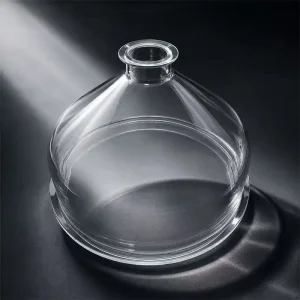
Explore our full line of oversized tubes, precision slotted rods, optical plates, and heavy-duty quartz vessels designed for extreme manufacturing environments.


Direct answers addressing technical performance, acid corrosion durability, minimum order quantities, and Indonesian shipping protocols.
Fused quartz possesses exceptional chemical inertness. It is completely unaffected by concentrated sulfuric, nitric, and hydrochloric acids at boiling temperatures. The only chemical compounds that attack fused silica are hydrofluoric acid (HF), phosphoric acid above 150°C, and strong alkaline solutions at high temperatures. In nickel-cobalt HPAL operations utilizing high-pressure sulfuric acid slurries, fused quartz rods experience essentially zero corrosion or pitting, maintaining optical clarity and dimensional stability.
Our standard high-purity transparent quartz rods support continuous operating temperatures of 1,100°C and short-term excursion peaks up to 1,250°C. Devitrification—the transition from amorphous silica to crystalline cristobalite—initiates above 1,150°C if surface contamination is present. Because our cleanroom acid-purification process removes all surface alkali metals (Na, K, Li < 1 ppm combined), our quartz rods demonstrate exceptional resistance to crystallization under typical thermal cycles.
Yes. We specialize in custom-to-drawing fabrication. Our machine shop combines multi-axis CNC milling, cylindrical diamond grinding, ultrasonic hole drilling, laser cutting, and flame glassblowing lathes. We routinely produce notched quartz rods, spiral glass rods, ground ball-and-socket joints, flanged ends, and precision optical flats with dimensional tolerances down to ±0.02 mm.
Standard size quartz rods (1mm to 50mm diameter) are maintained in inventory for immediate dispatch within 48 to 72 hours. Custom machined parts require 7 to 12 production days. For maritime shipping, direct container lines from Lianyungang/Shanghai reach Port of Tanjung Priok (Jakarta) or Tanjung Perak (Surabaya) within 7 to 10 sailing days. For time-sensitive maintenance shutdowns, express air courier delivery reaches Cengkareng (CGK) in 3 to 5 business days.
Breakage prevention is engineered into our logistics. Every individual rod is wrapped in protective polyethylene foam sleeves, placed in heavy-wall reinforced paper cylinders or partitioned foam slots, sealed with desiccant to prevent tropical moisture pitting, and packed in reinforced, shock-isolated ISPM-15 wooden export crates. Our international transit breakage rate has remained strictly below 0.1% over the past five years.
Yes. Under the ASEAN-China Free Trade Area (ACFTA), we issue official Certificate of Origin (Form E) documentation with every export shipment. This allows Indonesian importers to apply for preferential tariff concessions, frequently lowering the applied import duty to 0% - 5%, significantly reducing total landed landed landed inventory cost compared to buying through indirect re-exporters.
Whether you require standard optical quartz rods, acid-proof HPAL sensor guide rods, or large-scale semiconductor diffusion furnace assemblies, our technical engineers are ready to evaluate your CAD drawings, verify material grades, and prepare a direct factory quotation within 24 hours.
