Explore standard and drawing-customized fused quartz components hot-worked and cold-machined to sub-micron optical tolerance standards for demanding analytical and thermal systems.

Wholesale High-Quality Oversized Fused Quartz Tubes from China Suppliers | Factory for High-Temperature Applications Manufacturers, Supplier
View Product Details
Wholesale High-Temperature Resistant Quartz Lamp Holder from China Suppliers - Factory Direct for Industrial Lighting and Heating Applications Suppliers, Product
View Product Details
High-Quality Premium Quartz Boats for High-Temperature Processes - High-Purity Fused Silica from China Suppliers and Factory Manufacturers, Factory
View Product Details
Custom Premium Quartz Boat for High Temperature Processes Manufacturers, Product
View Product Details
Custom Custom Quartz Furnace Tubes from China Suppliers & Factory for Laboratory and Industrial Use Manufacturer, Products
View Product Details
Custom Custom Size Quartz Furnace Tube for Laboratory & Industrial Use - High-Purity Silicon Dioxide from China Suppliers & Factory Manufacturer, Product
View Product Details
Wholesale Premium Quartz Boats for High Temperature Processes - China Suppliers & Factory for Semiconductor Applications Manufacturer, Suppliers
View Product Details
Wholesale High-Quality Fused Silica Quartz Plate - Heat Resistant | China Suppliers & Factory Supplier, Products
View Product DetailsA rigorous examination of optical path length tolerances, bonding chemistries, refractive index homogeneity, and transmission windows across UV, Visible, and Near-Infrared spectra.
In analytical spectroscopy, a quartz cuvette is not merely a passive sample container; it serves as a co-axial optical window whose surface flatness, parallelism, and intrinsic chemical purity directly govern light transmittance, refractive aberration, and signal-to-noise ratio (SNR).
Standard optical glass (such as optical borosilicate) absorbs strongly below 320 nm, rendering it useless for UV absorption spectroscopy, peptide bond quantification at 214 nm, and nucleic acid concentration measurements at 260/280 nm. High-purity synthetic fused silica (JGS1 grade) extends the usable optical transmission cutoff down to 190 nm and into the deep-UV vacuum window without autofluorescence degradation.
| Optical Quartz Grade | Spectral Range | Internal Transmittance (≥) | Primary Applications |
|---|---|---|---|
| JGS1 (Synthetic Fused Silica) | 190 nm – 2,500 nm | ≥ 90% @ 200 nm | Deep UV Spectrophotometry, DNA/RNA, Fluorescence, HPLC Flow Cells |
| JGS2 (Optical Quartz Fused) | 220 nm – 2,500 nm | ≥ 88% @ 250 nm | Standard UV-Vis Routine Assays, Industrial Colorimetry, Medical Diagnostics |
| JGS3 (Infrared Optical Quartz) | 260 nm – 3,500 nm | ≥ 85% @ 2,700 nm | NIR Absorption, Organic Functional Group Kinetic Assays, Petrochemical Analysis |
| Standard Optical Glass (BK7 eq.) | 340 nm – 2,000 nm | ≥ 82% @ 360 nm | Visible Colorimetry, Educational Labs, Non-UV Routine Assays |
From high-throughput screening to harsh chemical process chromatography, custom quartz cuvettes deliver certified optical clarity under extreme pressures, temperatures, and photochemical stress.
Micro-volume and sub-micro quartz cuvettes configured with 50 μL sample cavities and black self-masking quartz walls eliminate scatter glare during oligonucleotide quantification (A260), protein assays (Bradford / BCA at A595), and circular dichroism (CD) secondary structure investigations down to 185 nm.
Continuous on-line inline spectrophotometer flow cells built from high-purity flame-welded fused quartz monitor trace metallic cations, hydrogen peroxide bath decay, and acid etch ratios (SC-1 and SC-2 cleaning baths) where aggressive HF or hot phosphoric mixtures decompose conventional borosilicate.
Long path length quartz cuvettes (50 mm and 100 mm optical paths) enable ultra-trace detection of chemical oxygen demand (COD), total phosphorus, free chlorine, and carcinogenic polycyclic aromatic hydrocarbons (PAHs) at parts-per-billion (ppb) concentrations in municipal watersheds.
Four-sided polished all-clear quartz cuvettes engineered with optical grade micro-finishing minimize Rayleigh and Raman backscattering, providing a pristine 90-degree collection angle for photon-counting photomultiplier tubes and high-resolution confocal detection heads.
Demountable and capillary-fed quartz microfluidic chips designed for stop-flow reaction kinetics, enzymatic equilibrium observation, and hydrothermal research operate stably up to 35 bar internal pressure and 250°C with zero birefringence distortion.
Navigating global supply chain volatility, strict pharmacological standards (USP, Ph. Eur.), and international quality benchmarks through certified manufacturing protocols.
The global analytical instrument market is witnessing an unprecedented push toward automation, inline spectroscopic monitoring, and micro-volume consumption. In regions across North America, the European Union, and East Asia, stringent pharmacopeia regulations (including United States Pharmacopeia USP <857> and European Pharmacopoeia Ph. Eur. 2.2.25) mandate rigorous wavelength accuracy and stray light limits for spectrophotometric release testing.
Consequently, procurement managers are transitioning away from high-cost OEM replacement cuvettes that carry prohibitive markups toward certified direct manufacturer partnerships capable of providing factory-calibrated optical cells with traceable spectral validation data.
Harnessing raw material integration, dual hot-cold fabrication clusters, and rapid prototyping capabilities to deliver uncompromised optical quartzware at global scale.
Situated in Donghai County, Jiangsu Province—globally acknowledged as the premier hub for quartz processing—our factory operates with instantaneous access to high-purity natural silica sands and plasma-fused synthetic ingots, shielding our supply chain from international raw stock shortages.
We combine artisan flame hot-working techniques for seamless chamber welding and stress annealing with computerized 5-axis ultrasonic diamond grinding. This dual capability allows non-standard geometry execution, customized threading, and capillary integration without outsourcing delays.
Direct factory manufacturing bypasses distributor markups while facilitating rapid prototype cycles. Engineering drawings submitted in 2D PDF or 3D STEP formats are reviewed within 24 hours, with custom proof-of-concept cuvettes manufactured and shipped within 10 to 14 days worldwide.
A strategic technological blueprint addressing sub-micron channel structuring, evanescent wave biosensors, and extreme deep-UV vacuum integration for the next decade.
Adoption of ultrafast laser selective chemical etching (FLICE) enables 3D monolithic internal channel creation directly inside fused silica blocks. This eliminates all bonded joint interfaces, unlocking microchannel geometries down to 5 μm without particulate traps.
Engineering specialized fused silica cuvettes featuring total internal reflection fluorescence (TIRF) optical flats. These custom profiles allow excitation of fluorophores strictly within 100 nm of the optical interface, suppressing bulk background fluorescence in single-molecule biophysics.
Developing synthetic silica materials with zero hydroxyl (OH) absorption bands and minimal interstitial oxygen defects, pushing reliable transmission thresholds down to 170 nm for synchrotron beamline end-stations and next-generation excimer laser diagnostics.
Engineered for high-temperature semiconductor processing, optical dispersion prisms, and analytical digestion tubes tested under extreme thermal gradients.
High-Quality High-Temperature Oversized Fused Quartz Tube Factory in China - Leading Suppliers for Photovoltaics & Semiconductors Supplier, Product
View Product Details
Custom High Purity Quartz Rod / Fused Silica Rod - China Suppliers & Factory for Semiconductors and Laboratory Applications Manufacturers, Factory
View Product Details
Wholesale High-Quality Fused Silica Quartz Plates from China Suppliers - Factory Direct Heat Resistant Solutions Manufacturers, Factory
View Product Details
High-Quality Customized High-Purity Quartz Products from China Suppliers and Factory for Semiconductor and Chemical Industries Manufacturer, Factory
View Product Details
High-Quality High Purity Quartz Rod / Fused Silica Rod - China Supplier & Factory for Semiconductors and Laboratory Use Manufacturers, Products
View Product Details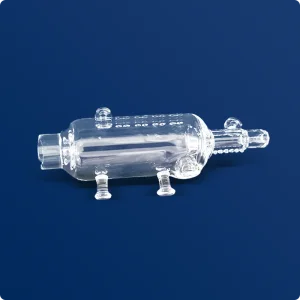
High-Quality High Purity Quartz Digestion Tube for Laboratory Factories, Product
View Product Details
High-Quality Custom Size Quartz Furnace Tube for Laboratory & Industrial Use | China Suppliers & Factory Solutions Supplier, Factory
View Product Details
High-Quality Premium Quartz Boat for High-Temperature Processes - High-Purity Suppliers and Factory in China Suppliers, Factory
View Product DetailsIn-depth answers curated by our senior optical glass engineers to solve operational challenges regarding transmission windows, cleaning chemistry, and geometric tolerances.
Synthetic fused silica (often designated as JGS1, Suprasil, or Spectrosil equivalents) is synthesized by gas-phase hydrolysis of high-purity silicon tetrachloride (SiCl4) in an oxygen-hydrogen flame. This results in virtually zero trace metallic impurities (Fe, Al, Ti < 0.1 ppm each), granting exceptional deep-UV transmission from 190 nm to 2,500 nm with negligible solarization or UV fluorescence. In contrast, natural fused quartz (JGS2) is melted from refined natural quartz rock crystals; while mechanically robust and thermally identical, trace metallic constituents produce an optical cutoff around 220 nm and minor absorption bands in the UV spectrum. For UV-Vis peptide, nucleotide, and circular dichroism assays below 220 nm, synthetic quartz is mandatory.
Adhesive or glue-sintered cuvettes use specialized organic epoxy resin systems to seal the polished quartz window plates to the body. While inexpensive, organic adhesives rapidly dissolve or swell when exposed to common analytical solvents including acetonitrile, tetrahydrofuran (THF), dimethyl sulfoxide (DMSO), acetone, and strong acids. Furthermore, adhesive degradation leaches fluorophores and UV-absorbing organic polymers directly into the specimen, creating catastrophic baseline drift and false peaks. In contrast, our direct thermal fusion optical bonding welds the quartz crystals together at their molecular softening point (> 1,200°C) without intermediate flux. The finished cuvette behaves as a monolithic fused quartz body that survives all organic solvents, 100% aqua regia, and autoclaving up to 1,100°C.
For custom spectrophotometer flow-through cuvettes, engineers must specify: (1) Path length (Z-dimension) and tolerance—our standard is ±0.01 mm, but we readily precision-lap to ±0.005 mm; (2) Center / Z-Height (distance from the base of the cell holder to the center of the spectrophotometer optical beam, typically 8.5 mm or 15 mm); (3) Internal flow chamber volume and geometry (cylindrical bore, rectangular channel, or tapered Z-flow channel to avoid dead-volume stagnation); (4) Inlet/outlet connectivity (M6 threaded ports, 1/4-28 HPLC micro-fittings, or fused quartz capillary tailpipes); and (5) Working pressure and operational temperature spectrum.
Never clean optical quartz windows with abrasive wipers or sonicate in high-power ultrasonic baths containing suspended solids, as micro-scratches destroy optical flatness (λ/4). For routine cleaning: (1) Immediately rinse with the assay solvent followed by high-purity HPLC-grade ethanol or Milli-Q deionized water; (2) For biological protein contamination, immerse in a 3M nitric acid or warm dilute hydrochloric acid bath (avoid hydrofluoric acid or concentrated hot alkalis which etch quartz); (3) For stubbornly adsorbed fluorescent dyes, soak in a 1:1 mixture of concentrated sulfuric acid and 30% hydrogen peroxide (piranha solution) under a fume hood; (4) Invert to dry on lint-free cleanroom wipes or dry with ultra-high purity nitrogen gas.
Every custom quartz optical cell undergoes multi-stage factory verification: First, 100% helium mass-spectrometry vacuum leak testing detects microscopic porosities down to 1×10⁻⁹ Pa·m3/s. Second, optical transmission across 200 nm–900 nm is mapped using certified double-beam spectrophotometers against calibrated air blanks to verify optical symmetry across paired matched cells (holding transmittance matching within ΔT < 0.5%). Finally, interferometric surface profilometry verifies window planarity and scratch-dig specifications per MIL-PRF-13830B (20/10 scratch-dig standard for laser-grade optics).
Submit your CAD drawings, optical path length parameters, or custom flow cell specifications. Our Donghai-based engineering design center validates manufacturability, optical tolerance budgets, and delivery timelines within 24 hours.
