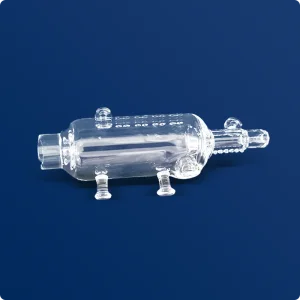
Industrial Engineering Whitepaper · Fused Silica Reactor Series

High-Quality Quartz Reactor Product & Products

Ultra-High Purity Fused Quartz Vessels, Semiconductor Diffusion Furnace Tubes, Microchannel Photochemical Flow Cells, and Custom Precision Quartzware Engineered to Micron Tolerances

Precision Engineering Catalog

Primary Quartz Reactor & High-Temperature Process Components

Explore our flagship certified fused quartz reactors, furnace tubes, microchannel cells, and high-purity structural quartzware manufactured under rigorous ISO 9001 and SEMI process controls.


Wholesale Quartz Microchannel Flow Cell Manufacturers, Supplier
Photochemistry / Analytics

Wholesale Quartz Microchannel Flow Cell Manufacturers, Supplier

View Product Specs
High-Quality High Purity Quartz Rod / Fused Silica Rod for Semiconductor & Laboratory
Semiconductor / Lab Stock

High-Quality High Purity Quartz Rod / Fused Silica Rod for Semiconductor & Laboratory - China Suppliers & Factory Products Manufacturers, Supplier

View Product Specs
High-Quality High Purity Quartz Digestion Tube for Laboratory Factories
Chemical Digestion / Analysis

High-Quality High Purity Quartz Digestion Tube for Laboratory Factories, Product

View Product Specs
Wholesale High-Quality Oversized Fused Quartz Tubes
Large Diameter Reactors

Wholesale High-Quality Oversized Fused Quartz Tubes from China Suppliers | Factory for High-Temperature Applications Manufacturers, Supplier

View Product Specs
High-Quality Custom Quartz Furnace Tubes
Furnace Core Tubes

High-Quality Custom Quartz Furnace Tubes from China Suppliers | High-Purity Quartz Factory for Laboratory & Industrial Use Suppliers, Product

View Product Specs
High-Quality Custom Size Quartz Furnace Tube
Precision Dimensioning

High-Quality Custom Size Quartz Furnace Tube for Laboratory & Industrial Use - High Purity Supplier & Factory in China Manufacturers, Products

View Product Specs
Custom Fused Silica Quartz Plate – Heat Resistant
Optical & Thermal Windows

Custom Fused Silica Quartz Plate – Heat Resistant Supplier, Factories

View Product Specs
Wholesale Premium High-Temperature Quartz Boats
Semiconductor Wafer Carriers

Wholesale Premium High-Temperature Quartz Boats from China Suppliers - Fused Silica Factory for Semiconductor Processes Product, Products

View Product Specs
99.999%
SiO₂ Purity Index
Ultra-low metallic contaminants: Al, Fe, Na, Li < 8 ppm total
1,250°C
Continuous Working Temp
Softening point at 1,683°C with minimal creep kinetics
5.5×10⁻⁷
Thermal Expansion (CTE)
Extreme thermal shock immunity: red-hot quench survival
< 10⁻⁹
He Leak Rate (mbar·L/s)
100% helium mass-spectrometry vacuum tightness certified
Material Science Authority

The Engineering Physics of Industrial Quartz Reactors

A quartz reactor is an indispensable thermal and chemical containment system deployed in advanced industrial fabrication where aggressive process atmospheres, extreme temperatures, and ultra-strict cleanliness thresholds prevent the use of standard borosilicate glass or high-performance metallic alloys. Constructed predominantly from amorphous fused silica (silicon dioxide, SiO₂), high-purity quartz reactors provide an extraordinary balance of physical properties: near-zero coefficient of thermal expansion, broad-spectrum electromagnetic transmittance extending from deep vacuum-ultraviolet (180 nm) into the mid-infrared (3,500 nm), and nearly absolute inertness to mineral acids, halogens, and corrosive precursor vapors.

In modern high-tech sectors—including semiconductor wafer processing (LPCVD, PECVD, ALD, wet chemical oxidation), photovoltaic silicon crystal growth and cell metallization, microfluidic flow chemistry, and critical analytical spectrometry—the quartz reactor operates as both a vacuum envelope and a controlled reaction chamber. The fundamental barrier to entry in quartz reactor engineering lies in balancing hydroxyl (OH⁻) radical content with trace alkali metal concentration. Excess OH⁻ groups disrupt the three-dimensional silicon-oxygen tetrahedral network (Si-O-Si bonds), reducing the effective viscosity of the vessel at 1,150°C and accelerating mechanical sagging under atmospheric or vacuum pressure loads. Conversely, natural quartz mineral stock must undergo rigorous chemical purification and high-temperature plasma calcination to drive alkali impurities (sodium, potassium, lithium) below parts-per-billion levels, thereby preventing the lethal phenomenon of surface devitrification (nucleation into crystalline cristobalite).

"The mechanical and structural integrity of a fused silica quartz reactor is not merely a function of wall thickness; it is governed by the stoichiometry of the amorphous Si-O network, internal stress annealing, and the total suppression of metallic seed ions that catalyze destructive cristobalite crystallization at temperatures above 1,000°C."

Amorphous Network Viscosity

By strictly controlling the synthesis method—whether continuous electric fusion, two-step oxy-hydrogen flame drawing, or chemical vapor plasma fusion—our quartz reactors achieve an annealing point of 1,215°C and a strain point of 1,120°C. This allows sustained structural integrity without creep deformation during high-temperature semiconductor annealing.

Devitrification Kinetic Resistance

Thermal devitrification occurs when trace elements (specifically Ca²⁺, Mg²⁺, and Fe³⁺) act as nucleation sites, triggering phase transformation from vitreous silica to high-cristobalite. Our proprietary acid-leaching purification and cleanroom thermal hot-working guarantee surface cleanliness that inhibits cristobalite formation across multi-cycle thermal sweeps.

Spectral Permeability for Photolysis

For photochemical flow synthesis, ozone water purification, and infrared flash annealing, internal transmission is paramount. Our optical-grade synthetic and fused silica reactors transmit >90% of incident radiation across 200–2,500 nm, enabling unhindered light-driven catalytic kinetics and radiant heat transfer directly into active reaction zones.

Geographic & Industrial Cluster Superiority

Why Donghai, China Leads the Global Fused Quartz Value Chain

Strategic vertical integration from high-grade raw silica refinement to high-end CNC cold-machining yields unmatched cost efficiency, technical scalability, and cycle-time velocity.

The global sourcing landscape for quartz reactor products has shifted decisively toward dedicated industrial clusters capable of unifying raw material synthesis, precision hot-working, and CNC sub-micron fabrication. Located in Donghai County, Jiangsu Province—internationally recognized as the "Silicon and Crystal Capital of China"—our manufacturing facility draws upon over three decades of accumulated metallurgical and glassworking ecosystem infrastructure. Donghai represents the world's most concentrated hub for quartz ingot smelting, furnace drawing, chemical acid refining, and specialized processing machinery.

Direct Upstream Mineral Integration

Direct supply lines to high-purity natural silica deposits and proprietary plasma ingot purification allow complete traceability of starting raw materials. We minimize international logistics surcharges and raw-stock lead times, securing guaranteed raw ingot stocks even during global supply shortages.

Dual-Track Hot & Cold Craftsmanship

Our workshop seamlessly merges master flame-working artisans—specialized in lathe-assisted fusing, side-arm joint welding, and dome shaping—with multi-axis CNC ultrasonic grinding, diamond slotting, and laser edge profiling, enabling customized geometry without external subcontracting.

30–50% Sourcing Cost Rationalization

Through high regional supply density and high-efficiency melting technologies (continuous electric furnace pulling vs costly batch fusion), we deliver OEM replacements and specialized custom reactors at significant structural cost savings compared to legacy European, American, or Japanese vendors.

Compressed Prototyping Lead Time

Standard quartz furnace tubes and stock rods ship within 3–5 working days, while custom CAD/STEP-based reactor assemblies transition from engineering review to hot-flame fabrication and helium leak certification in as little as 10–14 days, accelerating your R&D trial phases.

Market Evolution & Macro Trends

Emerging Technology Trends Reshaping Quartz Reactor Demand

As semiconductor nodes shrink below 7 nm and photovoltaic cells shift to N-type architectures, quartzware specifications are transitioning from baseline thermal resistance to quantum-level purity.

The global quartz reactor market is undergoing a profound paradigm shift driven by simultaneous revolutions in high-density computing, green energy transformation, and precision automated chemical manufacturing. Traditional commodity quartz glass no longer suffices for next-generation fabrication lines. Global OEMs and tier-one semiconductor fabs are placing stringent demands on reactor fabricators, centering on five overarching vectors:

Transition to N-Type TOPCon & HJT

Photovoltaic cell fabrication has rapidly transitioned from P-type PERC to N-type TOPCon, HJT, and Perovskite-silicon tandem cells. This requires oversized horizontal quartz diffusion tubes (exceeding 450 mm OD) capable of withstanding intense low-pressure POCl₃ and boron tribromide (BBr₃) corrosive atmospheres at 1,000°C without bore warping.

Atomic Layer Deposition (ALD) Tolerances

As microchip logic transitions toward 3D Gate-All-Around (GAA) and advanced 3D NAND with 200+ layers, precursor gas distribution must be atomic-scale uniform. Quartz showerhead reactors, injectors, and liner tubes now require tight dimensional tolerances within ±0.05 mm to maintain uniform laminar gas flow velocity.

Ultra-Low Hydroxyl (Low-OH) Purity

High OH concentrations (>150 ppm) create absorption bands at 2.73 μm and reduce structural shear resistance under heat. The industry trend heavily favors synthetic fused silica or vacuum-baked electric fusion reactors with OH levels < 20 ppm, prolonging reactor lifecycle in 24/7 continuous production fabs.

Continuous Flow Photochemistry

Pharmaceutical and agrochemical synthesis is aggressively shifting from dangerous multi-ton batch vessels to safe, continuous microchannel quartz flow cells. These high-transmittance, narrow-channel reactors allow immediate photonic penetration, extreme heat exchange, and instant quenching of volatile radical intermediates.

Zero-Contamination Clean Packaging

Global procurement teams reject traditional packaging due to particulate contamination. Current engineering benchmarks necessitate multi-stage ultrasonic cleanroom deionized water etching (18.2 MΩ·cm), Class 100 laminar flow packaging, and vacuum double-bagging to eliminate electrostatic dust attraction during air transit.

Industrial Deployment Matrix

Specialized Applications: Where Quartz Reactors Deliver Critical Performance

In each target operational domain, custom quartzware solves distinct failure modes involving thermal cycling, chemical corrosion, vacuum retention, or optical absorption.

Semiconductor Front-End Wafer Fab

Specific Role: Low-Pressure Chemical Vapor Deposition (LPCVD), thermal dry/wet oxidation, polysilicon deposition, and rapid thermal annealing (RTA).
Component Matrix: Flanged furnace tubes, wafer boats, liner tubes, injector nozzles, and high-vacuum quartz bell jars.
Failure Prevention: Eliminates transition metal migration (Fe, Cu, Ni) into silicon crystal lattices that destroy minority carrier lifetime.

Photovoltaic Cell High-Temp Diffusion

Specific Role: High-throughput phosphorus (POCl₃) and boron (BBr₃) emitter doping on large-format M10/G12 silicon wafers.
Component Matrix: Oversized quartz diffusion tubes (OD 350–550 mm), slotted quartz boats holding up to 400 wafers, and gas manifolds.
Failure Prevention: High resistance to corrosive chlorination and thermal sag under heavy structural mechanical loading at continuous 950–1,050°C.

Continuous Flow Photochemistry & Chlorination

Specific Role: Continuous halogenation, photo-oxidation, nitration, and UV-activated peptide synthesis under continuous fluid stream.
Component Matrix: Quartz microchannel flow chips, jacketed photoreaction vessels, and immersion wells for UV medium-pressure mercury lamps.
Failure Prevention: Transmits 254 nm and 365 nm UV wavelengths with >88% transmittance while completely resisting aggressive anhydrous HCl and bromine.

Trace Elemental Analysis & Digestion

Specific Role: High-pressure acid digestion (microwave digestion), ICP-OES/ICP-MS sample introduction torches, and combustion tubes.
Component Matrix: Sealed quartz digestion vessels, ICP quartz torches, quartz spray chambers, and quartz combustion boats.
Failure Prevention: Eliminates background analytical noise and false positives in sub-ppb elemental trace quantification, resisting HNO₃/HCl at 250°C/80 bar.

Comparative Materials Engineering

Fused Quartz vs Alternative High-Temperature Reactor Materials

An empirical comparison demonstrating why fused silica stands alone as the premier material for thermal purity, thermal shock survivability, and broadband optical transmission.

Performance Parameter High-Purity Fused Quartz (Our Standard) Synthetic Fused Silica Borosilicate Glass 3.3 (Pyrex Type) Alumina Ceramic (Al₂O₃ 99.7%)
SiO₂ / Material Purity ≥ 99.995% (4N5 - 5N) ≥ 99.9999% (6N - 7N) ≈ 81% SiO₂, 13% B₂O₃, 4% Na₂O ≥ 99.7% Al₂O₃
Maximum Working Temp (Continuous) 1,100°C – 1,150°C 1,150°C – 1,200°C 450°C – 500°C (Softens at 820°C) 1,600°C – 1,700°C
Short-Term Peak Thermal Limit 1,250°C – 1,300°C 1,300°C – 1,350°C 550°C 1,800°C
Thermal Expansion (CTE: 20-300°C) 5.5 × 10⁻⁷ / K 5.0 × 10⁻⁷ / K 33 × 10⁻⁷ / K (6x higher) 70–80 × 10⁻⁷ / K (14x higher)
Thermal Shock Resistance Quench from 1,100°C into 20°C water (Pass) Quench from 1,150°C into water (Pass) ΔT ≈ 100°C (Catastrophic fracture) ΔT ≈ 200°C (Moderate thermal cracking)
UV-Vis-NIR Transmittance (1 mm) > 90% (260 nm – 2,500 nm) > 92% (185 nm – 2,500 nm) Zero deep UV transmission (<310 nm cutoff) Opaque / Translucent only
Acid Resistance (Except HF / H₃PO₄ >300°C) Class 1 Complete Inertness Class 1 Complete Inertness Good, slight leaching of boron/alkali Good, vulnerable to strong hot acids
Dielectric Strength (20°C, 1 MHz) 25–40 kV / mm 35–45 kV / mm 15–25 kV / mm 10–20 kV / mm
Risk Mitigation & Procurement Protocols

Global Enterprise Sourcing & Quality Audit Standards

International technology leaders require complete technical transparency, rigorous metrology verification, and impact-isolated global crating before issuing factory qualification.

✓
CAD/Drawing Engineering Validation

Our application engineers review customer drawings in PDF, DWG, DXF, or STEP format, verifying flange mating tolerances, fillet radii for stress relief, and flame-weld transitions.

✓
Helium Leak Testing (<10⁻⁹ mbar·L/s)

All flanged vacuum vessels, double-jacketed photochemical flow cells, and bell jars undergo automated helium mass-spectrometry vacuum leak testing with individual serialized test reports.

✓
Optical Stress Birefringence Check

All hot-worked joints, side-arm ports, and end-domes pass through a high-precision polariscope to confirm full structural stress relief post-annealing in our digital annealing ovens.

✓
CMM Coordinate Metrology Inspection

Critical interfaces—such as ground taper joints, flat ground flanges, O-ring seal grooves, and wafer carrier slots—are inspected on coordinate measuring machines to ±0.02 mm.

✓
Trace Metal Impurity Certifications (ICP-MS)

Every shipment is accompanied by lot-specific chemical analysis documentation validating that elemental impurities (Al, Fe, Ti, Ca, Mg, Cu, Na, Li, K) remain within guaranteed thresholds.

✓
Shock-Monitored Global Freight Crating

Custom-molded closed-cell polyethylene foam beds, moisture-barrier vacuum packaging, and reinforced plywood export crates fitted with "Drop'n'Tell" and "Tip'n'Tell" shock indicators guarantee zero transit loss.

Technical Knowledge Base

Frequently Asked Questions: Engineering, Chemistry & Sourcing

Comprehensive engineering guidance to address critical questions encountered by chemical process engineers, fab managers, and procurement officers.

1
What causes devitrification on quartz reactors, and how can it be prevented?
Devitrification is the phase transition from metastable amorphous vitreous silica into crystalline cristobalite. It generally initiates above 1,000°C when catalytic impurities—specifically alkali metal ions (Na⁺, K⁺, Li⁺) or alkaline earth ions (Ca²⁺)—are present on the quartz surface. Cristobalite has a different density and thermal expansion profile, causing micro-cracking and hazing upon cooling. Prevention requires: (1) handling quartzware only with clean, powder-free lint-free nitrile gloves; (2) thorough cleaning with a 5–10% hydrofluoric (HF) acid etch followed by deionized water rinsing before firing; and (3) specifying high-purity electric-fused quartz stock with total alkali levels < 2 ppm.
2
What is the difference between transparent fused quartz and synthetic fused silica?
Transparent fused quartz is produced by melting naturally occurring high-purity natural silica sand (quartz crystal) via electric arc or oxy-hydrogen gas fusion. It achieves 99.99%–99.999% purity and features excellent high-temperature thermal stability and low hydroxyl content. Synthetic fused silica is synthesized by the chemical gas-phase hydrolysis of silicon tetrachloride (SiCl₄) in an oxygen-hydrogen flame. Synthetic silica achieves 99.9999% (6N+) purity with virtually zero metallic contamination, providing superior optical transmission in the deep UV spectrum down to 185 nm, making it essential for excimer laser photolysis and sub-10 nm semiconductor lithography chambers.
3
How does hydroxyl (OH⁻) content affect quartz reactor structural integrity?
Hydroxyl ions act as network terminators within the continuous silicon-oxygen lattice (-Si-OH instead of -Si-O-Si-). Elevated OH⁻ content significantly lowers the viscosity, strain point, and softening point of the quartz glass. In a high-temperature diffusion or LPCVD furnace operating under continuous mechanical vacuum at 1,150°C, a quartz reactor with high OH⁻ (>150 ppm) will experience premature structural sagging, wall inward collapse, and dimensional warping. Our high-temperature reactor tubes are produced using low-OH electric fusion technology, guaranteeing OH⁻ < 20 ppm (and < 5 ppm upon specialized thermal vacuum annealing).
4
What chemicals and gases will corrode or degrade fused quartz reactors?
Fused quartz exhibits near-universal chemical inertness to water, neutral salts, and almost all acids (including HCl, HNO₃, H₂SO₄, and aqua regia) even at elevated temperatures. However, quartz is actively attacked and dissolved by: (1) Hydrofluoric acid (HF) at any temperature, forming gaseous SiF₄; (2) Phosphoric acid (H₃PO₄) at temperatures exceeding 250°C; (3) Concentrated alkaline solutions (NaOH, KOH) at elevated temperatures; and (4) Molten basic oxides and basic slag. Halogen gases (Cl₂, Br₂) do not attack quartz up to 1,000°C unless basic contaminants are present.
5
Can oversized quartz reactor tubes (OD > 400 mm) maintain precision tolerances?
Yes. Through advanced automated continuous drawing and horizontal thermal reshaping towers, we manufacture oversized quartz tubes with outer diameters up to 550 mm and wall thicknesses up to 12 mm. We maintain tight circularity tolerances (< 1.5% out-of-roundness), wall thickness uniformity within ±8%, and linear straightness deflection < 1.5 mm per meter. Flanged ends can be ground flat within 0.05 mm to achieve hermetic sealing with mating metallic vacuum collars.
6
What end-fitting configurations can be engineered onto quartz reactors?
We provide a diverse spectrum of certified connection interfaces: (1) Precision ground ball-and-socket or ground taper joints (standard taper 24/40, 29/32, 45/50); (2) ISO-KF, ISO-LF, and CF compatible flat ground flanges with fluoropolymer FKM or perfluoroelastomer (FFKM) O-ring grooves; (3) Threaded GL-fittings (GL14, GL18, GL25, GL45) with PBT/PTFE screw caps; (4) Flame-welded quartz-to-pyrex graded seals for direct glassblowing onto borosilicate manifold systems; and (5) Custom water-cooled double-walled jacketed jackets.
7
How do you test and ensure zero leakage for high-vacuum and toxic gas reactors?
Every pressure-bearing or high-vacuum reactor passes through helium mass spectrometry leak detection. The vessel is evacuated to high vacuum (< 10⁻⁴ mbar) and enclosed in a helium test environment. We calibrate the spectrometer to detect leak rates as minute as 1.0 × 10⁻⁹ mbar·L/s. Furthermore, reactors destined for positive-pressure chemical synthesis undergo hydrostatic or pneumatic pressure burst validation at 1.5 times the maximum operational limit.
8
What information is required to receive a formal engineering review and quotation?
To provide an actionable quotation and manufacturability analysis within 24 hours, our engineering desk requires: (1) Dimensional 2D drawing (PDF/DWG) or 3D CAD model (STEP/IGES) specifying OD, ID, overall length, wall thickness, and port coordinates; (2) Operational environment (continuous operating temperature, peak thermal spike, vacuum level or internal pressure); (3) Working chemical atmosphere (precursor gases, acid concentrations, plasma exposure); and (4) Annual batch or prototype quantity requirements.
9
How should quartz reactors be cleaned and maintained after routine processing?
For semiconductor and CVD applications, post-process cleaning entails: (1) Removing organic residues using an organic solvent or piranha solution (H₂SO₄ + H₂O₂); (2) Etching inorganic and metallic deposits in a 5%–10% semiconductor-grade HF bath for 3–5 minutes (do not over-etch, as prolonged HF exposure roughens the surface finish and increases devitrification risk); (3) Rinsing thoroughly in cascade overflow deionized water tanks until resistivity exceeds 15 MΩ·cm; and (4) Drying with filtered clean dry air (CDA) or high-purity nitrogen in a Class 100 laminar clean bench.
10
What is the typical shipping cycle and packaging standard for fragile overseas orders?
Stock tubing, standard digestion tubes, and raw plates ship within 3–5 business days. Custom reactors and engineered assemblies require 10–18 business days depending on hot-working complexity. For overseas shipments to North America, Europe, East Asia, and the Middle East, we construct custom fumigated wooden export crates. Internal items are isolated using high-density tailored EPE foam cavities, vacuum-sealed in anti-static PE bags, and monitored by exterior impact-recording tags, yielding an unbroken transit delivery rate > 99.8%.
High-Temperature Consumables & Fixtures

Specialized Fused Quartz Thermal Process & Handling Products

Complete your furnace architecture with certified quartz wafer boats, thermal insulation rings, industrial lamp holders, and customized laboratory apparatus.


High-Quality Customized Quartz Products from China Suppliers
Custom Quartzware

High-Quality Customized Quartz Products from China Suppliers - High-Purity Quartz Instruments Manufacturer at Factory Prices Supplier, Factories

View Product Specs
High-Quality Premium Quartz Boats for High-Temperature Processes
Semiconductor Wafer Boats

High-Quality Premium Quartz Boats for High-Temperature Processes - China Suppliers & Factory for Semiconductor Manufacturing Product, Products

View Product Specs
Custom Premium Quartz Boats for High-Temperature Processes
Diffusion Carriers

Custom Premium Quartz Boats for High-Temperature Processes - Top China Suppliers & Factory Suppliers, Product

View Product Specs
Custom Custom High-Purity Quartz Furnace Tubes
Furnace Tubes

Custom Custom High-Purity Quartz Furnace Tubes from China Suppliers and Factory for Laboratory and Industrial Use Manufacturer, Supplier

View Product Specs
Custom Premium Quartz Boats - High Purity Factory Direct
High-Purity Slotted Boats

Custom Premium Quartz Boats for High-Temperature Processes - High-Purity Suppliers in China | Factory Direct Factories, Factory

View Product Specs
High-Quality High-Temperature Resistant Quartz Lamp Holder
Thermal Fixtures

High-Quality High-Temperature Resistant Quartz Lamp Holder for Industrial Use - China Suppliers & Factory Manufacturer, Manufacturers

View Product Specs
Wholesale Custom Transparent Quartz Glass Rings
Thermal Insulation Rings

Wholesale Custom Transparent Quartz Glass Rings - High Temperature Insulation Rings | China Suppliers & Factory Manufacturer, Manufacturers

View Product Specs
Wholesale Custom Size Quartz Furnace Tube
Industrial Furnace Tube

Wholesale Custom Size Quartz Furnace Tube for Laboratory & Industrial Use Suppliers, Product

View Product Specs