Direct factory wholesale components featuring extreme thermal-shock endurance (ΔT > 1100°C water quench without fracture), negligible trace metallics (≤ 15-20 ppm total), and custom CNC diamond cold machining.





High-purity fused quartz (SiO2 ≥ 99.99%) is not simply glass; it is an irreplaceable baseline engineering substrate across semiconductor wafer fabrication, compound optoelectronics, deep-UV optics, and solar cell architectures.
In sub-micron CMOS, DRAM, and 3D NAND fabrication lines, quartzware forms the immediate process envelope for high-temperature thermal diffusion (1000°C-1150°C), wet oxidation, LPCVD, and atomic layer deposition (ALD). A single part-per-billion (ppb) leaching of transition metals (Fe, Cu, Ni) or alkali elements (Na, K, Li) into the hot process chamber causes fatal lattice degradation and carrier lifetime collapse.
The global transition to N-type TOPCon, HJT, and tandem perovskite cells requires large-format low-pressure boron/phosphorus diffusion chambers. Oversized fused quartz tubes exceeding 450 mm in outer diameter and 3,000 mm in length must maintain circularity and wall-thickness uniformity (< 0.3 mm runout) under cyclical vacuum and deadweight thermal creep.
In dry plasma etch equipment (fluorine/chlorine chemistries), quartz focus rings, gas distribution plates, and showerheads guide high-density RF plasma fields. Fused quartz provides controlled erosion resistance, low dielectric loss across high-frequency RF matching regimes, and optical transparency spanning deep ultraviolet (DUV: 193 nm - 260 nm) through mid-infrared.
Fused silica glass consists of a continuous random network of silicon-oxygen tetrahedra (SiO4) linked through corner-sharing oxygen atoms. The absence of modifier cations (such as calcium or sodium) produces a virtually negligible coefficient of thermal expansion (α ≈ 5.5 × 10⁻⁷ / K between 20°C and 320°C).
This atomic structure renders quartzware uniquely impervious to extreme temperature gradients that instantly shatter borosilicate or soda-lime glasses. A quartz tube can be heated to 1100°C and immediately quenched in ice-cold water without structural catastrophic breakdown. Furthermore, fused quartz displays absolute chemical passivity against virtually all mineral acids (including HCl, HNO3, and H2SO4) at boiling points, reacting strictly with hydrofluoric acid (HF) and concentrated phosphoric acid at temperatures > 150°C.
| Physical / Chemical Property | Fused Quartz Value | Engineering Significance |
|---|---|---|
| SiO2 Purity Grade | ≥ 99.99% - 99.999% | Eliminates semiconductor wafer contamination |
| Density (at 20°C) | 2.20 ± 0.01 g/cm³ | Low mechanical inertia in robotic loaders |
| Thermal Expansion Coefficient | 5.5 × 10⁻⁷ cm/cm·°C | Superior thermal shock resistance (ΔT > 1000°C) |
| Softening Point | ≈ 1,683°C | Maintains structural load in vacuum > 1150°C |
| Annealing Point | ≈ 1,215°C | Target for precision stress-relief cycles |
| Dielectric Constant (at 1 MHz) | 3.75 - 3.80 | Minimal RF power loss in plasma etch tools |
Headquartered in Donghai County, Jiangsu—recognized globally as the primary crystal and fused quartz hub across the Eurasian continent—Lianyungang Southeast Quartz Products Co., Ltd. capitalizes on total upstream-to-downstream consolidation.
Unlike fragmented overseas workshops that wait 8 to 16 weeks for raw quartz ingots, cylinders, or oversized tube stock, our location inside the Donghai industrial zone grants same-day access to certified high-purity natural silica sand, plasma-fused billets, and continuously drawn tubing stock (Ø2mm to Ø600mm). This reduces overall custom order cycle times by 40% to 60%.
We merge traditional artisan scientific glassblowing with computerized cold-working equipment. Our facility runs dual-spindle glass-working lathes capable of handling components up to 6 meters in length, synchronized with multi-axis ultrasonic CNC milling centers that machine wafer retention slots, O-ring sealing grooves, and micro-fluidic channels down to ±0.01 mm geometric tolerances.
Process security is non-negotiable. Southeast Quartz operates on-site helium mass-spectrometry leak detection apparatus (≤ 10-9 mbar·L/s sensitivity), ultrasonic wall-thickness gauges, cross-polarized optical stress polariscopes, and Class 1,000 cleanroom acid-leaching lines to guarantee parts arrive pristine, de-stressed, and ready for immediate furnace installation.
Our dedicated team of application engineers converts client CAD files (STEP, DWG, IGES, PDF) into production-ready CAM toolpaths within 12 to 24 hours. Small-batch prototypes for university R&D labs or replacement runs for legacy semiconductor tools are routinely scheduled and dispatched in a fraction of standard lead times.
With more than 10 years of accumulated quartz manufacturing patents, our factory has solved critical quartz failure points including thermal stress concentration along flanged joints, devitrification nucleation during long furnace ramps, and micro-fracturing along slotted wafer carrier bridges.
By eliminating multiple tier-2 brokerage and distributor margins, global procurement managers obtain direct-from-manufacturer FOB or CIF pricing. We design custom foam-suspended, plywood-reinforced packaging validated through ISTA drop tests to ensure high-aspect quartz tubes arrive safely across the Americas, Europe, and the Middle East.
Understanding the real-world operational stressors on quartzware ensures appropriate geometry specification, prolonged equipment uptime, and total prevention of costly in-line wafer contamination.
Subjected to sustained 1050°C-1150°C temperatures under N2, O2, and POCl3 atmospheres. Gravitational sag and recrystallization (devitrification) are the dominant failure modes. We formulate low-OH fused quartz with precise wall-to-diameter ratios to prevent ovalization and preserve helium-tight end-flange seals.
Quartz showerheads, focus rings, and lift pins in ICP/RIE etch systems undergo steady micro-erosion via reactive fluorine radicals forming volatile SiF4. Our high-density plasma-fused ingots feature zero micro-inclusions and ultra-smooth flame-polished finishes that resist micro-cracking and particle generation.
Liquid-source organometallic delivery (TEOS, TiCl4, TMA) demands welded 3-port quartz bubblers with high internal pressure stability and chemical inertness. Southeast Quartz employs robotic and master lathe flame-welding to eliminate thermal joint notches, preventing rupture during thermal cycling.
Automatic robotic wafer handling requires rigid quartz boats and cantilever transfer paddles with minimal bending deflection under thermal mass loads of 50 to 100 8-inch/12-inch silicon wafers. High-modulus quartz components preserve tight transfer alignments to prevent automated wafer drop errors.
As semiconductor architectures transition toward Gate-All-Around (GAA) nanosheets and solar fabs embrace tandem cells, the mechanical, optical, and purity thresholds required from quartz fabricators are shifting.
Standard electrically or gas-fused natural quartz (Type I & II) is gradually being supplemented by synthetic fused silica synthesized from silicon tetrachloride (SiCl4) or silane precursor combustion. Synthetic materials achieve total trace metallic impurities < 5 ppb, essential for leading-edge EUV photomasks, laser beam homogenizers, and critical plasma etcher components where zero trace contamination is permitted.
The solar industry's standard wafer sizing (M10/G12) requires massive reaction vessels exceeding 450 mm to 550 mm outer diameter. Maintaining circularity and structural wall uniformity under thermal loads at this scale has spurred continuous dynamic melting technologies that minimize bubble seeds, surface striations, and thickness variances across tube lengths exceeding 3.5 meters.
Traditional grinding of brittle fused quartz frequently creates sub-surface micro-cracks that propagate into catastrophic fractures during high-temperature thermal cycles. Southeast Quartz integrates 5-axis ultrasonic CNC cold machining, combining high-speed spindle rotation with 20-40 kHz micro-vibrations, yielding mirror-like cut edges, razor-sharp notch definitions, and vastly higher mechanical strength.
Strategic sourcers and cleanroom process engineers must inspect far beyond baseline unit prices. Quartz reliability depends on trace chemical assays, thermal cycle stabilization, and geometric tolerances.
Comprehensive answers to common technical, metallurgical, manufacturing, and international logistics questions from our engineering and sales teams.
Transparent fused quartz sustains continuous operations at 1,100°C, with intermittent short-term excursions up to 1,250°C. Its theoretical softening point begins near 1,683°C. Above 1,150°C, quartz begins the nucleation process of devitrification, converting from its metastable amorphous glass state into crystalline α-cristobalite. This conversion accelerates drastically if the quartz surface is contaminated by skin contact (alkali salts like NaCl), airborne dust, or metallic oxides. Cristobalite has a different density and thermal expansion profile, creating micro-cracks and structural failure upon cool-down. Handling quartzware with clean lint-free gloves and performing routine acid cleanings prevents premature devitrification.
To receive a verified engineering review and quotation within 24 hours, provide: (1) Dimensional schematics specifying outer diameter (OD), inner diameter (ID), wall thickness, overall length, and critical tolerances; (2) CAD files in STEP, IGES, DWG, or dimensioned PDF formats; (3) Operating atmosphere (vacuum level, reactive gas species such as chlorine, oxygen, fluorine, or silane) and maximum working temperatures; (4) Hydroxyl content expectations (e.g., standard ≤ 30 ppm vs. ultra-low ≤ 5 ppm); and (5) Required end configurations (ground ball/socket joints, ISO-KF flanges, flat ground flanges, or fused quartz-to-metal seals).
Every pressurized vessel, sealed quartz reactor, diffusion tube, and bubbler undergoes standardized helium mass-spectrometer leak testing in accordance with ASTM E498/E499 standards, ensuring leak rates stay below 1 × 10⁻⁹ mbar·L/s. Welded sections are inspected via cross-polarization polariscopes to eliminate residual annealing stress concentrations. Wall thicknesses are mapped with high-precision ultrasonic gauges, and full chemical batch assay sheets (ICP-MS) accompany every critical export batch.
While frequently used interchangeably, the technical distinction lies in raw material synthesis: "Fused Quartz" is manufactured by melting naturally occurring high-purity crystalline silica sand (e.g., Donghai or Spruce Pine pegmatites) via electric arc or oxy-hydrogen flames. It offers exceptional thermal stability, high mechanical strength, and low cost. "Fused Silica" refers to synthetic glass produced through the vapor-phase hydrolysis of chemical silicon precursors (such as SiCl4). Synthetic silica achieves near-zero trace metals, lower bubble inclusion counts, and superior DUV (deep ultraviolet) transmission down to 193 nm, but comes at a higher manufacturing cost.
Safe international transit of quartz tubes up to 3+ meters in length relies on suspended-load engineering. Tubes are individually enclosed in multi-layer antistatic polyethylene sleeves, capped with custom EVA foam shock-dampening collars, and centered inside reinforced internal tubes. These are then placed within custom-built, heat-treated plywood crates (ISPM-15 compliant) lined with high-density polyurethane dampeners. Crates include tip-n-tell indicators, shock watches, and desiccants to maintain an impact-free, moisture-controlled transit environment.
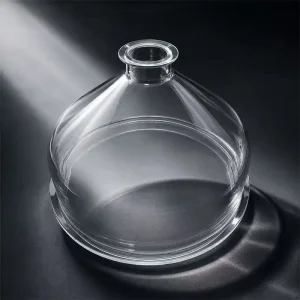
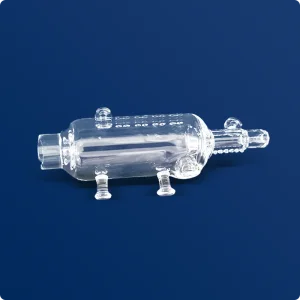
Wholesale industrial components built to client specifications. Retaining tight tolerances (±0.01 mm), helium-tight welds, and ultra-high chemical passivity across all standard and non-standard geometries.


Send us your component drawings (PDF, STEP, DWG) along with process parameters. Receive a formal engineering manufacturability review, thermal tolerance assessment, and wholesale factory quotation within 24 hours.
