Engineered to exact geometric tolerances and extreme chemical purities for wafer fabrication, UV/Vis absorption verification, and trace digestion.

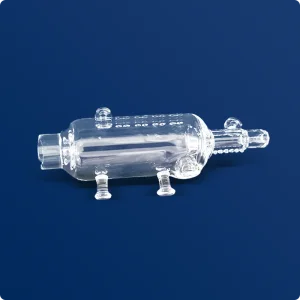




Strategic silicon dioxide (SiO₂) verification underpins the worldwide transition toward sub-5nm semiconductor lithography, bifacial photovoltaic cell architecture, and ultra-trace molecular diagnosis.
In high-precision manufacturing, "Quartz Identification" transcends mere mineral recognition. In advanced procurement channels, quartz identification embodies a dual industrial mandate: First, Material Grade & Purity Characterization—differentiating natural electric-arc fused quartz from synthetic fused silica, validating trace transition metal fractions (Fe, Ti, Cr) and alkali metals (Na, K, Li) down to single-digit parts-per-billion (ppb), and quantifying structural hydroxyl ([OH⁻]) groups. Second, Optical & Analytical Identification Product Engineering—the fabrication of specialized quartz apparatus (such as microchannel flow cells, digestion vessels, spectrophotometer cuvettes, and chromatography detection windows) deployed in analytical spectroscopy to identify external molecular, biological, and chemical species.
The global high-purity quartz (HPQ) ecosystem faces unprecedented supply pressures. With natural quartz reserves containing sub-30 ppm total impurities concentrated in limited deposits (such as Spruce Pine, North Carolina, and premier Asian geological zones in Donghai County, Jiangsu, China), factory-level identification ensures that silicon wafer fabs and solar cell manufacturing lines do not suffer premature batch failures caused by phase transformation or devitrification.
Diffusion furnaces, chemical vapor deposition (CVD), and rapid thermal processing (RTP) operate under aggressive chlorine, fluorine, and silane gases above 1,000 °C. Unverified quartz components exhibiting micro-bubbles or trace copper/sodium migration contaminate cleanroom wafers, creating catastrophic PN junction electrical leakages.
The global PV industry transition from P-type PERC to N-type TOPCon and Heterojunction (HJT) cells demands larger wafer boats and oversized tubes capable of withstanding prolonged phosphorus oxychloride (POCl₃) and boron tribromide (BBr₃) doping cycles without thermal distortion or structural sag.
In inductively coupled plasma mass spectrometry (ICP-MS), microwave digestion, and pharmaceutical micro-fluidic flow detection, vessel inertness is vital. Certified quartz ensures no leaching of boron, silica, or alkaline elements into ultra-pure reagents during analyte quantification.
A comprehensive engineering evaluation methodology for verifying fused silica and quartzware material properties before deployment in mission-critical environments.
| Quartz Classification | Raw Material Source | Purity Level (SiO₂) | OH⁻ Content (ppm) | Primary Industrial Use Case |
|---|---|---|---|---|
| Type I (Natural Electrically Fused) | Pegmatite quartz sands (vacuum melted) | 99.990% – 99.998% | < 5 – 20 ppm | Furnace tubes, semiconductor diffusion heaters, infrared process lamps |
| Type II (Natural Flame Fused) | Purified natural crystal sand (flame fusion) | 99.995% – 99.999% | 150 – 400 ppm | Wafer carrier boats, bell jars, standard laboratory glassware, sight glasses |
| Type III (Synthetic Fused Silica) | Chemical precursors (SiCl₄ / Silanes) | 99.9999% (6N) | 800 – 1,200 ppm | Deep UV lithography optical windows, photomasks, excimer laser components |
| Type IV (Synthetic Dry Fused Silica) | Plasma CVD / Soot remelting | 99.9999% (6N) | < 1 ppm | Near-IR optical telecommunications, high-energy laser transmission, core fiber optics |
| Opaque / Sintered Fused Quartz | Micro-bubble enriched SiO₂ matrix | 99.99% | < 30 ppm | Thermal insulation shields, solar crucible outer layers, radiant heat reflectors |
Destructive sample dissolution via ultra-pure hydrofluoric acid allows quantitative elemental measurement of 14 critical trace contaminants (Al, Ca, Cr, Cu, Fe, K, Li, Mg, Mn, Na, Ni, Ti, Zr, B). High-purity furnace tubes require total heavy metal concentrations under 0.8 ppm to eliminate wafer cross-contamination risks.
Fourier Transform Infrared Spectroscopy measures fundamental stretching vibrations of bonded silanol (Si-OH) groups at the 2.73 µm wavelength. Precise OH identification dictates product application: low-OH quartz prevents thermal swelling in vacuum environments, whereas controlled-OH quartz improves radiation hardness in optical instruments.
Cross-polarized optical birefringence identifies internal residual stress induced by non-uniform hot-working. Subsequently, vacuum-evacuated welded assemblies undergo mass spectrometer helium sniffing at leak sensitivities reaching 1×10⁻⁹ mbar·l/s to certify hermetic sealing integrity before delivery.
From synthetic quartz ingot synthesis to automated sub-micron CNC cold ultrasonics, manufacturing paradigms are evolving to meet extreme operational tolerances.
Integration of plasma-fused quartz ingots replacing multi-step arc smelting, reducing micro-bubble densities to SEMI Class 0 standards. Implementation of automated direct-part-marking (DPM) utilizing picosecond UV lasers to engrave tamper-proof QR/data-matrix codes directly onto quartz boat flanges for end-to-end cleanroom fab lifecycle tracking.
Replacing traditional diamond wheel grinding with 5-axis ultrasonic CNC milling. Ultrasonic vibration reduces mechanical cutting stresses by 40%, completely suppressing subsurface micro-cracks on microchannel flow cell paths and wafer slot roots, extending component thermal-shock cycle longevity by over 300% in industrial environments.
Application of atomic layer deposition (ALD) and chemical vapor treatment to deposit nanoscale aluminum silicate or yttrium-doped barrier films on quartz furnace tubes and reaction chambers. These coatings block ambient metal cation diffusion, elevating maximum continuous working temperatures from 1,150 °C up to 1,350 °C without cristobalite phase transitions.
Real-world integration of precision quartzware across semiconductor foundries, solar cell fabs, and environmental monitoring labs.
Operating Environment: Temperatures ranging between 950 °C and 1,150 °C under corrosive atmospheres containing SiH₂Cl₂, NH₃, and HCl at low pressures.
Solution: Custom-dimensioned, large-diameter fused quartz furnace tubes featuring precision ground ball-joint flanges and helium leak rates verified below 1×10⁻⁹ mbar·l/s. Matched with computer-slotted quartz boats providing wafer pitch tolerances within ±0.05 mm to prevent robotic arm pick-and-place collision during high-throughput wafer transfers.
Operating Environment: Continuous-flow UV-Visible absorbance and fluorescence detection down to 190 nm deep UV wavelengths.
Solution: High-purity quartz microchannel flow cells fabricated using plasma thermal bonding without optical cements or adhesives. Optical paths are flame-polished to surface roughness Ra < 0.5 nm, preserving 92% optical transmittance at 200 nm without fluorescent background noise, facilitating rapid identification of chemical compounds and bio-analytes.
Operating Environment: Concentrated nitric acid (HNO₃) and hydrofluoric acid (HF) mixtures under pressures up to 80 bar and temperatures of 260 °C.
Solution: High-purity fused silica digestion tubes featuring uniform wall thickness profiles verified by ultrasonic thickness gauges. High tensile strength and chemical inertness ensure zero trace metal background contribution during mineralogical and food safety contaminant identification.
Lianyungang Southeast Quartz Products Co., Ltd. combines raw material supply advantages with precision hot glassblowing and CNC machining for global export.
Situated in Qinghu Industrial Park, Donghai County, Jiangsu, China—the central distribution and processing cluster for Eurasian silica and quartz products—Southeast Quartz leverages unmatched regional raw materials access and specialized glassblowing talent. Since 2015, Southeast Quartz has operated standard modern industrial workshops equipped with continuous thermal drawing furnaces, large-diameter glassblowing lathes, CNC water-cooled profiling mills, laser slicing cutters, and automated class-10,000 cleanroom acid-washing lines.
Our integrated manufacturing envelope guarantees complete batch traceability from raw ingot to final component. We bridge the gap between engineering drawings and production realities by providing design-for-manufacturability (DFM) reviews on custom orders within 24 hours.
Skilled master glass artisans and semi-automated computer lathes execute complex structural welds, flanged closures, branch pipe joints, and ground glass unions without inducing thermal shock crystallization or micro-bubble entrapment.
Sub-millimeter CNC diamond machining centers handle precision surface grinding, slotted comb profiling for wafer boats, edge chamfering, and precision boring with tolerances maintained down to ±0.02 mm.
Every fabricated component undergoes automated programmable ramp-and-soak thermal annealing at 1,180 °C in electric furnaces to relieve residual stress, followed by multi-stage ultra-pure acid bath etching to remove surface metallic ions.
Authoritative technical clarifications addressing material selection, failure modes, precision tolerances, and international logistics.
Heavy-duty oversized furnace tubes, precision cut plates, fused silica rods, and optical grade microchannel flow detection cells.




