Engineered to deliver exceptional thermal endurance up to 1,250 °C, ultra-low OH radicals (<1 ppm), and near-zero bubble defects for extreme industrial applications in Santiago, Antofagasta, and Atacama.
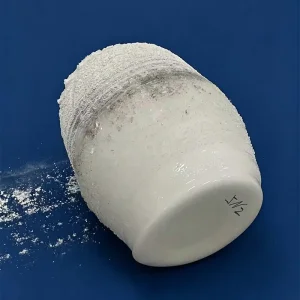



A comprehensive analysis of Chile's expanding demand for ultra-pure plasma-fused vitreous silica across copper pyrometallurgy, lithium chemical refining, optical astronomy, and solar thermal energy.
The Republic of Chile represents Latin America's most dynamic industrial economy, anchored by intensive extractive mining, rapid clean-tech transition, and cutting-edge science. In Northern Chile (Antofagasta, Calama, Atacama), mineral extraction operations produce over 25% of global copper and massive volumes of battery-grade lithium carbonate (Li₂CO₃) and lithium hydroxide (LiOH).
As processing plants transition toward automated hydrometallurgical digestion, direct lithium extraction (DLE), and pyrometallurgical calcination, traditional borosilicate glassware and commercial ceramics fail under aggressive acidic leaching agents (HF, HCl, H₂SO₄) and extreme thermal gradients.
Furthermore, northern Chile's Atacama Desert hosts over 50% of the world's optical and radio-astronomy collecting area (such as the ALMA array, Paranal Observatory, and the upcoming Extremely Large Telescope ELT). Optical mirror substrates, cryogenic observation chamber windows, and laser calibration collimators demand plasma-synthesized fused quartz ingots with near-zero bubble classes, high broadband transmission (190 nm to 2500 nm), and negligible hydroxyl radical contamination.
Plasma-fused quartz ingots (vitreous silica formed through high-frequency inductively coupled plasma melting at temperatures exceeding 2,000 °C) represent the pinnacle of fused quartz technology. Unlike conventional flame fusion (which introduces water vapor and hydroxyl groups) or electric arc fusion (prone to graphite electrode contamination), plasma fusion utilizes pure thermal argon or oxygen-argon plasma torch fields.
Key metallurgical properties critical for Chilean end-users include:
Why Chilean procurement directors and precision optical fabricators specify RF plasma-melted ingots over oxy-hydrogen flame or electrical fusion.
| Performance Dimension | Inductively Coupled Plasma Fusion (Our Standard) | Oxy-Hydrogen Flame Fusion (Verneuil) | Electrical Arc / Resistance Vacuum Fusion |
|---|---|---|---|
| Hydroxyl [OH⁻] Radical Concentration | < 1 to 5 ppm (Virtually Anhydrous) | 150 – 450 ppm (High water content) | 10 – 30 ppm (Moderate) |
| Typical Total Metallic Impurity (Fe, Cu, Ni, Al, Ti, etc.) | ≤ 8 to 15 ppm total (Semiconductor Grade 5N) | 20 – 50 ppm | 35 – 80 ppm (Risk of carbon/metal contamination) |
| Optical Inhomogeneity & Striae | Striae-free in 3 dimensions (Optics Grade A) | Parallel striae perpendicular to growth axis | Contains granular micro-inhomogeneities |
| Bubble / Inclusion Density | Class 0 according to DIN ISO 10110-3 | Class 1 - 2 (Occasional micro-bubbles) | Class 3 - 4 (Contains opaque or gaseous seed defects) |
| Continuous Safe Working Temperature | 1,150 °C continuous / 1,280 °C short-term | 1,050 °C (OH accelerates premature devitrification) | 1,100 °C |
| Typical Downstream Machined Products | Ingots, Astronomical Blanks, CVD Bells, Wafer Carriers | Standard labware, basic commercial tubes | Opaque quartz crucibles, thermal heating elements |
Direct supply paths from China's premier manufacturing base to Chile's key industrial hubs: Antofagasta, Calama, Mejillones, Valparaíso, and the Santiago Metropolitan region.
In the Salar de Atacama and Maricunga salars, lithium processing facilities handle aggressive lithium chloride liquors, solvent extraction organics, and calcination steps. Quartz furnace tubes and high-purity reactor shells core-drilled from plasma ingots guarantee zero sodium, potassium, or iron contamination into the lithium salts.
The clear, high-altitude skies of Northern Chile host the world's most sophisticated observatories. Our plasma-fused quartz ingots serve as structural blanks for specialized spectroscopic lenses, cryostat viewports, laser guide star beam expanders, and solar filter substrates requiring zero coefficient of thermal expansion hysteresis.
Projects like Cerro Dominador in the Atacama desert store thermal energy using nitrate molten salts operating above 565 °C. Plasma-fused quartz provides high-temperature pyrometric observation sight glasses, pyrometer protection sleeves, and thermal insulation rings that withstand corrosive salt vapors.
Headquartered in Donghai, Jiangsu—the premier silica refining hub of the Eurasian continent—Southeast Quartz bridges high-volume plasma synthesis with rigorous international export protocols.
By controlling both upstream natural crystal refining and proprietary high-frequency plasma furnace lines in Donghai County, we guarantee raw material traceability from crude ore to final polished ingot. Our fully contained RF plasma reactors eliminate the graphite contamination found in lower-cost melting setups, producing consistently transparent boules with diameters up to 450 mm and lengths up to 2,000 mm.
Chilean mining and industrial procurement teams avoid multiple tiers of European or North American middleman markups, reducing acquisition costs by 30% to 45% while receiving identical or superior physical tolerances.
Every single quartz ingot and secondary fabricated component is subjected to full-spectrum quality control prior to containerization: ICP-OES & GDMS trace element inspection, polarimetric stress birefringence verification, ultrasonic flaw scanning for micro-bubbles, and helium mass-spectrometry leak detection for sealed tubular reactors.
We provide specialized maritime export packaging—cushioned multi-layer custom shock absorbers, vacuum-sealed barrier moisture foils, and heavy-duty ISPM-15 compliant timber cases tailored for long-haul shipping routes from Shanghai/Lianyungang to the Ports of Valparaíso, San Antonio, and Antofagasta.
Representative glow-discharge mass spectrometry (GDMS) values of our high-purity plasma-fused quartz ingots supplied to Chilean research institutions and industrial users.
| Element | Aluminum (Al) | Iron (Fe) | Calcium (Ca) | Titanium (Ti) | Sodium (Na) | Potassium (K) | Lithium (Li) | Copper (Cu) | Total Metals |
|---|---|---|---|---|---|---|---|---|---|
| Standard Industrial Grade | ≤ 12.0 | ≤ 0.8 | ≤ 0.5 | ≤ 1.2 | ≤ 0.6 | ≤ 0.6 | ≤ 0.4 | ≤ 0.05 | ≤ 18.0 ppm |
| Semiconductor & Optical Grade | ≤ 6.0 | ≤ 0.15 | ≤ 0.2 | ≤ 0.5 | ≤ 0.1 | ≤ 0.1 | ≤ 0.08 | ≤ 0.01 | ≤ 7.5 ppm |
| High-Purity Plasma 5N Grade | ≤ 1.5 | ≤ 0.05 | ≤ 0.08 | ≤ 0.1 | ≤ 0.04 | ≤ 0.04 | ≤ 0.02 | ≤ 0.005 | ≤ 2.0 ppm |
How global supply chain realignment, mineral value-addition, and green hydrogen technologies are reshaping quartzware procurement in Chile over the 2025–2035 horizon.
Under Chile's National Lithium Strategy (Estrategia Nacional del Litio), state and private operators (such as Codelco, Enami, and private joint ventures) are required to move beyond raw brine export toward domestic chemical value addition. Refining battery-grade precursor salts locally requires robust analytical test equipment, ultra-clean quartz reaction chambers, and high-frequency digestion bombs that eliminate background trace contamination.
The Magallanes region in southern Chile and Antofagasta in the north are becoming global proving grounds for massive green hydrogen export facilities. Fused quartz observation windows, plasma flow cells, and ozone-generating UV quartz sleeves play a pivotal role in high-pressure electrochemical monitoring and clean synthetic e-fuel synthesis systems.
Globally, sub-3nm node fabrication and high-power EUV lithography require ingots with unprecedented refractive index homogeneity (Δn ≤ 2 × 10⁻⁶). As Chile establishes technology partnerships and university semiconductor incubation hubs in Santiago and Concepción, local researchers rely on Southeast Quartz's standardized plasma blanks for advanced R&D wafer processing.
Explore our complete export line, produced with high-precision hot flame welding and cold CNC five-axis ultrasonic machining. Fully compatible with Chilean industrial and laboratory dimensions.


Authoritative guidance addressing technical specifications, logistics, customs clearance, and product qualification for Chilean operations.
Plasma fusion utilizes electrodeless high-frequency inductively coupled plasma (ICP) torches operating at temperatures up to 2,000 °C in an ultra-clean argon atmosphere. This prevents graphite contamination and eliminates hydroxyl (OH⁻) moisture incorporation common in electric arc or oxy-hydrogen gas melting. The result is an ultra-pure vitreous silica ingot (≥99.999% SiO₂) with virtually zero bubble seeds, exceptional vacuum ultraviolet through infrared transmission, and maximum devitrification resistance under continuous high-temperature chemical exposure.
We employ a five-stage export packaging protocol designed specifically for trans-Pacific shipping routes to Chilean ports (Valparaíso, San Antonio, and Antofagasta). Each quartz ingot or tube is wrapped in static-free surface film, sealed in desiccated moisture-proof vapor barrier foil, cushioned by high-density custom-molded polyethylene foam shells (minimum 50 mm thickness), and enclosed in reinforced export-grade plywood crates compliant with international ISPM-15 heat-treatment standards. Every wooden container includes shock-watch and tilt-watch indicator labels.
Yes. We specialize in build-to-print manufacturing from customer CAD models (.STEP, .IGES, .DWG, or .PDF). Our cold-machining facility in Donghai utilizes CNC 5-axis ultrasonic contouring machines capable of maintaining dimensional tolerances within ±0.02 mm. Our hot-working workshop handles lathe flanging, optical fire-polishing, bubble-free precision welding, quartz thread cutting, and ground conical/spherical joints matching European and American apparatus standards.
Under normal continuous operation at 1,100 °C without surface contamination, plasma-fused quartz tubes typically demonstrate lifetimes between 12 to 24 months. In environments with aggressive volatile alkali mists (such as Li⁺, Na⁺, or K⁺ vapors) or heavy metal dusts (Pb, Cu), devitrification (crystallization into cristobalite) can be accelerated. To maximize component life in Chilean smelters, we recommend our specialized high-density fire-polished surfaces and strict adherence to clean acid-washing handling protocols.
Every delivery includes an exhaustive Quality Certification Package consisting of: (1) Material Mill Test Certificate verifying SiO₂ purity ≥ 99.999%, (2) GDMS/ICP-OES Trace Element Analysis Report detailing parts-per-million levels of 12 critical metallic elements, (3) Optical Spectrophotometer Transmission Curve (190 nm – 3200 nm), (4) Coordinate Measuring Machine (CMM) Dimensional Verification Protocol, and (5) Helium Mass Spectrometry Leakage Test Report (< 1 × 10⁻⁹ mbar·l/s) for vacuum and pressure-tight tubes.
Standard unshaped plasma-fused ingots (round cylinders or square blocks) generally ship within 7 to 14 days from our Donghai factory. Precision CNC machined components, flanged furnace tubes, and custom apparatus typically require 15 to 25 business days depending on geometric complexity. Ocean container transit from Lianyungang/Shanghai to Valparaíso or San Antonio typically takes approximately 28 to 35 days, with expedited express air-freight options (5 to 8 business days door-to-door to Santiago SCL Airport) available for critical replacement emergencies.
Submit your CAD drawings (.STEP, .DWG, .PDF) or procurement target specifications. Our senior quartz glass engineers will evaluate thermal parameters, recommend optimal material grades, and return a factory-direct quote within 24 hours.
