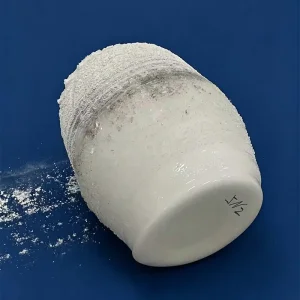
Poland Spec Focus Ring

Precision-machined ultra-high purity fused silica focus rings, thermal shielding rings, and custom dielectric containment solutions engineered for Poland's accelerating semiconductor, optoelectronic, photovoltaic, and research laboratories.
High-temperature resistant fused quartz rings, electro-optical lamp holders, oversized containment tubes, and calibrated lab-grade silica rods tailored to strict European dimensional DIN standards.



Poland has transitioned from an automotive and heavy industrial manufacturing hub to one of the most promising nodes in the European Union's semiconductor and advanced electronics ecosystem. Under the umbrella of the European Chips Act, multibillion-euro investments across Lower Silesia (Wrocław), Warsaw, Kraków, and the Silesian tech basin are creating an unprecedented domestic demand for semiconductor-grade consumables, led by high-precision fused quartz rings.
Centering on Wrocław and the Miękinia development zone, Poland is establishing premier test and assembly foundries and microelectronic packaging clusters. Quartz rings play an indispensable role as dielectric edge isolators, thermal heat shields, and etch-resistant focus rings in process chambers operating under strict sub-ppm contamination limits.
Institutions such as the Łukasiewicz Research Network (IMiF - Institute of Microelectronics and Photonics) and CEZAMAT in Warsaw operate cutting-edge cleanrooms. These facilities demand small-batch, tight-tolerance (±0.02mm) custom quartz rings for wide-bandgap semiconductors (GaN, SiC) and quantum optic research.
Poland ranks among Europe's fastest-growing solar energy producers. Domestic manufacturers of photovoltaic cells, heat exchangers, and high-temp vacuum furnace manufacturers rely on oversized quartz rings for gas baffle systems, thermal insulation rings, and protective flanges up to 600 mm in diameter.
As semiconductor architectures advance past 3nm and high-aspect-ratio (HAR) dry etching becomes universal in 3D NAND and advanced logic fabrication, the consumption and technical demands placed on quartz focus rings and dielectric collars have grown exponentially. Understanding the global supply dynamics is crucial for Polish procurement executives seeking supply resilience.
In modern reactive ion etching (RIE) and inductively coupled plasma (ICP) environments, quartz rings are subjected to intense bombardment from fluorine- and chlorine-based plasmas (such as CF₄, NF₃, and Cl₂). Historically treated as passive mechanical supports, quartz focus rings today dictate the uniform distribution of plasma sheath boundaries across the wafer edge.
A fraction of a millimeter in ring surface recession alters the RF electric field, causing critical dimension (CD) variations and edge die loss. Consequently, fab managers across Europe now prioritize ring materials engineered for reduced micro-crack propagation, low particle flaking, and minimal hydroxyl (OH⁻) content (< 5 ppm) to prolong operational chamber life between wet cleans.
Geopolitical shifts, energy spikes across Western Europe, and extended lead times from conventional legacy European quartz glass blowers have driven Polish tech companies to reconfigure their sourcing models. OEM markups on replacement quartz rings regularly exceed 300% to 500% with delivery lead times stretching from 26 to 40 weeks.
Leading Polish OEMs, third-party maintenance contractors, and research foundries are bypassing intermediary brokers. By establishing direct contracts with specialized manufacturers capable of drawing-to-part production with helium leak and 3D CMM verification, Polish buyers achieve 40%–60% cost efficiencies while compressing fulfillment cycles down to 2–4 weeks.
| Physical & Chemical Parameter | Standard Fused Quartz Ring | High-Purity Plasma Quartz Ring | Synthetic Fused Silica (Litho/UV Ring) |
|---|---|---|---|
| Total Impurity Level (Al, Fe, Ti, Cu, Na) | < 20 ppm | < 5 ppm (Semiconductor 5N) | < 0.1 ppm (Sub-ppb trace metals) |
| Hydroxyl (OH⁻) Content | 15 – 30 ppm | < 5 ppm (Low OH) | < 1 ppm (Dry grade) or > 800 ppm (UV grade) |
| Transformation Point (Tg) | 1,075 °C | 1,120 °C | 1,180 °C |
| Softening Point | 1,680 °C | 1,710 °C | 1,730 °C |
| Coefficient of Thermal Expansion (20-300°C) | 5.5 × 10⁻⁷ / K | 5.4 × 10⁻⁷ / K | 5.1 × 10⁻⁷ / K |
| Dielectric Breakdown Strength (at 20°C) | 25 – 40 kV/mm | > 45 kV/mm | > 50 kV/mm |
| Surface Roughness (Polished vs Ground) | Ra 0.4 – 0.8 µm | Ra 0.1 – 0.2 µm (Fine lapped) | Ra < 0.005 µm (Super-polished optical) |
From advanced industrial furnace lines in Silesia to scientific laboratories in the Mazowieckie voivodeship, fused quartz rings deliver mechanical rigidity, dielectric purity, and zero outgassing in demanding process chambers.
Installed circumferentially around silicon wafers during ICP and reactive ion etching. By guiding plasma trajectories uniformly across the perimeter, our quartz focus rings eliminate micro-trenching and edge yield degradation in Polish wafer fab processes.
Crucial for Gallium Nitride (GaN) and Silicon Carbide (SiC) power electronic device growth in Polish compound semiconductor labs. With thermal resistance reaching 1,200°C, these rings maintain structural flatness and prevent cross-contamination during epitaxy runs.
Poland's heavy manufacturing, automotive laser welding, and defense engineering sectors require ultra-pure quartz retaining rings. Their near-zero thermal expansion ensures laser collimation lenses and output windows remain mechanically secure without stress birefringence.
Furnace builders in Toruń, Katowice, and Poznań employ precision ground quartz sealing rings. Engineered with CNC-milled O-ring grooves and polished flat sealing surfaces, these rings sustain high vacuum (< 10⁻⁶ mbar) while resisting thermal shock from rapid heating profiles.
In TOPCon and Heterojunction (HJT) solar cell fabrication, quartz rings provide thermal decoupling between heating elements and reactant gas showerheads, preventing premature silane decomposition and eliminating parasitic film buildup.
Chemical pilot plants and pharmaceutical synthesis reactors in Łódź and Warsaw utilize chemical-inert quartz rings as observation sight ports resistant to boiling acids (except HF) and intense UV inspection wavelengths down to 190 nm.
As equipment builders pursue higher wafer throughput and more corrosive gas chemistries, quartz component engineering is experiencing fundamental material and machining advancements.
Traditional diamond grinding of fused quartz induces subsurface micro-fractures that propagate into catastrophic cleavage during high-temperature thermal cycling. Our production line incorporates 5-axis ultrasonic CNC milling technologies.
By applying high-frequency microscopic oscillations during diamond tool contact, cutting forces are reduced by over 60%, allowing us to machine intricate vacuum grooves, bayonet notches, and through-holes without micro-cracks. Polish clients receive rings with pristine edge integrity, eliminating particle release in cleanrooms.
In aggressive halogen plasma etch conditions, standard fused silica focus rings erode at rates up to 15 nm/min. The next frontier involves surface plasma-modification and yttria (Y₂O₃) nanostructured encapsulation.
This technological roadmap preserves the thermal-shock resistance and mechanical machinability of fused quartz while establishing an etch barrier that extends chamber maintenance cycles by 2.5× to 4×. Polish R&D fabs and production lines can directly slash overall cost of ownership (CoO).
Whether replacing obsolete OEM chamber parts in Wrocław or prototyping novel reactor components in Warsaw, our quartz engineers review your tolerances, thermal requirements, and atmospheric specs within 24 hours.
Comprehensive engineering answers covering material purity verification, thermal limits, EU logistics, custom machining tolerances, and cleanroom handling.
Browse our comprehensive catalog of quartz glass rings, plasma-melted ingots, precision rods, and high-temperature furnace tubes certified for European research institutions and industrial fabrication plants.