Direct factory delivery of ultra-pure fused quartzware fabricated to withstand extreme thermal cycles, devitrification stresses, and aggressive chemical diffusion atmospheres.

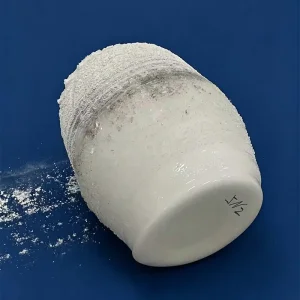





Why specifying fused quartz by a singular melting point leads to catastrophic process failure, and how to evaluate viscosity reference points under industrial operating envelopes.
In classical metallurgy and crystalline solid processing, a material’s melting point marks an abrupt, sharp phase change from solid to liquid governed by latent heat of fusion. However, for fused quartz (amorphous silicon dioxide, SiO₂), no single thermodynamic melting point exists. As an amorphous glass network consisting of tetrahedral [SiO₄] units linked at their corners in an irregular, non-crystalline three-dimensional array, fused quartz does not instantaneously liquefy. Instead, upon heating, it undergoes a gradual, continuous transition marked by an exponential decrease in dynamic viscosity.
While crystalline natural quartz transforms polymorphically into high-temperature cristobalite around 1,713°C and subsequently melts into a viscous liquid, pure amorphous fused quartz simply softens continuously across a 600°C temperature span. For semiconductor process engineers, CVD furnace designers, and thermal processing specialists, operating parameters must be defined not by an arbitrary "melting point," but by universally recognized rheological viscosity reference points (ASTM C598 / ISO 7884 standards).
≈ 1,070°C – 1,120°C
Viscosity: 1014.5 dPa·s (Poise 1014.5). At this temperature, internal thermal stresses relax in a matter of hours. The glass behaves as a rigid, brittle solid with zero structural sag under load.
≈ 1,180°C – 1,215°C
Viscosity: 1013.0 dPa·s. Thermal stress relief occurs within minutes. This represents the safe upper boundary for prolonged continuous thermal service without creep deformation under vacuum.
≈ 1,665°C – 1,730°C
Viscosity: 107.6 dPa·s. Littleton Softening Point. The glass deforms rapidly under its own gravitational mass. At this stage, self-supporting structures begin severe dimensional slump.
1,750°C – 2,050°C
Viscosity: 104 to 105 dPa·s. The true "melting zone" utilized in our hot-working shop. Hydrogen-oxygen blowpipes and plasma arcs manipulate molten quartz for seamless welding and drawing.
A critical engineering failure mode observed above 1,150°C is devitrification—the spontaneous thermodynamic nucleation and growth of crystalline cristobalite on the quartz surface. The presence of trace alkali ions (such as sodium Na⁺, potassium K⁺, lithium Li⁺, and calcium Ca²⁺) acts as a powerful catalytic flux, lowering the activation energy for network reorganization and dramatically accelerating devitrification rates. When devitrified quartz is cooled through 200°C–275°C, the rapid displacive β-to-α cristobalite phase transition triggers an abrupt 5% volumetric contraction, resulting in surface spalling, micro-crazing, and structural shattering. Therefore, selecting ultra-pure fused quartz (purity ≥ 99.995% to 99.999% SiO₂) is critical to preventing crystallization and prolonging component service life.
Laboratory-verified physical properties across natural electric-fused, gas-fused, and synthetic fused silica materials manufactured at our Donghai facility.
| Performance Characteristic | High-Purity Natural Fused Quartz (Tubes / Rods) | Semiconductor Grade Plasma Fused Ingot | Synthetic Fused Silica (Ultra-Pure / DUV) | ASTM / ISO Test Method |
|---|---|---|---|---|
| SiO₂ Purity Level | ≥ 99.995 % (Total impurities < 30 ppm) | ≥ 99.998 % (Total impurities < 15 ppm) | ≥ 99.9999 % (Total impurities < 0.5 ppm) | ICP-MS / GD-MS |
| Strain Point (1014.5 dPa·s) | 1,075 °C | 1,110 °C | 1,020 °C – 1,050 °C (OH dependent) | ASTM C598 |
| Annealing Point (1013.0 dPa·s) | 1,180 °C | 1,215 °C | 1,120 °C – 1,160 °C | ASTM C598 |
| Softening Point (107.6 dPa·s) | 1,683 °C | 1,710 °C | 1,600 °C – 1,640 °C | ASTM C338 / ISO 7884 |
| Max Continuous Service Temp | 1,100 °C | 1,160 °C | 950 °C – 1,000 °C | Long-Term Load Sag Test |
| Short-Term Peak Excursion | 1,250 °C (under protective atm) | 1,300 °C | 1,150 °C | RTP Chamber Spike |
| Coefficient of Thermal Expansion (CTE) | 5.5 × 10⁻⁷ / K (20°C – 320°C) | 5.4 × 10⁻⁷ / K | 5.2 × 10⁻⁷ / K | Dilatometry (ASTM E228) |
| Thermal Shock Resistance | ΔT = 1,100°C → 20°C water quench (no crack) | ΔT = 1,150°C → 20°C water quench | ΔT = 1,050°C → 20°C water quench | ISO 718 Thermal Shock |
| OH (Hydroxyl) Radical Content | < 15 – 30 ppm (Dry / Low OH) | < 5 ppm (Vacuum Baked) | 100 – 1,200 ppm (Synthesis method dependent) | FTIR Spectroscopy (2.73 µm) |
| Dielectric Strength (20°C, 1 MHz) | 25 – 40 kV/mm | 35 – 45 kV/mm | 45 – 55 kV/mm | IEC 60243-1 |
Operating from Donghai County—the crystal and quartz capital of China—Lianyungang Southeast Quartz Products integrates the complete industrial chain from crystal refining to cleanroom-certified assembly.
Global industrial supply chains demand more than competitive pricing; they require uncompromising supply chain velocity, raw material traceability, and ultra-high geometric precision. Located within the world-renowned Donghai quartz industrial cluster, our 4.0 smart factory facility commands unparalleled vertical integration. While standard glass workshops rely on third-party raw material intermediaries, we oversee direct raw quartz refining, electric arc furnace fusion, large-bore quartz tube drawing, and 5-axis CNC ultrasonic cold processing all within our standardized workshops.
High-purity silica sand undergoes chemical pickling, optical sorting, and high-frequency vacuum plasma melting to eliminate micro-bubbles and reduce metallic contamination below 10 ppm total mass fraction.
Heavy-duty precision glassblowing lathes equipped with dual-axis digital synchronizers use oxy-hydrogen torches to shape oversized furnace tubes up to Ø650 mm OD with flawless wall uniformity.
Diamond-tool CNC centers perform micro-slotting for wafer boats (pitch tolerances down to ±0.03 mm), flange milling, waterjet profile contouring, and optical flat grinding to surface finishes of Ra < 0.2 µm.
Computer-controlled electric annealing furnaces execute 48-hour ramped thermal cycles to completely neutralize residual mechanical stresses, followed by 100% helium mass-spectrometry leak detection.
With an annual raw material throughput surpassing thousands of metric tons in Donghai, our economies of scale translate to a 25–40% cost efficiency dividend over Western and Japanese boutique fabricators, without compromising dimensional fidelity.
Our proprietary hot-welding techniques, stress-mitigating structural joints, and specialized jig fixtures are backed by more than 200 utility model patents, ensuring robust field lifetimes in harsh industrial environments.
CAD drawing to physical prototype delivery within 7 to 10 days. Fully digitalized production routing guarantees that emergency replacement furnace tubes and wafer boats reach international fab lines with speed and precision.
Custom-engineered fused quartz hardware designed to overcome chemical corrosion, thermal fatigue, and molecular contamination across mission-critical modern sectors.
For 200mm and 300mm front-end wafer fabrication (FEOL). Our quartz diffusion furnace tubes, slotted wafer boats, pedestal assemblies, and bell jars maintain strict particle cleanliness and structural integrity through oxidation, drive-in diffusion, and LPCVD processes at sustained temperatures up to 1,150°C.
High-efficiency N-type TOPCon and Heterojunction solar cell architectures require heavy boron and phosphorus doping at elevated thermal loads. Our oversized quartz diffusion tubes (up to Ø600mm) resist tube sag, thermal shock, and aggressive POCl₃ / BBr₃ chemistries, maximizing solar manufacturing uptime.
Optical-grade fused silica plates, prisms, and flow cells provide broad-spectrum spectral transmission from 185 nm (Deep UV) through 2,500 nm (Near-Infrared). Engineered with virtually zero bubble count (DIN 58927 Class 0) and low fluorescence for precision analytical sensors and high-energy laser optics.
Custom quartz reactors, round-bottom flasks, distallation heads, bubblers, and combustion boats. Superior chemical inertia to virtually all mineral acids (except hydrofluoric and hot concentrated phosphoric acid above 300°C) allows high-pressure decomposition without metallic leaching.
Strategic R&D pathways addressing sub-2nm semiconductor thermal nodes, ultra-low expansion mirrors, and microfluidic additive fabrication.
As semiconductor architectures scale past the 2 nm gate-all-around (GAA) threshold and extreme ultraviolet (EUV) lithography powers industrial production, thermal processing demands are approaching the physical boundaries of silica. Southeast Quartz actively directs research along three primary technological vectors to redefine high-temperature component performance:
By doping synthetic silica with controlled titanium dioxide (TiO₂) percentages, we are engineering Ultra-Low Expansion (ULE) quartz displaying near-zero coefficient of thermal expansion between 5°C and 35°C. Critical for next-generation EUV photomask substrates and space telescope mirror blanks.
Moving beyond standard CNC mechanical grinding, we are pioneering femtosecond laser-induced selective chemical etching (SLE). This allows us to craft sub-millimeter 3D microfluidic channels, internal cooling circuits, and stress-free wafer-contact geometries directly within solid fused quartz blocks.
Addressing creep deformation during extended 1,200°C horizontal furnace runs. Micro-alloying the amorphous silica matrix with silicon nitride bonds (Si-N-Si) elevates the Littleton softening temperature by +50°C, extending furnace tube operating lifetimes up to 300% without structural ellipticity distortion.
Eliminating procurement risks through stringent quality assurance frameworks, cleanroom packaging standards, and comprehensive international regulatory certifications.
International original equipment manufacturers (OEMs) and semiconductor wafer fab consortiums operating in North America, the European Union, Japan, and Southeast Asia require strict compliance verification. Southeast Quartz supports global sourcing frameworks with standardized documentation, chemical traceability, and secure international transit protocols:
Fab-grade components adhere rigorously to SEMI F21, SEMI F63, and SEMI C3.19 directives covering trace metallic contamination, extractable anion thresholds, and particle cleanliness standards on all wafer-contacting quartz surfaces.
All finished products, welding fillers, and acid pickling compounds fully satisfy EU Directive 2015/863 (RoHS 3) and EC 1907/2006 (REACH SVHC). Zero hazardous heavy metals (lead, cadmium, mercury, hexavalent chromium) are introduced during hot-forming.
Following high-purity ultrasonic HF/HNO₃ acid cleaning, components undergo ultra-pure DI water washing (18.2 MΩ·cm resistivity), final drying under filtered hot nitrogen, and double-bag vacuum sealing in our ISO Class 5 (Fed Std 209E Class 100) cleanroom.
Zero transit breakage policy. Oversized quartz tubes and delicate slotted boats are immobilized inside customized, shock-absorbent closed-cell polyethylene foam beds within reinforced, fumigated ISPM-15 export wooden crates engineered for global ocean and air freight.
In-depth responses from our senior materials engineers addressing structural sag, devitrification risks, pressure ratings, and custom tolerances.
Submit your CAD drawings (PDF, DWG, STEP) along with temperature, gas atmosphere, and dimensional requirements. Our senior materials team will verify manufacturability within 24 hours.
Explore specialized quartzware designed for vacuum metallurgy, wafer carriers, optical sub-assemblies, and precision industrial furnace linings.


