Explore standard and bespoke high-purity quartz protection components machined to micron tolerances and leak-tested for industrial uptime.
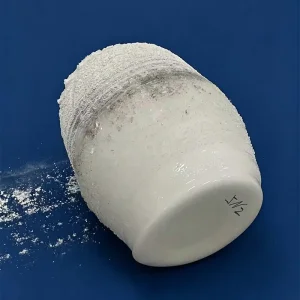





An in-depth metallurgical analysis of fused quartz protection tubes deployed in modern semiconductor, photovoltaic, and plasma chemical systems.
In modern industrial thermal engineering, temperature sensors such as noble-metal thermocouples (Types R, S, and B) and optical pyrometers operate in hostile, reactive, and extreme thermal conditions. Fused quartz protection tubes serve as the frontline physical and chemical barrier preventing thermocouple poisoning, devitrification breakdown, and catastrophic atmosphere contamination.
Global demand has shifted decisively from commodity commercial quartz to synthetic and high-purity natural silica glasses boasting total metallic impurity levels of less than 15-20 ppm, with ultra-high purity grades falling below 5 ppm. The relentless shrinkage of semiconductor node architectures (sub-3nm lithography, high-aspect vertical NAND, and advanced 3D packaging) coupled with large-format TOPCon and Perovskite-Silicon tandem solar cells imposes strict zero-tolerance thresholds for trace transition metals (iron, copper, nickel) and alkaline species (sodium, potassium, lithium). At elevated process temperatures above 1,000 °C, alkali elements act as nucleation catalysts, triggering fatal cristobalite crystallization that leads to structural micro-cracking and loss of vacuum hermeticity.
Moreover, the ultra-low thermal expansion coefficient of fused quartz (5.5 × 10⁻⁷ /K between 20 °C and 1,000 °C) gives these protection envelopes unmatched thermal shock resistance. Unlike sintered alumina or silicon carbide protection sleeves, a custom fused quartz protection tube can be repeatedly plunged into or extracted from molten silicon, fluxing salts, or induction zones without experiencing catastrophic spallation or fracture.
Located in Donghai County, Jiangsu—the premier silica hub on the Eurasian continent—Southeast Quartz maintains immediate proximity to primary raw quartz, enabling rapid raw material grading, seamless batch consistency, and unprecedented agility for custom orders.
Our workshop seamlessly merges traditional master-level glassblowing lathe techniques with cutting-edge 5-axis CNC diamond ultrasonic grinding. This enables wall-thickness tolerances down to ±0.05 mm, flanged end closures, and micron-level bore concentricity.
Every closed-end or flanged quartz protection tube undergoes rigorous vacuum bakeout followed by helium mass spectrometry leak detection. We guarantee an integral envelope hermeticity exceeding 1×10⁻⁹ mbar·l/s before shipment.
Engineered quartz protection sleeves tailored to exact chemical environments, thermal cycling parameters, and vacuum configurations.
Protects profiling thermocouples and optical sensors inside POCl₃, BBr₃, and SiH₄ gaseous environments. Prevents chemical attack on noble thermocouple sheaths while ensuring zero outgassing into sensitive wafer chambers.
Immersed or placed in proximity to molten silicon charges up to 1,420 °C. The ultra-low OH- content and optimized wall thickness deliver the mechanical stiffness required to avoid sagging under intense vacuum radiation.
With an optical transmission exceeding 92% across ultraviolet through near-infrared spectra (260 nm to 2,500 nm), custom fire-polished clear quartz tubes prevent pyrometer reading drift without signal attenuation.
Highly resistant to halogens, boiling acids (excluding hydrofluoric and hot phosphoric acid), and aggressive dry-etch gases, quartz tubes maintain structural integrity where standard metallic alloys quickly corrode.
How leading procurement teams in North America, Europe, and East Asia qualify quartzware manufacturing partners.
Purchasing managers and plant engineers frequently face unexpected equipment downtime due to premature quartz crystallization, vacuum breach, or micro-bubble bursting under thermal load. In order to mitigate operational risk, international supply chains are enforcing five critical procurement standards:
1. Purity Verification & Traceability: Tier-1 buyers require certified ICP-MS (Inductively Coupled Plasma Mass Spectrometry) assay documentation detailing parts-per-billion levels of trace metals. In particular, copper (Cu) and iron (Fe) must remain below detection thresholds to prevent deep-level traps in silicon wafers.
2. OH (Hydroxyl) Radical Control: Operating life in vacuum conditions depends directly on hydroxyl content. High-OH quartz reduces viscosity at temperatures above 1,000 °C, accelerating envelope sag and premature deformation. Our factory offers both electrically fused (low OH, <20 ppm) and plasma-refined configurations optimized for long-duration resistance to sagging.
3. Flame-Working Annealing Protocols: Uneven thermal gradients introduced during end-doming, flange fusing, or capillary welding create residual hoop stress. Comprehensive polariscope inspections and multi-stage computer-controlled annealing cycles ensure residual stress is reduced to below 5 MPa, effectively preventing microcracks under steep thermal ramps.
4. Strict Geometric Dimensional Tolerances: Modern automated load locks and cantilever systems require tighter tube straightness tolerances (camber <0.5 mm/m) and uniform wall thickness (±0.08 mm). These specs prevent binding and heat dissipation hot spots.
Immediate answers covering manufacturing specifications, material limits, and custom engineering parameters.
Complete your high-temperature process setup with our precision-engineered quartz boats, plates, furnace tubes, and oversized components.


