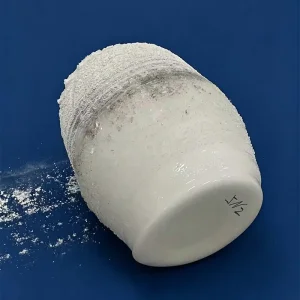
Direct-factory fused silica supply chain compliant with rigorous cleanroom thermal tolerances and low trace-metal ppm criteria.





Analysis of high-purity fused silica performance against emerging semiconductor wafer geometries and third-generation compound semiconductors.
Continuous thermal exposure above 1,150°C accelerates Phase Transformation from amorphous fused silica to crystalline cristobalite. Advanced thermal stress profiling and controlled hydroxyl (OH-) reduction extend furnace tube cycle life beyond standard 3,000-hour operational benchmarks.
Direct factory procurement reduces supply intermediary markups by 35-50%. Rigorous dimensional consistency eliminates process-line adjustments, wafer breakage risks during automated robotic transfers, and catastrophic vacuum failures inside diffusion furnace clusters.
Micro-doping regimes require metallic impurities (Fe, Cu, Ni, Na, K, Li) to remain strictly below 10-20 ppb thresholds. In-house plasma-assisted gas-phase purification ensures our wholesale quartzware prevents destructive counter-doping across sensitive P-N junction interfaces.
Comprehensive metallurgical and thermal breakdown to optimize strategic component selection across frontend operations.
| Performance Metric | Semiconductor Grade (SG-01) | Solar & Photovoltaic (PV-02) | Chemical & General Lab (GL-03) |
|---|---|---|---|
| Typical SiO₂ Content | ≥ 99.998% - 99.999% | ≥ 99.99% | ≥ 99.95% |
| Hydroxyl (OH⁻) Concentration | < 5 ppm (Vacuum Baked) | < 30 ppm | < 150 - 200 ppm |
| Maximum Continuous Temp | 1,180°C (Short peak 1,300°C) | 1,100°C | 1,050°C |
| Key Furnace Applications | LPCVD, Oxidation, Diffusion, RTP | POCl₃ Diffusion, PECVD Boats | Exhaust Traps, Acid Reaction Vessels |
| Surface Roughness (Ra) | Ra < 0.2 μm (Fire Polished / CNC) | Ra < 0.8 μm | Standard Fine Ground / Cut |
Eliminating transit-related failures and process variability with verified manufacturing controls from Donghai's premier quartz cluster.
Every welded manifold, bubbler junction, and oversized furnace flange undergoes high-vacuum helium mass-spectrometry leak evaluation to guarantee hermetic boundaries under 10⁻⁹ mbar·l/s conditions.
Quartz items are prone to transit micro-fractures. We utilize engineered dual-density foam suspensions, humidity-controlled barrier wraps, and certified IPPC export crating to ensure zero-defect delivery across North America, Europe, and Asia.
Every custom production run ships with verified dimensional CMM inspection certificates, trace-element spectrographic analyses, and precise annealing profiles to satisfy Fab quality management audits.
Continuous investment in diamond machining, plasma fusing, and micro-bubble purification platforms.
Expanding the processing envelope of our high-temperature vertical lathe forming platforms to manufacture seamless oversized quartz tubes up to 600mm OD without internal stresses or wall thickness variations.
Deployment of zero-bubble, extremely low hydroxyl synthetic quartz ingots suited for deep ultraviolet (DUV) laser optical windows, extreme CVD chambers, and high-frequency plasma etching baffles.
Direct machining of intricate microchannel carrier boats, slotted cassettes, and complex wafer pedestals directly from solidified plasma-fused billets, bypassing conventional flame-weld stress accumulation points.
Essential guidance covering thermal limits, chemical compatibility, drawings, and custom manufacturing constraints.
Complete structural and process consumable solutions direct from our Donghai facility.