Industrial Engineering Whitepaper

High-Quality Quartz Tubular Reactor Manufacturers & Product

Precision-engineered fused silica & synthetic quartz reactors for semiconductor epitaxial growth, ultra-high purity chemical vapor deposition (CVD), photothermal synthesis, and severe-service corrosive gas synthesis.

Primary Catalog

Certified Industrial Quartzware & Tubular Reactor Assemblies

Explore high-purity batch, continuous-flow, and oversized thermal process chambers manufactured under stringent ISO 9001:2015 process controls.


Wholesale Custom Quartz Furnace Tube
Wholesale Custom Quartz Furnace Tube for Laboratory & Industrial Use | China Suppliers & Factory Direct Supplier, Factory
View Specifications
Customized High-Purity Quartz Products
Wholesale Customized High-Purity Quartz Products from Top China Suppliers | Reliable Factory Solutions Product, Products
View Specifications
Oversized Fused Quartz Tube Factory
High-Quality High-Temperature Oversized Fused Quartz Tube Factory in China - Leading Suppliers for Photovoltaics & Semiconductors Supplier, Product
View Specifications
Heat Resistant Quartz Lamp Holders
Custom Heat Resistant Quartz Lamp Holders for Industrial Use - High-Purity Glass from China Suppliers and Factory Supplier, Factories
View Specifications
Custom Quartz Boats for Semiconductor
Custom High-Temperature Quartz Boats for Semiconductor Processes - China Suppliers & Factory Made with High-Purity Silica Manufacturers, Products
View Specifications
Wholesale Quartz Lamp Holder
Wholesale Heat Resistant Quartz Lamp Holder for Industrial Use - High-Quality Supplier from China Factory Suppliers, Factories
View Specifications
Fused Silica Quartz Plates
Wholesale High-Quality Fused Silica Quartz Plates from China Suppliers - Factory Direct Heat Resistant Solutions Manufacturers, Factory
View Specifications
High Purity Quartz Rods
High-Quality High Purity Quartz Rods from China - Fused Silica Rods for Semiconductor & Laboratory | Reliable Suppliers & Factory Manufacturer, Product
View Specifications
Materials Science

Thermodynamic Rigidity & Trace Impurity Dynamics

Understanding why fused silica tubular reactors remain the undisputed benchmark in high-vacuum, severe-thermal, and corrosive fluid environments.

≥ 99.999%
SiO₂ Purity Grade (5N)
1,250 °C
Continuous Service Temp
5.5 × 10⁻⁷/K
Ultra-Low CTE (α)
< 1×10⁻⁹
mbar·l/s He Leak Rate

Severe Thermal Shock Resistance

With an exceptionally low coefficient of thermal expansion (CTE) of approximately 5.5 × 10⁻⁷ K⁻¹ between 20°C and 1,000°C, high-grade fused quartz tubular reactors resist catastrophic failure under abrupt thermal excursions. Process chambers can undergo rapid gas quenching cycles without microscopic lattice cleavage or crack propagation.

Alkali & Transition Metal Mitigation

In advanced microelectronics and compound semiconductor epitaxial synthesis, mobile ion contamination—specifically Sodium (Na), Potassium (K), and Lithium (Li)—induces gate dielectric breakdown. Our refined quartz feedstocks undergo multi-stage plasma smelting, keeping cumulative alkali levels below 1.0 ppm and heavy metals (Fe, Cu, Ni) below 0.15 ppm.

Chemical Inertness & Acid Resistance

Except for concentrated hydrofluoric acid (HF) and hot phosphoric acid exceeding 300°C, quartz remains inert across all halogens (Cl₂, Br₂, F₂), aqua regia, and acidic gas-phase precursors. In high-temperature chlorinated silane cracking (e.g., Trichlorosilane SiHCl₃), fused quartz guarantees zero metallic leaching and negligible surface erosion.

Material Property Standard Fused Silica Tube High-Purity Semiconductor Grade (4N8) Synthetic Fused Quartz (6N Ultra-Pure)
SiO₂ Purity Concentration ≥ 99.9% ≥ 99.998% ≥ 99.9999%
Total Metallic Impurities (ppm) < 35 ppm < 8.0 ppm < 0.2 ppm
Hydroxyl [OH⁻] Content < 150 ppm < 30 ppm (Electrically Fused) < 5 ppm / > 1200 ppm (Grade Tunable)
Strain Point / Annealing Point 1,070 °C / 1,180 °C 1,120 °C / 1,215 °C 1,140 °C / 1,230 °C
Softening Point 1,670 °C 1,683 °C 1,730 °C
Primary Target Application General Industrial & Analytical Lab LPCVD, MOCVD, PV Silicon Diffusion Atomic Layer Deposition (ALD), EUV Optics
Industrial Clustering

China Factory Supply Chain Advantages & The Donghai Cluster

Unrivaled vertical integration from raw pegmatite quartz purification to plasma-assisted glass lathe forming, delivering structural precision, rapid lead times, and substantial cost advantages.

Geographic Raw Material Proximity

Donghai County in Jiangsu Province is recognized as the world's most dense manufacturing cluster for high-purity quartz goods. Direct physical access to refined SiO₂ ore beneficiation and chlorination refining plants guarantees an unbroken feedstock pipeline. Factory-level sourcing reduces raw ingot transportation delays, insulating global clients against international supply chain crunches.

Plasma Continuous Fusion & Automated Lathe Forming

Our facility integrates proprietary continuous vertical electric melting furnaces and large-bore CNC horizontal glass working lathes. By pairing automated hydrogen-oxygen flame torch controls with computerized wall-thickness ultrasonic sensors, we maintain circularity tolerances within ±0.15% across tubular diameters scaling up to 1,200 mm OD.

Full-Spectrum Machining: Cold to Hot Working

Unlike fragmented suppliers relying on third-party secondary machining, our Donghai facilities encompass ultra-high-speed diamond core drilling, 5-axis CNC grinding, flame-polishing, chemical pickling (high-purity HF passivation), and stress-relief electrical annealing kilns under a singular unified roof, drastically eliminating sub-tier markups.

Global Procurement

Global Enterprise Procurement Requirements & QA Verification

Technical metrics and strict metallurgical verifications mandated by tier-1 semiconductor fabs, chemical equipment EPCs, and research consortia.

Helium Mass Spectrometer Leak Detection

For vacuum-sealed reactors and toxic precursor distribution lines (such as SiH₄, PH₃, or Cl₂), microscopic micro-cracks in weld seams or bubbler intake joints are unacceptable. Every reactor tube is subjected to helium mass spectrometry sniffing and hood tests, strictly enforcing leak rates lower than 1 × 10⁻⁹ mbar·l/s under ultra-high vacuum conditions.

Geometric Precision & Ovality Control

Automated semiconductor horizontal furnaces and wafer transfer robots require rigid tolerances. Outer diameter (OD) deviation is held within ±0.5 mm, wall-thickness concentricity is managed within 8%, and overall axial camber is constrained below 0.8 mm per meter. Flange mating faces undergo optical flat testing to achieve Ra ≤ 0.4 μm roughness.

Hydroxyl (OH) Management & Thermal Viscosity

Excessive hydroxyl radicals weaken the internal silica-oxygen ring structures, reducing the glass viscosity and causing high-temperature sagging or deformation during long thermal cycles at 1,150°C+. Through controlled vacuum electrical fusion and post-forming dehydroxyl annealing protocols, [OH⁻] is tailored below 15 ppm for prolonged anti-sagging durability.

Real-World Deployment

Localized Industrial Application Scenarios

Where precision quartz tubular reactors perform continuous service across heavy industries, advanced electronics, and chemical synthesis.

LPCVD & PECVD Semiconductor Thin-Film Deposition

Employed as horizontal process tubes, liners, and inner reaction envelopes. Quartz tubular reactors provide an isolated, ultra-clean thermal zone for low-pressure chemical vapor deposition of polycrystalline silicon, silicon nitride (Si₃N₄), and silicon dioxide (SiO₂). Extreme chemical inertness prevents chlorine-induced etching during in-situ NF₃ chamber cleanings.

Photovoltaic N-Type TOPCon & HJT Diffusion Cells

Modern high-efficiency solar wafer fabrication demands massive, oversized quartz process tubes (OD 450 mm to 750 mm) capable of containing stacks of 210 mm and 182 mm wafers. Our tubes endure repetitive 24/7 phosphorus oxychloride (POCl₃) liquid source bubbling and boron tribromide (BBr₃) doping cycles at 850°C–1,050°C with zero spalling or devitrification.

High-Temperature Gas-Phase Flow Chemistry

Continuous flow chemistry requires visible reaction monitoring, high pressure thresholds, and comprehensive acid tolerance. Transparent fused silica tubular reactors allow direct visual and spectroscopic process tracking during hazardous organic chlorination, flash vacuum pyrolysis, and high-temperature methane reforming studies without degradation.

MOCVD & Third-Generation Semiconductor Epitaxy

For Gallium Nitride (GaN) and Silicon Carbide (SiC) power semiconductor wafer fabrication, quartz reaction bells and tubular containment cells deliver optimal radiative heating transmission. They ensure laminar gas dynamics over substrates, preventing parasitic deposition while remaining impervious to ammonia (NH₃) cracking at extreme temperatures.

Compliance & Support

Localized Global Support & Rigorous Compliance Assurance

Bridging global industrial requirements with local field service, regulatory certifications, and comprehensive batch tracking.

International Pressure & Vessel Directives

Where quartz tubular reactors operate under positive gas overpressures or deep vacuums, mechanical structural integrity is certified against the European Pressure Equipment Directive (PED 2014/68/EU) and ASME Boiler and Pressure Vessel Code (BPVC Section VIII, Div 1) design guidelines. Hydrostatic burst calculations accompany all high-pressure flanged assemblies.

SEMI Standards & Material Traceability

Components engineered for semiconductor tool integration strictly comply with SEMI S2 (Environmental, Health, and Safety Guidelines for Semiconductor Manufacturing Equipment) and SEMI F47 voltage sag immunity standards. Each reactor tube is laser-etched with an individual serial 2D DataMatrix code detailing ingot batch, torch operator, and inspection records.

Turnkey Export Logistics & Shock-Proof Packaging

International shipping of high-value, oversized quartz tubes requires specialized crating. We engineer bespoke moisture-barrier vacuum packaging nested inside heavy-duty ISPM 15 heat-treated plywood crates lined with 3D custom-molded high-density polyethylene (EPE) suspension foam, accompanied by calibrated 3-axis Drop-N-Tell and Tip-N-Tell transit shock indicators.

Technology Horizon

Macro Industry Trends & Next-Generation Reactor Evolution

Examining technological transitions in sub-3nm chip fabrication, wide-bandgap materials, and smart heating reactors.

Synthetic Chemical Vapor Fusion (SiCl₄ Precursors)

As semiconductor nodes cross below 3nm, standard naturally mined fused silica approaches its limit for crystal defect tolerance. The industry is actively pivoting to synthetic quartz manufactured through vapor-phase axial oxidation of high-purity silicon tetrachloride (SiCl₄). This material provides 6N purity (99.9999% SiO₂), virtually non-existent heavy metals, and zero bubble inclusion.

Micro-Structured & Continuous Microchannel Reactors

Process intensification in green chemical synthesis demands higher surface-area-to-volume ratios. Manufacturers are migrating from large-volume batch tubes to multichannel quartz micro-reactors with integrated internal mixing baffles, cooling jackets, and thermocouple wells laser-welded directly onto the primary tubular wall for instantaneous exothermic heat dissipation.

Surface Anti-Devitrification Coatings

Devitrification—the phase transformation of amorphous fused silica into crystalline cristobalite above 1,150°C—is accelerated by atmospheric particulate contamination. Next-generation quartz reactors feature plasma-deposited high-purity silicon oxynitride or proprietary micro-crystalline barrier layers, expanding service lifespans by up to 250% in demanding PV diffusion cycles.

Engineering Knowledge Base

Frequently Asked Questions (FAQ) for Process Engineers

Comprehensive technical answers concerning design tolerances, failure prevention, chemical exposure, and installation best practices.

What engineering parameters are required to generate an actionable manufacturing quote?
To provide an accurate technical and commercial proposal, our engineering team requires:
  • Geometric dimensions: Outer Diameter (OD), Inner Diameter (ID) or Wall Thickness (WT), Total Length (TL), and strict tolerance allowances (±mm).
  • End configuration details: Plain cut, ground square, fire-polished, hemispherical closed end, standard ground taper joints (e.g., ST 24/40), ISO-KF / NW vacuum flanges, or water-cooled stainless-steel quick-clamp flanges.
  • Thermal profile: Operating temperature continuous baseline, maximum peak excursion temp, ramping rates (°C/min), and dwell cycles.
  • Atmospheric composition: Vacuum level (Pa or mbar) or positive internal pressure (bar), active chemical gas precursors (e.g., SiH₄, HCl, NH₃), carrier gases (N₂, Ar, H₂), and acid wash regimens.
  • CAD Engineering drawings: 2D dimensioned drawing (PDF) along with 3D models (STEP / IGES format) for CNC toolpath verification.
What is the definitive temperature threshold for fused quartz tubular reactors?
High-purity transparent fused quartz exhibits a softening point around 1,683°C, an annealing point at approximately 1,215°C, and a strain point around 1,120°C. Under continuous steady-state industrial duty, 1,150°C is the recognized conservative maximum operating temperature. However, short-term transient heating profiles up to 1,250°C are entirely manageable provided the reactor tube is supported evenly against gravitational sagging and is thoroughly free from surface alkali metal contamination.
How can engineers prevent rapid devitrification during high-temperature thermal cycling?
Devitrification is primarily an impurity-catalyzed nucleation phenomenon. At operating temperatures above 1,000°C, minute traces of alkali or alkaline earth metals (such as Na⁺, K⁺, Ca²⁺, and Mg²⁺) present on the quartz exterior act as nucleation sites, transforming amorphous SiO₂ into crystalline cristobalite. To prevent premature devitrification:
  • Always handle quartzware with clean, powder-free lintless synthetic gloves. Never touch tube surfaces with bare hands.
  • Before commissioning, rinse the tube using an ultra-pure deionized (DI) water ultrasonic wash followed by a 5% to 10% high-purity Hydrofluoric (HF) acid strip for 2 to 3 minutes, then blow dry with filtered electronic-grade N₂.
  • Ensure heating furnace insulation elements (refractory alumina fibers) are free from volatile sodium salts that can deposit vapor-phase contaminants onto the tube at elevated temperatures.
Can fused quartz tubes be operated safely under internal positive pressure?
While quartz possesses extraordinary compressive strength (approx. 1,150 MPa), its ultimate tensile strength is substantially lower (approx. 50 MPa) and is sensitive to minute surface flaws or micro-scratches. Operating a quartz tubular reactor under positive gauge pressure requires calculating the internal burst pressure using Lamé's thick-cylinder formula or Barlow's equation:

P = (2 × S × t) / (D × SF)

Where S is tensile strength, t is wall thickness, D is diameter, and SF is a safety factor of at least 8 to 10. For positive pressures exceeding 1.5 to 2.0 bar, quartz tubes should be paired with external steel containment sleeves or built with heavy-wall profiles (≥8 mm to 12 mm WT).
What specific weld techniques are utilized for quartz-to-quartz and quartz-to-metal seals?
Quartz-to-quartz connections are flame-fused on automated glass lathes using synchronized oxy-hydrogen (H₂/O₂) or oxy-propane torches at flame temperatures exceeding 2,000°C. Following joining, the entire heat-affected zone (HAZ) undergoes full stress-relief annealing inside an electric kiln to eliminate frozen-in photoelastic fringe stresses. For quartz-to-metal interconnects (e.g., transition to stainless steel vacuum lines), graded glass transition seals (Dumet/Kovar) or elastomer O-ring compression flanges (Viton, Kalrez, or Chemraz) with integrated liquid-cooling jackets are standard practice to accommodate CTE mismatches.
How does hydroxyl [OH⁻] content directly affect the structural longevity of the reactor?
The hydroxyl group [OH⁻] is incorporated into the silica glass network by breaking a bridging oxygen bond: Si—O—Si + H₂O ↔ 2 Si—OH. This cleavage terminates the continuous covalent tetrahedral network, directly lowering the glass viscosity at elevated temperatures. High-OH tubes (>200 ppm) begin sagging, bulging, or distorting at temperatures 50°C to 80°C lower than ultra-low-OH electrically melted tubes (<10 ppm). For long-span horizontal furnace reactors, low-OH quartz is strictly specified.
What is your process verification methodology prior to international shipment?
Our multi-tier quality control protocol encompasses:
  • Optical Visual & Bubble Classification: In accordance with DIN 58927 / ISO 10110 standards to guarantee zero structural inclusions, crystallization cords, or air lines in critical reaction zones.
  • Dimensional Metrology: Laser micrometers verify OD/ID runout, and ultrasonic wall gauge scanners confirm uniform wall thickness along the full axial profile.
  • Strain Polarization Analysis: Optical polariscopes evaluate residual internal stress birefringence across welds and flared joint zones.
  • Mass Spectrometry Helium Leak Audit: Vacuum testing to ensure leak rates do not exceed 1 × 10⁻⁹ mbar·l/s.
How do oversized quartz tubes (OD > 400 mm) maintain dimensional concentricity?
Oversized fused quartz tubes are manufactured using advanced vertical continuous drawing or rotary cylinder thermal casting machines. The downward gravitational pull combined with internal inert gas backpressure control maintains accurate wall thickness. Multi-axis CNC carbon graphite stabilizing rollers prevent gravitational droop during the plastic phase, maintaining ovality within ±1.2% even on large-scale formats exceeding 600 mm in diameter.
What cleaning solutions are recommended for removing baked-on chemical reaction residues?
For organic or polymeric residues, piranha solution (3:1 concentrated H₂SO₄ to 30% H₂O₂) or boiling aqua regia effectively oxidizes carbon deposits without etching the quartz surface. For metal oxides or mineral salts, a 10% hydrochloric acid (HCl) or 15% nitric acid (HNO₃) soak is recommended. If silicon or silica deposits must be stripped, a dilute 5% to 7% HF solution can be used with extreme caution, taking note that HF dissolves the underlying quartz substrate at a rate of approximately 0.5 to 1.5 μm per minute at 20°C.
What are standard production lead times and sample fabrication turnaround for custom geometries?
Standard stocked catalog tubes and raw drawn hollows are dispatched within 3 to 5 business days. Bespoke engineered reactors requiring custom CNC flange grinding, specialized side-arm welding, and multi-port capillary configurations typically require 2 to 3 weeks for prototype tooling and pilot fabrication. High-volume repeat manufacturing runs for tier-1 tool OEMs are managed through customized safety-stock buffer arrangements in our Donghai warehouse.
Product Portfolio

Specialized Quartz Reactor Consumables & Optical Components

Complementary precision quartz boats, heavy-duty plates, machined rings, source bubblers, and optical support components.

High Purity Quartz Rods Suppliers
High-Quality High Purity Quartz Rods from China Suppliers | Fused Silica Rod Factory for Semiconductors & Lab Applications Suppliers, Product
View Specifications
Custom Quartz Products Semiconductor
Custom Customized Quartz Products from China Suppliers - High-Purity Quartz Factory for Semiconductor and Optical Applications Manufacturer, Products
View Specifications
Fused Silica Quartz Plate Factory
High-Quality High-Quality Fused Silica Quartz Plate from China Suppliers | Heat Resistant Factory Product Factories, Product
View Specifications
Custom High-Purity Quartzware
Wholesale Customized High-Purity Quartz Products from China - Leading Suppliers and Factory for Semiconductor and Scientific Applications Suppliers, Factories
View Specifications
Custom High Purity Quartz Rod
Custom High Purity Quartz Rod / Fused Silica Rod for Semiconductor & Laboratory - China Suppliers & Factory Suppliers, Factories
View Specifications
Industrial Quartz Lamp Holders
Custom Heat Resistant Quartz Lamp Holders for Industrial Use – China Suppliers and Factory Supplier, Factories
View Specifications
Quartz Glass Insulation Rings
Wholesale High-Temperature Resistant Quartz Glass Rings - Custom Insulation Solutions from China Suppliers and Factory Supplier, Product
View Specifications
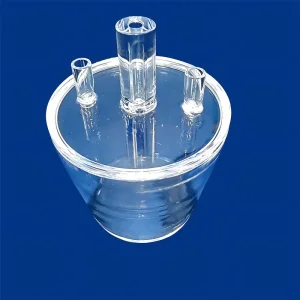
3-port Quartz Bubbler Source Bottle
High-Quality 3-port Quartz Bubbler / Quartz Source Bottle / Wet Oxygen Bottle Factory, Products
View Specifications
Direct Factory Engineering

Initiate Your Custom Quartz Tubular Reactor Project

Send your DWG, STEP, or PDF engineering drawings directly to our technical desk. Our Senior Glassblowing Technologists and Thermal Engineers review all design tolerances, thermal boundary calculations, and flange seal matches within 24 hours.

Submit Engineering Drawing




