Manufactured using plasma-fused vitreous silica and nano-polishing technologies to achieve microscopic Ra roughness standards below 0.05 μm.





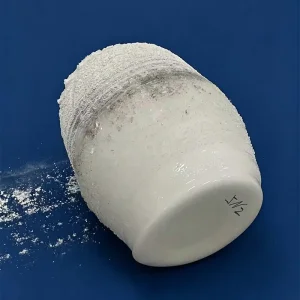
Bridging the architectural demand for zero-porosity, high-luster quartz worktops with industrial-grade chemical-mechanical planarization (CMP).
Engineered quartz worktops comprise 90%–93% natural crystalline quartz bonded with high-grade polymer resins. Achieving a micro-polished mirror finish demands multi-stage diamond polishing pads from 50 grit down to 3000 grit, followed by colloidal silica buffs that eliminate micro-fissures without scorching resin matrices.
In high-purity quartzware manufacturing (semiconductors, optics, photovoltaics), polishing extends beyond aesthetics. Ultra-pure fused quartz plates, tubes, and wafer boats undergo abrasive slurry polishing to lower surface defects, preventing accelerated devitrification when thermal cycling hits 1,100 °C to 1,250 °C.
Modern polishing manufacturers operate under rigorous environmental mandates. Slurry water treatment systems must recycle up to 98% of process effluent while removing sub-micron suspended silica solids. Concurrently, zero-VOC polishing compounds have become mandatory across North American and EU fabrication facilities.
How surface finishing dynamics adapt to critical cleanroom processes, specialized wet laboratories, and high-wear architectural hubs.
Wafer diffusion lines and atomic layer deposition (ALD) chambers rely on flawless fused quartz surfaces. Polishing mitigates boundary-layer micro-roughness in quartz boats and tubes, reducing particle entrapment and ensuring vacuum integrity during corrosive gas flushes (HCl, NF3).
In analytical wet laboratories and healthcare facilities, quartz worktop polishing seals micro-cavities against acid, base, and solvent ingress. Diamond grit progression followed by cerium oxide slurry seals quartz matrices against biological contamination and high-temperature thermal shock.
Optical quartz plates and observation windows demand double-sided precision CMP. Removing internal micro-stresses and reaching ultra-low roughness (Ra < 1 nm) maximizes transmission across spectral ranges from deep UV (190 nm) through mid-range infrared (2500 nm).
Unmatched raw material access, concentrated engineering clusters, and end-to-end processing efficiency.
Situated in Donghai County, Jiangsu—the premier silica processing hub of Eurasia—our factory maintains direct, uninterrupted access to ultra-pure crystalline silica sand and ingots. This eliminates upstream supply volatility and ensures complete chemical traceability across all batch lots.
From initial raw quartz purification and plasma arc melting to 5-axis CNC diamond profiling and chemical-mechanical polishing, Southeast Quartz eliminates intermediary handling fees and bottlenecks, achieving prototype turnaround times 40% faster than Western peers.
Every polished run undergoes mass-spectrometry helium leak detection, internal strain polariscopic inspection, and laser interferometry. Our facilities run 24/7 QA monitoring that guarantees dimensional accuracy within ±0.01 mm for custom CNC fabrications.
Anticipating the precision requirements of next-generation semiconductors, green hydrogen reactors, and ultra-durable surfaces.
Adoption of resin-bonded diamond abrasives with integrated liquid cooling to eliminate micro-cracking and subsurface damage on complex worktop bevels and oversized fused quartz reactor walls.
Deployment of zero-VOC polishing compounds and advanced closed-loop flocculation filtration systems. Achieving zero slurry effluent emissions while boosting surface gloss rates by 25%.
Implementing magnetically controlled abrasive fluids for corrective polishing of freeform quartz optical sheets and semiconductor carriers, targeting deterministic sub-nanometer surface roughness (Ra < 0.2 nm).
Seamless international trade backed by localized logistics corridors, standard certifications, and protective packaging.
Our quartzware and surface polishing formulations comply strictly with RoHS, REACH, and NSF-51 standards for food zone application, alongside ISO 9001:2015 quality management benchmarks for dimensional validation.
Every fragile fused quartz instrument and polished surface is encased in shock-absorbing EPE foam, sealed against maritime humidity, and crated in fumigated ISPM-15 plywood boxes engineered to withstand multi-modal logistics.
Our engineering desk reviews CAD drawings (.DWG, .STEP, .PDF) across all international time zones. Custom quotes, thermal suitability analyses, and manufacturability assessments are dispatched within 24 operational hours.
In-depth technical answers addressing tolerance requirements, surface chemistry, and procurement parameters.
Mechanical polishing utilizes progressively finer diamond abrasive grits and chemical-mechanical slurries (cerium oxide or colloidal silica) to physically shear surface asperities while maintaining flat geometries and sharp edges. Flame polishing subjects the surface to a controlled oxy-hydrogen burner flame, causing the silica skin to melt and reflow. Flame polishing produces excellent transparent luster and seals surface micro-fissures, but can introduce minor edge radius rounding and optical distortion if precision flat tolerances are needed.
No. Engineered quartz consists of approximately 90%–93% natural crystalline quartz bonded with 7%–10% polyester or acrylic polymer resins. Traditional stone polishing techniques using dry diamond pads or aggressive high-friction RPMs generate localized heat exceeding 150 °C, which degrades and scorches the resin polymer, leaving irreversible dull gray halos. Specialized wet diamond resin pads, water cooling, and specialized low-temperature colloidal compounds are strictly required.
To deliver an authoritative manufacturability assessment, our team requires: (1) Dimensional geometries including outer diameter (OD), inner diameter (ID) or wall thickness, length, and geometric tolerances; (2) End configurations (open, sealed, ground taper joints, or welded flanges); (3) Material grade specifications (transparent fused quartz vs. opaque silica); (4) Operating environments (peak temperature, thermal cycle speeds, vacuum levels, or chemical exposures); and (5) Technical drawings in PDF, DWG, or STEP format.
Hot-working and intense grinding introduce residual mechanical stresses within the amorphous vitreous silica network. When subjected to operational temperatures exceeding 1,000 °C, these stressed zones act as nucleation sites for cristobalite crystalline transformation (devitrification), causing the glass to turn cloudy and brittle. Our factory subjects every part to program-controlled electric annealing kilns up to 1,150 °C followed by controlled cooling to relieve strain, maximizing operating lifespans.
All finished quartz items pass through a comprehensive triple-check protocol: (1) Helium mass-spectrometry leak detection to verify sealed vacuum integrity; (2) Hydrostatic pressure testing for vessels and oversized tubes; and (3) Optical cross-polarization inspection to ensure zero residual stress birefringence. Dimensions are verified against customer blueprint specifications with calibrated laser coordinate gauges.
Explore our export-ready products manufactured directly from Donghai, Jiangsu with global fulfillment.

