ISO 9001 Certified Donghai Supply Chain

Wholesale Thermal Shock Resistant Quartz Supplier & Suppliers

Precision-Engineered Ultra-High Purity Fused Silica Glassware for Semiconductor Thermal Diffusion, Epitaxy, Photovoltaic Crystallization, and High-Stress Laboratory Environments.

Direct Factory Catalog

High-Purity Quartz Stock & Custom Fabrications

Engineered with near-zero thermal expansion (5.5 × 10⁻⁷ /°C) to withstand direct water quenching from 1100°C without microfracturing.


High Purity Quartz Rods

High-Quality High Purity Quartz Rods from China - Fused Silica Rods for Semiconductor & Laboratory

View Product Details
Quartz Lamp Holder

Wholesale High-Temperature Resistant Quartz Lamp Holder for Industrial Use - China Suppliers

View Product Details
Quartz Glass Ring

High-Quality Custom Transparent Quartz Glass Ring - High Temperature Insulation Ring

View Product Details
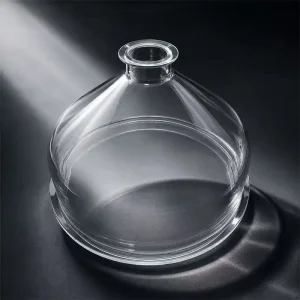
Quartz Bell Jar

Wholesale Quartz Bell Jar with Excellent Thermal Stability Factories, Products

View Product Details
Fused Silica Quartz Plates

Wholesale China Suppliers of Fused Silica Quartz Plates - High Temperature Resistant Quartz Glass

View Product Details
Custom Quartz Instruments

Custom Customized Quartz Products from China Suppliers - High-Purity Quartz Instruments

View Product Details
Quartz Boats

High-Quality High-Temperature Quartz Boats from China | Reliable Suppliers & Factory

View Product Details
Purity Quartz Ware

High-Quality Customized Quartz Products from China Suppliers - High-Purity Quartz Instruments

View Product Details
Engineering White Paper

Thermal Shock Resistance: The Physics of Fused Silica Performance

Why amorphous SiO₂ matrices outperform technical borosilicates and alumina ceramics under severe temperature gradients.

Ultra-Low Thermal Expansion Coefficient (CTE)

The primary factor delivering unmatched thermal shock resilience is the extremely low coefficient of thermal expansion, typically recorded at 5.5 × 10⁻⁷ /°C between 20°C and 1000°C. Compared to borosilicate glass (33 × 10⁻⁷ /°C), fused quartz experiences virtually zero volumetric variance across intense heating cycles.

5.5 × 10⁻⁷
Linear Expansion (20°C to 1000°C)

Structural Integrity & Annealing Control

Thermal failure occurs when internal thermal gradient stress exceeds ultimate tensile limits. We implement proprietary electric and hydrogen-oxygen flame stress-relief annealing profiles, dropping residual birefringence below 5 nm/cm, preventing catastrophic cracking during rapid quenching from 1150°C into chilled media.

< 5 nm/cm
Maximum Residual Strain Birefringence

High Viscosity & Softening Thresholds

Engineered transparent fused silica maintains exceptional structural rigidity under sustained high thermal loads. With a strain point of 1070°C, an annealing point of 1180°C, and a softening point exceeding 1683°C, our wholesale quartz components prevent sag deformation in horizontal low-pressure chemical vapor deposition (LPCVD) furnaces.

1683°C
Softening Point Threshold
Empirical Verification

Material Performance Benchmark Matrix

A side-by-side technical evaluation of industrial thermal substrates under thermodynamic stress.

Material Classification SiO₂ Purity (%) CTE (× 10⁻⁷ /°C) Continuous Service Temp Thermal Shock Delta (ΔT Quench) Helium Leak Rate (mbar·l/s)
Southeast High-Purity Fused Quartz ≥ 99.995% 5.5 1100°C (Short peak: 1250°C) Δ1100°C to 20°C Water Quench < 1.0 × 10⁻⁹
Standard Technical Borosilicate 80.5% 32.5 450°C Δ150°C < 1.0 × 10⁻⁶
Transparent Polycrystalline Alumina N/A (>99.9% Al₂O₃) 80.0 1500°C Δ200°C < 5.0 × 10⁻⁸
Optical Crown Glass (BK7) 69.0% 71.0 400°C Δ100°C Unrated for Vacuum
Enterprise Procurement

Localized Support & International Compliance Assurance

Mitigating global operational risks through cross-border metallurgical certifications and rigorous export standards.

Full Regulatory Adherence (RoHS, REACH, TSCA)

Every delivery includes exhaustive lot-specific trace element analysis. We guarantee our fused silica is free from restricted heavy metals, hazardous volatile organics, and SVHC candidates, ensuring seamless qualification within European, North American, and East Asian cleanroom protocols.

Helium Mass-Spectrometry Leak Testing

To eliminate process contamination in high-vacuum or corrosive chemical atmospheres, our critical welded components—such as quartz bell jars, diffusion reactor tubes, and gas bubblers—undergo automated helium sniffer testing to certify seal integrity beyond 1.0 × 10⁻⁹ mbar·l/s.

Custom Engineered Cushioning & Logistics

Long quartz tubes and brittle wafer carriers encounter complex vibration risks during multimodal freight. We engineer custom-molded high-density EVA suspended packaging, vacuum-sealed PE dust barriers, and rigid export-grade ISPM-15 treated wooden crating to guarantee zero transit damage.

Manufacturing Ecosystem

China Factory Hub: Donghai Integrated Supply Chain Advantages

Harnessing the world's most concentrated quartz refining cluster in Donghai, Jiangsu Province.

Unbroken Raw Material Upstream

Donghai processes over 70% of China's high-purity quartz raw crystal. Our factory enjoys immediate pipeline access to IOTA-equivalent purified feedstock, minimizing spot pricing volatility and securing reliable supply.

Dual Hot-Flame & CNC Machining

We combine veteran artisan glassblowing (precision torch lathe welding, fire-polishing, and bell-jar shaping) with 5-axis ultrasonic CNC diamond cold grinding down to ±0.02 mm tolerance limits.

Scalable Rapid Prototyping

Whether you require a single bespoke plasma-fused reactor tube or 50,000 standard furnace sleeves per month, our agile tooling setup supports pilot run sign-offs within 7 business days from CAD/STEP review.

Economies of Scale & Direct Pricing

Factory-direct delivery eliminates tiered trading markups. Sourcing from our manufacturing lines yields a sustainable 25% to 40% margin benefit across high-volume scheduled replacement programs.

Targeted Applications

Demanding Industrial & Laboratory Environments

Engineered for mission-critical processes where mechanical failure creates downtime or product contamination.

Semiconductor Wafer Processing

Critical wafer batches depend on our high-temperature quartz boats and furnace process tubes inside LPCVD, oxidation, and rapid thermal processing (RTP) equipment. Low alkali content (Na < 0.5 ppm, K < 0.5 ppm) prevents trace contamination during silicon lattice formation.

Photovoltaic Ingot & Cell Growth

Crucial for next-generation TOPCon and HJT solar cells, our large-diameter thermal-shock quartz furnace tubes endure rapid insertion cycles and extreme thermal fluxes without thermal fatigue, minimizing scheduled maintenance downtime.

Chemical Synthesis & Plasma Windows

Highly resistant to hot concentrated acids (except hydrofluoric and phosphoric above 300°C), our high-purity quartz observation windows, reaction beakers, and microchannel flow chips withstand volatile exothermic thermal shocks.

Industry Trajectory

Future Trends Shaping the Quartzware Market

Material developments driving the next generation of industrial high-temperature processes.

Synthetic Fused Silica for <5nm Fabrication

As semiconductor process nodes shrink below 3nm, standard natural quartz displays limits under intense extreme ultraviolet (EUV) light. We are expanding synthetic quartz production using chemical vapor deposition (SiCl₄), reducing metallic impurities below 0.1 ppb.

AI-Monitored Automated Flame Polishing

Manual glass fabrication introduces minor dimensional variation. We integrate computer-vision torch arms that monitor surface temperature and melt pooling via infrared thermography, maintaining wall thickness uniformity within ±0.05 mm across oversized tubes.

Anti-Devitrification Surface Treatments

Devitrification into cristobalite at temperatures above 1150°C remains the primary cause of quartz degradation. Our proprietary chemical passivations slow alkali migration into the silica lattice, extending furnace tube service life by up to 40%.

Enterprise Procurement

Specialized Quartz Components & Custom Tubes

Explore custom furnace tubes, specialized holders, and precision-cut quartz plates engineered to technical drawings.

Custom Quartz Products

Custom Customized Quartz Products from China Suppliers - High-Purity Quartz Instruments

View Product Details
High Purity Quartz Boats

High-Quality Premium Quartz Boats for High-Temperature Processes - High-Purity Fused Silica

View Product Details
Heat Resistant Quartz Plates

Custom High-Quality Fused Silica Quartz Plates - Heat Resistant from Trusted China Suppliers

View Product Details
Furnace Tubes

Wholesale Custom Size High-Purity Quartz Furnace Tubes for Laboratory & Industrial Use

View Product Details
Quartz Lamp Holders

Wholesale High-Temperature Resistant Quartz Lamp Holders from China Suppliers | Factory Direct

View Product Details
Custom Quartz Furnace Tube

Custom Custom Size Quartz Furnace Tube for Laboratory & Industrial Use - High-Purity

View Product Details
Semiconductor Quartz Boats

Custom Premium Quartz Boats from China Suppliers - High-Purity Quartz for Semiconductor & PV

View Product Details
Fused Silica Quartz Plate

High-Quality China Suppliers Factory Fused Silica Quartz Plate - Heat Resistant, High Purity

View Product Details
Procurement Knowledge Base

Frequently Asked Questions for Engineers & Buyers

Essential guidance on thermal shock, material purity, machining tolerances, and export shipping.

Why does fused quartz demonstrate superior thermal shock resistance compared to borosilicate glass?
The decisive mechanism lies in the coefficient of thermal expansion (CTE). Fused quartz features an exceptionally low CTE of approximately 5.5 × 10⁻⁷ /°C from room temperature to 1000°C—roughly 1/6th that of borosilicate glass (33 × 10⁻⁷ /°C). When exposed to rapid temperature changes, the minimal volume change creates very little internal differential stress, allowing components to survive direct 1100°C-to-water quenching cycles that shatter other glasses.
What technical parameters must be provided for custom quartzware production quotes?
To deliver an exact technical quote within 24 hours, our engineering department requires: (1) Dimensional drawings (PDF, DWG, or STEP format) outlining inner/outer diameters, wall thickness, and tolerances; (2) Required purity grade (e.g., standard industrial fused quartz vs. semiconductor-grade JGS1/JGS2); (3) Working temperature ranges and atmospheric exposure (vacuum, corrosive gases, acid vapors); (4) Sealing and end-form details (ground joints, CF flanges, optical windows); and (5) Batch order volumes.
What is the safe operating temperature limit for transparent fused quartz components?
Transparent fused quartz operates continuously at approximately 1100°C and supports brief operating peaks up to 1250°C–1300°C without mechanical sagging. The material possesses a softening point near 1683°C. To prevent accelerated devitrification (transformation from amorphous silica to crystalline cristobalite) above 1050°C, surfaces must be kept free of fingerprints, grease, and ambient alkali salts (Na, K, Ca) using clean handling protocols.
How do you prevent fragile quartzware from breaking during ocean and air transit?
We follow an engineered multi-tier packaging system: components are dust-sealed in cleanroom polyethylene bags, nested within custom CNC-cut high-density expanded polyethylene (EPE) or EVA foam cavities, boxed within inner structural cartons, and secured inside export-grade, heat-treated plywood crates fitted with shock-watch and tilt indicators. This protocol yields a 99.85% zero-damage arrival rate across our worldwide shipments.
Can Southeast Quartz manufacture custom oversized furnace tubes and non-standard shapes?
Yes. Our workshop combines heavy-duty glassblowing lathes with 5-axis CNC ultrasonic cold-machining. We fabricate oversized quartz process tubes up to 600 mm in diameter, long-run tubes exceeding 3500 mm, complex quartz boats, plasma bubblers, bell jars, and slotted carrier baskets based on your equipment specifications.
What factory-gate quality assurance protocols are conducted prior to release?
Every production batch undergoes a four-stage quality verification protocol: (1) Laser micrometer dimensional verification against approved drawings; (2) Polariscope optical strain evaluation to confirm residual stress below 5 nm/cm; (3) Helium mass-spectrometry leak detection for sealed and pressure-bearing components; and (4) ICP-MS trace-element testing to confirm purity levels (99.99%–99.999% SiO₂). Full inspection reports accompany every shipment.