High-purity raw ingots, oversized furnace tubes, and CNC-tailored fused silica hardware ready for swift deployment across Tangier Med, Casablanca, and Jorf Lasfar industrial hubs.



The Kingdom of Morocco has rapidly emerged as a continental manufacturing powerhouse and a transatlantic bridge for renewable energy, aerospace engineering, and high-performance chemical processing. Across major development poles—from the Tanger Automotive City and Casablanca Technopark to the massive industrial processing complex of Jorf Lasfar (OCP Group)—the requirement for mission-critical refractory materials has grown exponentially.
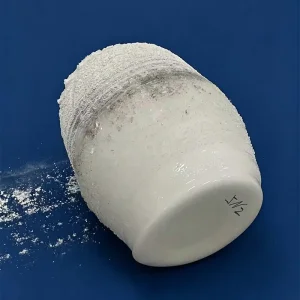
Plasma-fused quartz ingots represent the apex of synthetic glass metallurgy. By harnessing ultra-clean electrodeless RF and DC plasma torches exceeding 10,000°C, natural crystal sands and high-purity synthetic SiO2 are melted without electrode graphite contamination. For Morocco’s expansive Concentrated Solar Power (CSP) facilities at Noor Ouarzazate, high-flux photoreactors, green hydrogen electrolysis testbeds, and acid processing circuits, our plasma-fused ingots supply the chemical inertness, high softening point (1,683°C), and trace-metal purity necessary for uncompromising durability.
Consult Moroccan Technical RepresentativeA detailed comparison highlighting physical, optical, and structural variances vital for high-temperature engineering and vacuum process chamber fabrications.
| Material Property / Metric | Plasma-Fused Quartz Ingot (PFQ Series) | Electric Arc / Resistance Fused Quartz | Flame Hydrolysis Fused Silica |
|---|---|---|---|
| Fusion Heat Source | Thermal Argon/Oxygen RF Induction Plasma (>10,000°C) | Graphite Electrodes / Tungsten Resistors (~2,200°C) | H₂ / O₂ Combustion Flame Burners (~2,000°C) |
| Hydroxyl (OH⁻) Content | Ultra-Low (< 5 ppm) or Custom Controlled | Low (~ 20–30 ppm) | Very High (800 – 1,200 ppm) |
| Bubble & Inclusion Index | Class 0 (Virtually bubble-free, DIN 58927) | Class 2–3 (Micro-bubbles present) | Class 0–1 (Low bubble density) |
| 1400 nm / 2730 nm IR Absorption | Negligible absorption bands (Peak IR transmittance) | Moderate absorption | Severe OH-induced absorption dip |
| Softening Point (Log η = 7.6) | 1,683°C – 1,710°C (Exceptional sag resistance) | 1,630°C – 1,670°C | 1,580°C – 1,610°C (Earlier thermal deformation) |
| Trace Alkali Impurities (Li, Na, K) | < 0.05 ppm combined (Extends devitrification threshold) | > 0.8 ppm (Promotes early cristobalite growth) | < 0.1 ppm |
| Primary Industrial Suitability | CSP Receiver Windows, Semiconductor Flanges, Laser Optics | General Furnace Tubes, Muffle Inserts | UV Lithography Lenses, Excimer Windows |
Thermal expansion coefficient of 5.5 × 10⁻⁷ /K guarantees remarkable dimensional stability. Quartz shapes machined from these ingots can withstand instantaneous water quenching from 1,100°C to ambient temperatures without cracking.
Strict vertical rotary feeding during plasma boule growth eliminates structural striae and grain boundaries, ensuring 3D refractive index consistency (Δn ≤ 2 × 10⁻⁶) for critical Moroccan optical sorting and laser processing systems.
Chemically unreactive against all industrial acids (except HF and hot H₃PO₄ above 300°C). In Morocco's massive phosphate extraction and sulfuric acid synthesis networks, plasma-fused components deliver 5× longer lifecycle performance.
From renewable mega-projects in the Sahara to high-precision manufacturing zones along the Atlantic-Mediterranean corridor.
Morocco leads Africa in solar thermal capacity. In high-temperature molten salt tower receivers and parabolic troughs, secondary optics and protection tubes undergo severe flux density and thermal cycles. Our plasma-fused quartz ingots provide low OH-absorption, eliminating thermal stress hotspots, preventing solarization, and preserving transmissivity across UV-Vis-Near IR bands (200 nm to 2,500 nm).
Processing world-scale phosphate deposits at Jorf Lasfar and Safi demands equipment resistant to severe chemical attack. Precision CNC-machined quartz injectors, sight glasses, and thermowell sheaths produced from our plasma ingots outshine standard borosilicate glasses, remaining immune to gaseous SO₂, NOx, and concentrated reagent vapors up to extreme temperatures.
As Morocco builds microelectronics assembly and testing capabilities alongside localized silicon solar cell plants, plasma-fused quartz serves as the mother stock for diffusion boats, wafer pedestals, batch carriers, and CVD showerheads. The absence of alkali ions ensures zero parasitic contamination of wafer dopant layers.
Morocco acts as a pivotal digital gateway linking West Africa with Europe via undersea fiber lines. Our plasma ingots exhibit homogeneous refractive index profiles and minimal scattering loss, meeting optical fiber preform cladding and handle-rod requirements for next-generation telecommunication lines.
Our engineering trajectory aligns with industrial carbon neutrality, next-generation N-type TOPCon/Perovskite solar tandem architectures, and sub-nanometer semiconductor manufacturing requirements.
Scaling boule fusion diameters to Ø650 mm with automated plasma torches to supply oversized single-piece diffusion flanges for Morocco's PV wafer supply chains.
Transitioning plasma gas ionization from hydrocarbon-coupled systems to pure green-hydrogen RF plasma, eliminating carbon particulate capture at ppm levels.
Direct chemical vapor condensation (CVC) of chlorosilanes directly into high-density plasma ingots with total metallic impurities below 10 parts-per-billion (ppb).
Extreme laser-induced damage threshold (LIDT > 50 J/cm² at 355 nm) fused quartz substrates engineered for aerospace radar windows and advanced lithography mirrors.
Navigating international trade lanes between China’s premier quartz hub in Donghai and Morocco is streamlined by our established logistics architecture. We support maritime freight via Tanger Med Port and airfreight into Mohammed V International Airport (Casablanca) under Incoterms (EXW, FOB, CIF, DDP).
Density: 2.20 ± 0.01 g/cm³
Mohs Hardness: 5.5 – 6.5
Dielectric Constant: 3.75 (at 1 MHz, 20°C)
Annealing Point: 1,210°C ± 15°C
Strain Point: 1,120°C ± 15°C
Thermal Conductivity: 1.4 W/(m·K) at 20°C
Refractive Index (Nd): 1.4585
Compressive Strength: 1,150 MPa
In-depth technical answers addressing material selection, fabrication tolerances, and operational parameters.
High-temperature furnace vessels, precision CNC plates, thermal insulation rings, and specialized scientific quartz instruments.



