Engineered to accommodate high thermal gradients, strict vacuum integrity, and inert atmospheres across Victorian university laboratories, advanced ceramic manufacturers, and clean-tech pilot facilities.

Custom Precision Quartz Furnace Tube for Melbourne R&D & High-Temp Processes

High-Purity Slotted Quartz Wafer Boat for Melbourne Semiconductor & PV Research

Optical-Grade Fused Silica Quartz Observation Plates for Victorian High-Temp Viewports
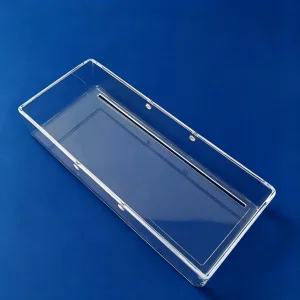
Heavy-Wall Ultrasonic Quartz Etch & Cleaning Tank for Melbourne Nano-Fab Wet Benches
The Greater Melbourne industrial corridor—anchored by the Clayton Innovation Precinct, Monash University, RMIT Advanced Manufacturing Precinct, the CSIRO Energy and Mineral Resources divisions, and the Melbourne Centre for Nanofabrication (MCN)—has emerged as one of the southern hemisphere's premier hubs for advanced material synthesis, battery cathode calcination, and photonics prototyping. Operating within these rigorous sectors requires high-temperature equipment that provides absolute chemical inertness, trace elemental purity, and mechanical stability under intense cyclic thermal loads.
Quartz furnace tubes constitute the core barrier envelope in high-temperature horizontal tube furnaces, vertical LPCVD reactors, and rotary calciners. In Melbourne's research and industrial ecosystems, where laboratories synthesize novel metal alloys, solid-state battery electrolytes, graphene monolayers, and solar perovskite substrates, standard borosilicate or aluminosilicate glasses fail rapidly due to lower strain points and ionic migration. Our fused quartz solutions address the operational stress profiles demanded by Victorian researchers and plant engineers.
Stable non-sagging performance across extended multi-day thermal holding cycles.
Withstands peak excursion temperatures during rapid annealing and flash pyrolysis.
Extremely low CTE provides virtual immunity to catastrophic thermal shock cracking.
Prevents heavy metal and alkali ion contamination into active wafer or battery substrates.
Whether providing replacement process tubes for standard laboratory furnaces (such as Carbolite Gero, Nabertherm, or Across International units widely deployed across Australian universities) or manufacturing customized 300 mm+ oversized fused silica liners for pilot-scale chemical vapor deposition, we ensure Melbourne manufacturing facilities minimize downtime through direct-from-manufacturer sourcing.
Thermal processing engineers often struggle with premature furnace tube collapse, cloudy surface degradation (devitrification), and vacuum leakage at flanged interfaces. In industrial furnaces operating over 1,000 °C, quartz does not melt abruptly; rather, its viscosity decreases exponentially until reaching its softening point around 1,683 °C. Under horizontal cantilever loads, poor-quality quartz tubes suffer from mechanical creep, resulting in ovality distortion that jams wafer pushers or compromises flange O-ring seals.
Furthermore, trace elemental contaminants—specifically alkali ions such as Sodium (Na), Potassium (K), and Lithium (Li)—act as nucleating catalysts at temperatures exceeding 900 °C. Once contamination occurs, the amorphous fused silica transitions into a crystalline cristobalite phase. Upon cool-down through the 200–275 °C threshold, beta-to-alpha cristobalite inversion produces an abrupt 5% volumetric shrinkage, generating dense networks of micro-fissures that shatter the tube. Southeast Quartz mitigates this through raw sand purification and high-temperature electric arc/oxyhydrogen continuous drawn-fusion processes, maintaining total alkali content below 1.5 ppm.
By controlling hydroxyl content to tailored levels (<20 ppm for standard electric fusion and <5 ppm for vacuum bake-out grades), we elevate the annealing point to ~1,210 °C, dramatically minimizing high-temperature structural sag under self-weight in Melbourne laboratories.
Computer-controlled glass-lathe sizing ensures outer diameter (OD) and inner diameter (ID) tolerances within ±0.2 mm to ±0.5 mm, with total runout/camber held below 1.5 mm per meter to eliminate binding during automated robotic substrate insertion.
We supply fire-polished plain cut ends, ISO/KF high-vacuum ground joint connections, bead seals, fused double-jacket water-cooling sleeves, and precision CNC-slotted quartz flanges equipped with fluoropolymer or Kalrez gasket faces.
Every furnace tube manufactured by Southeast Quartz is tracked through raw lump grading, purified beneficiation, thermal drawing, and ICP-MS (Inductively Coupled Plasma Mass Spectrometry) validation. Below are the verified metrics for our flagship thermal grades supplied to the Australian market:
| Physical / Chemical Property | Semiconductor High-Purity Grade | Laboratory & Industrial Grade | Opaque Fused Silica (Heat Shield) |
|---|---|---|---|
| SiO₂ Purity (%) | ≥ 99.998% | ≥ 99.990% | ≥ 99.95% |
| Hydroxyl (OH) Content (ppm) | < 5 – 15 ppm | < 30 ppm | < 10 ppm |
| Continuous Operating Temp (°C) | 1,150 °C | 1,100 °C | 1,050 °C |
| Strain Point / Annealing Point (°C) | 1,120 °C / 1,215 °C | 1,070 °C / 1,180 °C | 1,050 °C / 1,150 °C |
| Alkali Elements (Na + K + Li) | < 0.8 ppm (ICP-MS) | < 2.5 ppm | < 6.0 ppm |
| Transition Metals (Fe + Cu + Ni + Cr) | < 0.5 ppm | < 1.8 ppm | < 5.0 ppm |
| Helium Leak Tightness Rate | < 1.0 × 10⁻¹⁰ Pa·m³/s | < 1.0 × 10⁻⁸ Pa·m³/s | Non-vacuum structural layer |
| Thermal Shock Tolerance | 1,100 °C into 20 °C Water without failure | 1,000 °C into 20 °C Water without failure | High thermal gradient insulation |
Thermal processes across Victoria and global centers feature distinct process gas profiles, thermal cycle ramps, and corrosive atmospheres. Here is how Southeast Quartz engineers furnace tubes and structural quartzware to withstand these environments:
Inside low-pressure chemical vapor deposition (LPCVD) and oxidation diffusion furnaces, quartz tubes house silicon or silicon carbide (SiC) wafer batches. The quartz tube must endure corrosive halogens, silane (SiH₄), ammonia (NH₃), and dichlorosilane (SiH₂Cl₂) at temperatures up to 1,050 °C. Our semiconductor-grade furnace tubes undergo multi-stage HF acid etching, hot-deionized water cascade purges, and Class 1,000 cleanroom packaging to guarantee near-zero particulate contamination.
With Australia’s transition toward domestic mineral refinement and battery active material (BAM) processing, lithium-ion and sodium-ion cathode precursors (NMC, LFP) undergo rotary or static tube calcination. At 750–900 °C, volatile lithium vapors can aggressively attack refractory aluminas. Transparent and opaque fused quartz tubes provide chemically non-reactive containment, preventing crucible-tube fusing and protecting against batch discoloration.
Phosphorus oxychloride (POCl₃) liquid source diffusion and boron tribromide (BBr₃) doping require oversized quartz process tubes ranging from 250 mm to 450 mm in diameter. Our large-bore fused quartz cylinders are flame-polished to ensure a smooth, homogeneous bore, preventing phosphorus glass adhesion and facilitating clean cycle-strip maintenance.
Synthesizing optical fiber preforms via modified chemical vapor deposition (MCVD) demands precise dimensional concentricity and wall-thickness uniformity. Our drawing towers hold wall-thickness variance within 3% of nominal, preventing uneven hot-zone temperature gradients during high-speed rotational torch passes.
Procuring fragile, high-value fused silica hardware across international supply chains requires stringent packaging and customs protocols. Southeast Quartz provides end-to-end logistics support to simplify purchasing for Melbourne university procurement officers, Victorian industrial plant managers, and equipment maintenance contractors:
We handle consolidated LCL/FCL ocean freight into the Port of Melbourne and priority air-cargo shipments directly into Melbourne Tullamarine Airport (MEL), with delivery directly to Clayton, Dandenong, Fishermans Bend, and Campbellfield industrial zones.
Strict Australian Department of Agriculture, Fisheries and Forestry (DAFF) biosecurity protocols demand heat-treated, non-timber or fumigated plywood enclosures. Our multi-layer suspended foam packaging prevents shipping vibration damage and ensures seamless quarantine clearance.
Shipments to Melbourne include dimensional inspection protocols, raw quartz certificate of analysis (COA), ICP-MS purity test reports, and helium mass spectrometry vacuum leak test verification certificates for peace of mind.
As semiconductor lithography advances beyond 3nm and novel wide-bandgap semiconductors (Gallium Nitride on Silicon, Silicon Carbide) require sustained processing temperatures approaching 1,350 °C, natural fused quartz is pushed toward its physical limits. Southeast Quartz is actively developing and supplying next-generation materials tailored for these demanding conditions:
1. Synthetic Fused Silica (VAD/CVD Synthesized): Utilizing silicon tetrachloride (SiCl₄) vapor synthesis rather than refined crystal sand, our ultra-pure synthetic silica tubes achieve total metallic impurity profiles below 0.1 ppm, virtually eliminating point defect migration during high-temperature compound semiconductor epitaxial wafer runs.
2. Devitrification-Resistant Micro-Doping: Through proprietary aluminum and nitrogen trace-doping in our electric drawing furnaces, we alter the silica network matrix to suppress cristobalite crystal growth kinetics. This increases operational life at 1,200 °C by up to 2.5× compared to standard natural fused quartzware.
3. Precision CNC Ultrasonic Grinding: For intricate Melbourne research assemblies requiring internal baffles, thermocouple wells, and eccentric flanges, our 5-axis ultrasonic CNC machines allow machining of fused silica without sub-surface micro-fracturing, safeguarding vacuum integrity under 10⁻⁷ Torr conditions.
Key design, operational, and procurement questions regarding custom quartz furnace tubes supplied into Melbourne and Australasian markets.
Full-spectrum fused silica hardware engineered for high-temperature diffusion furnaces, chemical acid baths, optoelectronic viewports, and vacuum insulation systems serving Melbourne facilities.

Customized High-Purity Quartz Ware for Semiconductor & Chemical Cleanrooms in Melbourne
Precision Machined Fused Silica Instruments for Australian Universities & Metrology Labs

High-Temperature Resistant Transparent Quartz Glass Insulation Ring for Furnace Flanges

Heavy-Duty Oversized Fused Quartz Cylinder for Victorian Industrial Furnaces & Kilns
Extra-Large Diameter High-Purity Quartz Diffusion Liners for Commercial Solar & CVD
Precision Lapped Quartz Sealing Ring for Ultra-High Vacuum (UHV) Chamber Ports

High-Purity Fused Quartz Solid Rods & Stirrers for Australian Metallurgy & Smelting
Optically Clear Fused Silica Plates & Heat Shields with High UV-to-IR Transmittance
Whether you require standard replacement tubes for Melbourne university furnace equipment or specialized quartzware manufactured to custom engineering drawings, our technical team confirms material grades, dimensional tolerances, and direct shipping logistics within 24 hours.
