Direct from our Donghai precision manufacturing base: engineered with ultra-high purity fused silica (SiO₂ ≥ 99.99%), helium mass-spectrometry verified, and manufactured strictly to engineering tolerances.




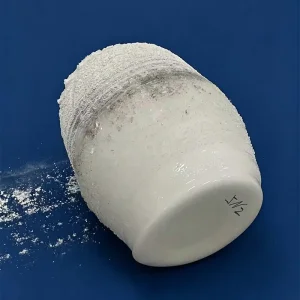
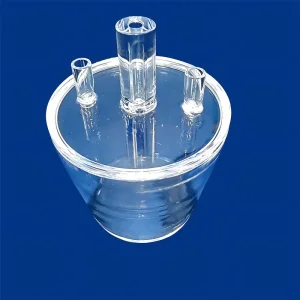
In modern semiconductor fabrication facilities (fabs), photovoltaic cell manufacturing plants, and high-purity chemical vapor deposition lines, the quartz boat serves as an indispensable consumable carrier. As global technology nodes compress toward sub-28nm geometries and solar manufacturers transition to high-efficiency N-type TOPCon and Heterojunction (HJT) architectures, thermal carrier demands have transitioned from standard commodity quartzware to mission-critical precision-machined fused silica vessels.
Driven by semiconductor capital equipment investments and worldwide photovoltaic gigawatt expansions, the global industrial quartzware market is experiencing an unprecedented CAGR of 8.4%. Process wafer carriers and horizontal/vertical quartz boats represent over 34% of total consumable quartz expenditure across critical diffusion, LPCVD, and annealing thermal modules.
Thermal diffusion furnaces operate sustained cycles between 900°C and 1,250°C under corrosive gaseous atmospheres containing POCl₃, BBr₃, NH₃, and pure O₂. Fused quartz is the singular material balancing extreme thermal shock resistance (CTE of 5.5 × 10⁻⁷/°C), near-zero chemical reactivity, and mechanical integrity without contaminating sensitive p-n junctions.
Unlike furnace housing frames, quartz boats endure cyclic thermal expansion, corrosive etch-clean steps (HF baths), and heavy wafer mass loads. Operating life cycles typically mandate replacement or high-temperature rebuilds every 6 to 18 months, demanding dependable, high-volume production partners capable of maintaining precise slot tolerances across thousands of repetitive runs.
Industrial quartz boats must operate under intense thermal stress gradients. Understanding the structural properties of pure amorphous silicon dioxide (fused silica) allows process engineers to maximize component longevity and mitigate wafer warping.
| Physical / Chemical Property | Standard Fused Quartz Specification | High-Purity Semiconductor Grade | Operational Significance for Quartz Boats |
|---|---|---|---|
| SiO₂ Purity Content | 99.99% (4N) | ≥ 99.999% (5N) | Prevents metal ion diffusion into high-temperature silicon substrate lattices. |
| Thermal Expansion (CTE, 20-300°C) | 5.5 × 10⁻⁷ / °C | 5.4 × 10⁻⁷ / °C | Virtually zero expansion allows rapid thermal cycling without structural fracture. |
| Strain Point / Annealing Point | 1,070 °C / 1,180 °C | 1,120 °C / 1,215 °C | Governs the upper temperature envelope before boat crossbars experience viscous sagging. |
| Softening Point | 1,683 °C | 1,710 °C | Ensures dimensional stability during extreme thermal spikes and welding fabrication. |
| OH⁻ (Hydroxyl) Radical Content | < 30 ppm | < 5 ppm | Low OH prevents micro-bubble migration, structural sag, and accelerated devitrification. |
| Trace Alkali (Na + K + Li) | < 1.5 ppm | < 0.3 ppm | Alkali ions act as nucleating catalysts for α-cristobalite phase transformation. |
Devitrification is the unwanted transition of metastable amorphous fused quartz into crystalline cristobalite. Occurring primarily above 1,150°C, this surface restructuring creates microscopic micro-cracks upon furnace cooldown due to density mismatches. Southeast Quartz mitigates this through high-temperature vacuum dehydroxyl annealing and proprietary flame-polishing protocols that eliminate surface nucleation seeds.
Modern semiconductor robotic handling systems (wafer transfer cassettes) demand slot spacing, depth, and pitch tolerances within ±0.02 mm. Utilizing multi-axis diamond-tooled CNC grinding centers, our factory creates precision V-grooves, U-slots, and dual-pitch tooth profiles that eliminate edge chipping, wafer tilting, and robotic transfer misalignments.
Following CNC cold cutting, quartz surfaces undergo micro-fracture repair through precision acid washing (HF/HNO₃ formulations). This chemical polishing cleanses diamond tooling residue, eliminates sub-surface micro-cracking, and achieves an optical-grade finish that resists particulate buildup inside high-vacuum chambers.
Procurement directors worldwide face dual pressures: reducing the Total Cost of Ownership (TCO) while guaranteeing uncompromised wafer yield. Located in Donghai County, Jiangsu — the world's most concentrated natural crystal and fused quartz industrial cluster — Southeast Quartz delivers a unique competitive edge.
Donghai processes over 70% of China's high-purity quartz sands, ingots, and furnace tubing. Our direct proximity to raw material refining facilities eliminates cross-border logistics markups, ensures 100% batch traceability of ingot feedstock, and shields our global clientele from raw material shortages during global supply chain disruptions.
While European or North American legacy suppliers often quote 16 to 24 weeks lead times for bespoke quartz boats, our integrated R&D-to-machining workflow delivers custom CAD-to-prototype parts in 10 to 14 business days. High-capacity continuous annealing furnaces run 24/7 to handle fast-track semiconductor line shutdowns.
High-temperature quartz boat fabrication requires the rare convergence of automated precision CNC machining and artisanal manual hydrogen-oxygen flame torch welding. Our facility houses over 100 veteran technicians who execute distortion-free quartz rod welds, reinforced bridge supports, and leak-proof gas injection joints.
Industrial quartz boats are designed in specialized configurations tailored to exact thermodynamics, wafer loading weights, and corrosive process gases across various industrial environments.
In planar MOSFET, BCD, and Power IGBT fabrication lines, quartz boats support 100mm, 150mm, and 200mm silicon wafers during furnace drive-in and wet/dry oxidation stages. The low-alkali composition prevents mobile charge carriers from migrating into thin gate oxides, preserving critical threshold voltages.
N-type solar cell architecture requires dense horizontal and vertical boat configurations supporting up to 400 ultra-thin M10 (182mm) and G12 (210mm) silicon wafers per batch. Operating inside high-temperature LPCVD and boron/phosphorus diffusion chambers, our boats deliver high mechanical strength to prevent wafer adhesion and edge micro-chipping.
Silicon nitride (Si₃N₄) and polysilicon deposition processes operate under vacuum environments prone to thermal gradients. Our boats feature engineered hollow crossbeams and expansion-relief slots that absorb thermal mechanical stress while ensuring laminar precursor gas flow across wafer surfaces.
In vapor axial deposition (VAD) and outside vapor deposition (OVD) core rod consolidation, fused quartz boats carry preform soots through chlorine dehydration and helium consolidation furnaces at temperatures exceeding 1,200°C, requiring absolute immunity to blistering and chemical volatilization.
For tier-1 semiconductor foundries and global equipment manufacturers (OEMs), approving a new quartz boat supplier requires rigorous verification. The following matrix illustrates the multi-stage quality assurance protocol executed for every shipment at Southeast Quartz.
Every raw material batch undergoes Inductively Coupled Plasma Mass Spectrometry (ICP-MS) to certify trace impurity thresholds. Maximum allowed concentrations for critical elements: Fe < 0.2 ppm, Al < 14 ppm, Ti < 1.0 ppm, Cu < 0.05 ppm, Na < 0.5 ppm. Detailed material test reports (MTR) accompany every batch.
High-precision multi-sensor Coordinate Measuring Machines (CMM) map slot parallelism, tooth spacing, boat camber, perpendicularity, and rail pitch. We hold strict dimensional repeatability of ±0.02mm, guaranteeing seamless compatibility with automated robotic wafer loading systems.
Polarized light stress analysis verifies that all welded joints, crossbars, and handles have undergone full relaxation annealing to eliminate thermal fracture risks. Sealed hollow tubular components undergo Helium Mass Spectrometry Leak Testing with sensitivity down to 1 × 10⁻⁹ mbar·l/s.
The relentless drive toward higher wafer throughput, lower cleanroom carbon footprints, and larger wafer geometries is prompting three major technological shifts in industrial quartz manufacturing.
As 300mm wafer fabrication becomes the global standard for memory and advanced logic chips, horizontal boats are giving way to tall vertical quartz boats and ladder carriers. These structures require reinforced quartz rod columns, micro-welded quartz support plates, and thermal sag compensation algorithms to maintain rigidity over 1,200°C heat cycles.
For sub-7nm and extreme thermal operations, chemical synthetic quartz made from SiCl₄ gas decomposition offers ultra-purity levels exceeding 99.9999% (6N) with virtually zero metallic impurities. Furthermore, micro-doping with rare elements like titanium or aluminum increases the viscosity point, raising continuous heat limits to 1,250°C without sagging.
Escalating quartz sand raw material costs have accelerated the demand for high-value quartz boat refurbishment. Southeast Quartz offers certified thermal de-stressing, micro-abrasion etching, and precision slot re-profiling, extending the operational life of large vertical quartz carriers by up to 200% while reducing overall fabrication carbon footprints.
Practical answers to complex queries regarding material grades, thermal parameters, handling precautions, and procurement processes for industrial quartz boats.
Explore our complete catalog of industrial quartz solutions — spanning custom diffusion boats, oversized reactor tubes, optical plates, rods, and high-temperature lamp holders engineered for global fab lines.




