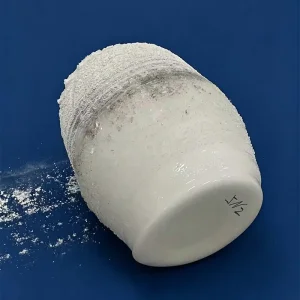
Semiconductor & Advanced Photonics Class

High-Quality Quartz Feed Tubes Supplier & Factory

Precision-engineered fused silica delivery tubes, ultra-pure precursor injectors, and customized thermal quartzware manufactured in Donghai, China for sub-micron deposition, photovoltaic diffusion, and epitaxial wafer synthesis.

Primary Catalog

Precision Quartz Products & Components

Explore our core selection of precision-machined fused quartz tubes, high-temperature carriers, and optical-grade fused silica components rigorously inspected for global industrial deployment.


High-Quality Customized Quartz Products from China

High-Quality Customized Quartz Products for Semiconductor & Scientific Applications

View Specifications
Wholesale High-Temperature Quartz Boats for Wafer Processing

High-Temperature Quartz Boats for Semiconductor Wafer Processing

View Specifications
Wholesale China Fused Silica Quartz Plate Suppliers

Fused Silica Quartz Plate & High-Temperature Heat-Resistant Glass Windows

View Specifications
Wholesale Custom Size Quartz Furnace Tube

Custom Size Quartz Furnace Tube for Laboratory & Industrial Thermal Processing

View Specifications
Plasma-Fused Quartz Ingots

Plasma-Fused Quartz Ingots & High-Purity Raw Blanks for Precision Machining

View Specifications
High-Purity Fused Silica Quartz Plates

High-Purity Fused Silica Quartz Plates - Heat Resistant Custom Sizes Available

View Specifications
Wholesale Customized Quartz Products from China

Customized Quartz Solutions & Precision Machined Laboratory Instruments

View Specifications
Customized High-Purity Quartz Products

High-Purity Quartz Ware for Chemical Vapor Deposition & Etch Environments

View Specifications
Industry White Paper

Global Landscape: Mission-Critical Quartz Feed Tubes in Modern Fabrication

Analyzing thermal stability, chemical inertness, and structural tolerances required across 300mm wafer fabs, photovoltaic cell doping lines, and optical fiber synthesis systems.

The Crucial Role of Quartz Feed Tubes in Sub-Micron Thermal Processing

In high-temperature chemical synthesis and semiconductor thermal batch processes, a quartz feed tube (also designated as an injector tube, source gas delivery conduit, or process torch) serves as the primary fluidic interface between ultra-pure chemical precursors and reaction process chambers. Operating at continuous temperatures ranging from 900°C to 1250°C under aggressive halogenic, silane, or organometallic gas streams, the structural and chemical integrity of the quartz feed tube dictates overall production yield, wafer contamination indices, and system mean-time-between-failures (MTBF).

With global semiconductor manufacturing advancing below 5nm nodes and photovoltaic architectures migrating to TOPCon and heterojunction (HJT) solar cells, conventional laboratory-grade glassware cannot survive these demanding operational windows. The global market currently experiences an acute demand for quartz feed tubes characterized by total metallic trace impurities under 8 to 15 parts per million (ppm), total hydroxyl (OH-) concentrations engineered below 5 ppm for dehydroxylated electric-fusion grades, and ultra-tight geometric runout parameters. As thermal cycle dynamics become increasingly severe, failure mechanisms such as premature devitrification, sagging, thermal stress micro-fracturing, and pinhole leakage represent catastrophic process risks that fab managers aggressively mitigate through verified tier-1 supplier qualifications.

Stringent Chemical Inertness

Thermal reactions involving corrosive gases such as silicon tetrachloride (SiCl4), trichlorosilane (TCS), boron tribromide (BBr3), and phosphorus oxychloride (POCl3) rapidly corrode metallic delivery pipes. Fused silica feed tubes provide non-reactive, stable fluidic pathways that prevent metal ion contamination across substrate surfaces.

Thermal Shock Resistance

Characterized by an exceptionally low coefficient of thermal expansion (CTE ≈ 5.5 × 10⁻⁷ /K between 20°C and 1000°C), our fused quartz feed tubes withstand instantaneous thermal gradients exceeding 1000°C without mechanical rupture, ensuring zero cracking during rapid furnace recipe transitions.

Geometric Concentricity & Tolerances

Micro-nozzle orifice diameter consistency, wall thickness uniformity, and Total Indicated Runout (TIR) are controlled within ±0.05mm. This extreme precision guarantees uniform precursor fluid distribution, laminar boundary-layer velocity, and repeatable batch deposition profiles.

Industrial Synergy & Supply Chain

Donghai Manufacturing Advantages: Efficiency, Scale, & Full-Chain Control

How Southeast Quartz leverages China's Silicon Valley of Quartz to optimize cycle times, raw material purification, and precision hot/cold engineering.

≥ 99.999%
SiO₂ Chemical Purity
< 1×10⁻⁹
He-Leak Test (mbar·L/s)
±0.05 mm
CNC Machining Precision
100%
Cleanroom Packed Class 100

Raw Material Cluster Density

Situated in Donghai County, Jiangsu Province—the epicenter of the Eurasian quartz industrial belt—Southeast Quartz directly accesses globally certified high-purity natural crystal sand and synthetic precursors. This direct regional pipeline eliminates intermediary handling delays and mitigates raw material trace contamination risks.

Dual-Track Hot & Cold Processing

Our infrastructure integrates computer-controlled multi-axis glass-blowing lathes, hydrogen-oxygen plasma thermal forming stations, and 5-axis CNC ultrasonic diamond grinding machines. This dual processing capability allows seamless transitions from bulk raw tubing to intricate multi-orifice feed tube assemblies under one quality control system.

Rapid Engineering Prototyping

Leveraging an experienced engineering roster of over 100 master technicians and certified glassmakers, we compress custom drawing review-to-production cycles from the industry standard of 6–8 weeks down to 10–15 business days, delivering full first-article inspection (FAI) reports for global OEM and fab customers.

Technical Insight: Why does raw sand origin and processing cluster matter for feed tubes? Fused quartz feed tubes subjected to thermal cycling above 1000°C undergo crystal phase transformation (devitrification into cristobalite) catalyzed by trace alkali metals (Li, Na, K). The Donghai cluster provides multi-stage chemical acid washing, flotation, and magnetic separation that stabilizes alkali impurities to ultra-trace levels (<0.5 ppm), extending feed tube service life by 35% to 60% compared to secondary non-clustered manufacturers.
Material Science Standards

Technical Specification Matrix: Fused Silica vs. Electric Arc vs. Synthetic Grades

Comprehensive metallurgical and physical performance metrics verified under ICP-MS and helium mass spectrometry.

Physical / Chemical Property Electric-Fused Quartz (Type II) Flame-Fused Quartz (Type III) Synthetic Fused Silica (Type IV) Testing Methodology
SiO₂ Chemical Purity ≥ 99.995% ≥ 99.998% ≥ 99.9999% (Electronic Grade) GDMS / ICP-OES
Hydroxyl (OH⁻) Concentration < 5 – 20 ppm 150 – 250 ppm < 1 ppm (Water-Free) to 1200 ppm FTIR Spectrometry
Continuous Service Temperature 1150 °C 1100 °C 1200 °C ASTM C-336
Softening Point (η = 10⁷·⁶ dPa·s) 1683 °C 1665 °C 1710 °C High-Temp Dilatometry
Thermal Expansion (20°C–1000°C) 5.4 × 10⁻⁷ / K 5.5 × 10⁻⁷ / K 5.2 × 10⁻⁷ / K Interferometric Dilatometer
Dielectric Strength (20°C) 25 – 40 kV/mm 25 – 35 kV/mm > 45 kV/mm IEC 60243-1
Total Trace Metals (Fe, Cu, Ni, Cr, Al) < 12 ppm < 6 ppm < 0.05 ppm High-Resolution ICP-MS
Helium Leak Tightness < 1×10⁻⁹ mbar·L/s < 1×10⁻⁹ mbar·L/s < 1×10⁻¹⁰ mbar·L/s He Mass Spectrometry

Total Indicated Runout (TIR)

For horizontal and vertical feed tubes exceeding 1200mm in length, standard straightness is kept within <1.0mm/m, with precision-annealed semiconductor grades reaching <0.3mm/m to prevent process collar binding.

Orifice & Nozzle Geometry

Micro-nozzle feed tubes feature laser-cut and fire-polished gas ejection holes calibrated to ±0.03mm tolerance, preventing differential backpressure and ensuring balanced flow dynamics across wafer carriers.

Stress Birefringence

Post-welding internal residual stresses are relieved through programmed multi-stage electric annealing cycles down to <10 nm/cm optical path difference, preventing spontaneous fracture under cyclic thermal shock.

Surface Micro-Roughness

Internal fluidic channels are fire-polished to Ra < 0.1 μm, eliminating micro-cavities where precursor condensates, halogen salts, or metallic nanoparticles might nucleate and cause contamination flaking.

Implementation Architectures

Localized Application Scenarios: Delivering Pure Precursors Under Severe Environments

From 300mm diffusion chambers to high-power optical fiber VAD/MCVD deposition systems.

Semiconductor LPCVD & ALD

In Low-Pressure Chemical Vapor Deposition (LPCVD) and Atomic Layer Deposition (ALD), quartz feed tubes inject TEOS, Silane (SiH4), and ammonia (NH3) directly over wafer surfaces. The tube's thermal stability ensures precursors remain in gas phase without thermal decomposition prior to nozzle exit, eliminating haze defects.

  • Polysilicon deposition furnaces
  • Silicon nitride (Si3N4) passivation
  • Low-OH tubes prevent moisture poisoning

Photovoltaic Diffusion Doping

During TOPCon boron emitter formation and PERC phosphorus diffusion, quartz feed pipes convey POCl3 and BBr3 liquid bubbler vapors at 850°C–1050°C. Resisting extreme halogen corrosion, our tubes provide uniform sheet resistance (Rsheet) distribution across 182mm and 210mm solar wafers.

  • High throughput continuous furnace lines
  • Zero trace Fe/Cu to protect carrier lifetime
  • Multi-port custom gas injection tips

Optical Fiber MCVD / VAD Deposition

Modified Chemical Vapor Deposition (MCVD) and Vapor Axial Deposition (VAD) require high-purity synthetic silica feed tubes to guide SiCl4, GeCl4, and freon vapors into rotating preform substrates under 1800°C traversing burner flames. Absolute bubble-free optical clarity guarantees minimal optical attenuation.

  • Hydroxyl content < 0.2 ppm for low-loss fibers
  • Concentricity tolerance < 0.08 mm
  • High-speed rotary seal connections

High-Purity Chemical Synthesis

For fine chemical distillation, pharmaceutical intermediate chlorination, and specialty gas halogenation, quartz feed tubes act as robust dip tubes, spargers, and reagent injectors that prevent chemical leaching, eliminate batch contamination, and enable direct visual process inspection.

  • Corrosive acid sparging (HCl, HNO3, H2SO4)
  • High thermal shock autoclave feeds
  • Threaded, flanged, and ball-joint terminations
Quality Control Protocols

Global Enterprise Procurement Demands: Verification & Auditing Protocols

How international procurement managers qualify quartzware manufacturers: SEMI F21 adherence, helium mass spectrometry, and cleanroom verification.

1. Helium Mass Spectrometry Leak Detection

Every sealed or welded quartz feed tube undergoes vacuum bagging and helium sniffing using calibrated Leybold mass spectrometers. Leak rates must verify below 1.0 × 10⁻⁹ mbar·L/s to eliminate micro-crack risks that would introduce atmospheric oxygen or moisture into sub-micron deposition chambers.

2. Dimensional CMM & Optical Profilometry

Feed tubes with multi-hole injector arrays undergo full 3D coordinate measuring machine (CMM) mapping. Hole centers, pitch distances, angular orientations, flange planarities, and coaxiality are certified against customer CAD models with digital inspection sheets included in shipping dossiers.

3. Ultra-Clean Acid Leaching & Class 100 Packaging

Components undergo ultrasonic degreasing, multi-stage hydrofluoric (HF) and nitric (HNO3) chemical etching to strip surface mechanical micro-defects, followed by 18.2 MΩ·cm ultra-pure water rinsing. Final packaging occurs within Class 100/1000 cleanrooms using double-layer vacuum antistatic polyethylene wrapping.

Procurement Checklist for Global Buyers: When specifying quartz feed tubes for OEM or replacement fab tools, ensure your request for quotation (RFQ) includes: (a) Outer Diameter (OD), Inner Diameter (ID) and wall thickness tolerances (e.g., ±0.1mm); (b) End terminations (conical ground joint, KF/NW flange, flat ground seal, or fused glass-to-metal transition); (c) Continuous operating temperature and chemical gas constituents; (d) Maximum allowable hydroxyl (OH) content in ppm; and (e) Certified test reports required (Purity CoC, Helium Leak Cert, Dimensional CMM).
Emerging Horizons

Future Trends: Where High-Purity Quartz Engineering Is Headed

Technological roadmaps driving the next decade of advanced thermal quartzware manufacturing.

Ultra-Low Hydroxyl Dehydroxylation

Thermal stability at 1200°C+ requires dropping OH content below 1–2 ppm. Modern vacuum thermal baking and reactive fluorine treatment technologies are eliminating OH- radicals, raising quartz viscosity and preventing feed tube sag in ultra-long horizontal tube furnaces.

Laser Micro-Machining of Feed Nozzles

Replacing traditional manual flame-drilling, ultra-fast picosecond and femtosecond industrial lasers now perforate feed tube orifices down to 50 μm diameters with zero micro-cracking and negligible heat-affected zones (HAZ), enabling revolutionary micro-channel injector geometries.

Plasma-Sprayed Protective Ceramic Coatings

To resist fluorinated plasma etching in dry cleaning cycles (NF3/CF4), quartz feed tubes are increasingly fortified with ultra-pure yttrium oxide (Y2O3) or aluminum oxide (Al2O3) plasma coatings, extending consumable component lifespans by up to 300% in next-gen dry etch equipment.

Engineering Knowledge Base

Technical Q&A: Specifying, Maintaining, & Sourcing Quartz Feed Tubes

Detailed insights from Southeast Quartz senior process engineers on failure prevention, cleaning, and custom fabrication.

What causes devitrification in quartz feed tubes, and how can it be avoided?
Devitrification is the phase transition from metastable amorphous fused silica into crystalline cristobalite. It generally initiates above 1150°C and is drastically accelerated by surface contamination—particularly alkali ions (Na, K, Li) and alkaline earth elements (Ca, Mg). Touching quartz with bare skin transfers sodium chloride, which acts as a nucleation catalyst, causing milky white surface haze and subsequent stress fractures upon cooling. To prevent this, always handle quartzware with clean lint-free nitrile or cotton gloves, regularly perform 5%–10% HF acid etch cleaning to strip surface nucleation seeds, and store components in cleanroom environments.
Why is hydroxyl (OH⁻) content critical for high-temperature feed tubes?
Hydroxyl groups structurally terminate the three-dimensional silicon-oxygen tetrahedral network (Si-O-Si bonds replaced by Si-OH bonds). High OH content lowers the viscosity, strain point, and annealing point of fused quartz. Under continuous operation at 1100°C–1200°C, high-OH quartz tubes experience thermal sagging, creep deformation, and accelerated devitrification. For horizontally mounted long feed tubes or high-temperature diffusion injectors, electric-fused or dehydroxylated quartz (<5–20 ppm OH) is mandatory to maintain dimensional straightness.
What drawing files and tolerances are required for a customized feed tube RFQ?
We accept standard 2D formats (PDF, DWG, DXF) and 3D CAD files (STEP, IGES, SLDPRT). For precise quoting, drawings should specify: outer diameter (OD), inner diameter (ID) or wall thickness, overall length, runout/straightness limits (TIR), nozzle hole positions, pitch and diameters, and joint end types (e.g., ground spherical joints, NW/KF vacuum flanges, or fused ball joints). Standard dimensional tolerance is ±0.1mm, while critical CNC cold-machined features can be held to ±0.03mm.
How does Southeast Quartz conduct helium mass spectrometry leak testing?
Components with welded flanges, sealed multi-path chambers, or dual-jacketed delivery jackets are mounted on automated vacuum test fixtures connected to a high-sensitivity Leybold helium mass spectrometer. The internal volume is evacuated to <10⁻² mbar, and pure helium is sprayed externally across all flame welds, joints, and capillary intersections. A leak rate strictly below 1.0 × 10⁻⁹ mbar·L/s must be sustained to pass quality certification, ensuring zero air ingestion in vacuum CVD processes.
What is the standard procedure for cleaning quartz feed tubes in a fab?
The validated semiconductor cleaning protocol involves: 1) Ultrasonic degreasing in high-purity solvent or surfactant bath; 2) Immersion in a 5% to 10% electronic-grade hydrofluoric (HF) acid bath for 5 to 10 minutes to dissolve micro-devitrification layers and chemical residues; 3) Immersion in high-purity nitric acid (HNO3) to strip metallic contaminants; 4) Cascading rinse in 18.2 MΩ·cm deionized (DI) water until resistivity stabilizes; 5) Nitrogen gas gun purge and cleanroom oven drying at 120°C. Never clean with abrasive pads or alkaline caustic solutions (e.g., KOH, NaOH), which attack silica.
How do you protect fragile quartz feed tubes during international transit?
Long and delicate quartz tubes present severe breakage hazards during global air or ocean transit. Southeast Quartz utilizes custom CNC-cut high-density EPE foam cradles engineered to suspend the quartz tubes inside rigid inner boxes, preventing resonance and point-loading. The inner carton is isolated with shock-dampening padding inside heavy-duty multi-ply plywood export crates reinforced with exterior steel banding. Fragility indicators (TiltWatch, ShockWatch) and desiccants are standard for intercontinental shipping.
Expanded Inventory

High-Purity Quartz Vessels, Plates & Custom Fabrications

Explore our full-spectrum manufacturing capabilities covering precision-slotted boats, oversized reactor tubes, optical plates, and specialized industrial lamp fixtures.


Wholesale Customized Quartz Products from China Suppliers

Wholesale Customized Quartz Instruments & Factory Solutions

View Specifications
High-Quality Customized Quartz Products from China Suppliers

High-Purity Quartz Instruments Manufacturer at Donghai Factory

View Specifications
Wholesale High-Quality Fused Silica Quartz Plates

Factory-Direct Heat-Resistant Fused Silica Quartz Plates & Discs

View Specifications
Wholesale Customized Quartz Products for High-Temperature Applications

Customized High-Temperature Thermal Quartz Components & Liners

View Specifications
Wholesale Custom High-Temperature Resistant Quartz Glass Rings

Custom High-Temperature Resistant Quartz Glass Rings for Thermal Insulation

View Specifications
Wholesale Premium Quartz Boats for High Temperature Processes

Premium Quartz Boats for Semiconductor Wafer Diffusion & Annealing

View Specifications
Custom Customized Quartz Products from China Suppliers

High-Purity Quartz Factory for Semiconductor & Optical Assemblies

View Specifications
Wholesale High-Temperature Resistant Quartz Lamp Holder

High-Temperature Resistant Quartz Lamp Holder for Industrial Heating

View Specifications
Direct Factory Engineering Support

Need Drawing Review or Custom Feed Tube Quotation?

Send your specifications, CAD drawings (PDF/STEP/DWG), and operating parameters. Our technical glass specialists in Donghai will review tolerances, advise on material selection, and submit an authoritative engineering quote within 24 hours.

Submit Engineering RFQ Download Quartz Technical Catalog