Direct-from-factory thermal-shock-resistant fused quartz tubes, high-purity rods, and precision carrier parts precision-machined in Donghai County for tier-1 solar manufacturers worldwide.

Wholesale Custom Size Quartz Furnace Tube for Laboratory & Industrial Use - High Purity Suppliers from China Factory Factories, Factory
Configure & Quote
Custom High Purity Quartz Rods from China Suppliers - Fused Silica Rods for Semiconductor & Laboratory Applications Factory Factories, Factory
Configure & Quote
Custom Customized High-Purity Quartz Products from China Factory - Reliable Suppliers for Semiconductor and Scientific Research Manufacturer, Product
Configure & Quote
Wholesale High-Temperature Resistant Quartz Lamp Holders from China Suppliers | Factory Direct for Industrial Use Supplier, Product
Configure & Quote
Wholesale Heat Resistant Quartz Lamp Holder for Industrial Use - High-Quality Supplier from China Factory Suppliers, Factories
Configure & Quote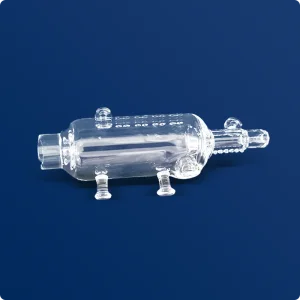
High-Quality High Purity Quartz Digestion Tube for Laboratory Factories, Product
Configure & Quote
Wholesale Quartz Cleaning Tank Manufacturer, Manufacturers
Configure & Quote
Wholesale High Purity Quartz Rod / Fused Silica Rod for Semiconductors & Laboratory - China Suppliers and Factory Factories, Products
Configure & QuoteThe worldwide photovoltaic (PV) manufacturing industry is undergoing its most pivotal technological leap since the transition from polycrystalline to P-type PERC cells. As the solar sector accelerates full-scale industrial adoption of N-type TOPCon (Tunnel Oxide Passivated Contact), HJT (Heterojunction Technology), and tandem perovskite-silicon cell structures, process conditions inside high-temperature thermal reactors have pushed consumable components to unprecedented physical thresholds. In this high-stakes ecosystem, quartz solar processing parts are no longer regarded as basic laboratory glassware; they have become mission-critical thermal processing vessels and mechanical handling apparatuses that directly govern cell conversion efficiency, minority carrier lifetime, and line throughput.
High-purity fused quartzware serves as the inert barrier shielding silicon substrates from atmospheric and metallic contamination across extreme thermal cycles. In contemporary TOPCon manufacturing lines, phosphorus (POCl3) and boron (BBr3) diffusion, thermal wet oxidation, and low-pressure chemical vapor deposition (LPCVD) processes routinely run at sustained operating temperatures between 950°C and 1,250°C. Under these severe environments, trace impurities in quartz components—specifically transition metals like iron (Fe), copper (Cu), and nickel (Ni), as well as mobile alkali ions (Na, K, Li)—can thermally outgas and diffuse into the crystal lattice of the solar wafer. Even minute concentrations of mobile ions in the parts-per-billion (ppb) regime cause lattice point defects, severely degrading the passivation quality of the tunnel oxide interface and crippling the final open-circuit voltage (Voc) of the solar cell.
Consequently, tier-1 gigawatt-scale solar module manufacturers in North America, Europe, East Asia, and the Middle East are restructuring their supply chain strategies. Procurement executives now demand quartz fabricators capable of providing verifiable raw material traceability, advanced low-hydroxyl (low-OH) fused silica grades, robust devitrification resistance, and helium mass-spectrometer leak certification. Meeting these rigorous industry mandates requires an integrated manufacturing footprint that unites raw crystal beneficiation, specialized flame hot-working lathes, and multiaxis CNC cold-machining under rigorous cleanroom packaging standards.
TOPCon cell architecture requires BBr3 emitter diffusion at 1,050°C–1,200°C. This extreme thermal soak accelerates structural sagging and devitrification in lower-grade quartz furnace tubes, mandating synthetic inner liners and ultra-pure raw ingots.
The industry-wide standardization of M10 (182mm), G12 (210mm), and rectangular wafer footprints necessitates oversized quartz tubes with outer diameters exceeding 450mm to 550mm, requiring exceptional mechanical wall-thickness uniformity.
With PV fabs operating on uninterrupted 24/7/365 production schedules, unplanned thermal line shutdowns due to quartzware warping or structural microcracking incur massive revenue losses, escalating demand for extended mean time between failures (MTBF).
When international solar manufacturers evaluate quartz solar processing parts suppliers, supply chain agility, cost stability, and technical execution are primary selection parameters. In this regard, China’s quartz processing ecosystem—anchored in Donghai County, Jiangsu Province—delivers structural efficiencies that remain unmatched anywhere in the world. As the undisputed quartz capital of the Eurasian continent, Donghai hosts a vertically integrated industrial cluster that concentrates over 80% of China's high-purity quartz refining, fusion, precision machining, and recycling capabilities within a 30-kilometer radius.
For global procurement teams, sourcing directly from factories like Southeast Quartz located within this geographic cluster eliminates fragmented intermediate logistics. Raw natural quartz crystals and plasma-fused ingots are processed, synthesized, and transformed into raw tubing stock locally. This proximal supply chain insulates manufacturing schedules from international bulk shipping bottlenecks, while localized material access compresses quotation-to-delivery lead times by up to 60% compared to European or North American counterparts.
| Physical & Chemical Parameter | Standard Grade Fused Quartz | Solar TOPCon Diffusion Grade | Testing Protocol / Verification |
|---|---|---|---|
| Silicon Dioxide (SiO2) Purity | ≥ 99.99% | ≥ 99.998% – 99.999% | Inductively Coupled Plasma Mass Spectrometry (ICP-MS) |
| Hydroxyl (OH-) Content | ≤ 150 – 200 ppm | ≤ 5 – 20 ppm (Dehydroxylated) | Fourier-Transform Infrared Spectroscopy (FTIR) |
| Total Transition Metals (Fe, Cu, Ni, Cr) | < 5.0 ppm | < 0.15 ppm | Glow Discharge Mass Spectrometry (GDMS) |
| Thermal Expansion Coeff. (20°C–1000°C) | 5.5 × 10¯7 / °C | 5.4 × 10¯7 / °C | High-Temperature Dilatometer |
| Maximum Continuous Operating Temp | 1,100 °C | 1,250 °C | Thermal Soak Creep & Sagging Test |
| Helium Leak Tightness Rate | 1.0 × 10¯8 mbar·l/s | ≤ 1.0 × 10¯9 mbar·l/s | Helium Mass Spectrometry Leak Detection |
Beyond raw material availability, the efficiency advantage stems from human capital and modern equipment investments. High-precision quartz manipulation requires a rare synthesis of artisanal manual flame-working mastery and automated 5-axis CNC diamond tooling. Decades of specialized quartz fabrication in Donghai have cultivated a generational labor force of skilled glass technicians capable of flawless manual welding, necking, and fire-polishing of complex manifold ports. When combined with sub-micron CNC grinding machines, automated ultrasonic washing lines, and Class 10,000 cleanroom packaging facilities, Donghai factories achieve an optimal equilibrium of high dimensional precision, rapid scalability, and highly competitive unit economics.
Immediate access to raw quartz refining centers eliminates inter-provincial delays, cutting baseline delivery times from 10 weeks to under 3 weeks for non-standard parts.
High throughput capacity allows raw silica purchasing in bulk, directly buffering international buyers against macroeconomic raw material spot price volatility.
Seamless integration of flame-welding lathes and high-precision multi-axis CNC milling machines ensures complex wafer slot pitch accuracies within ±0.05mm.
Every finished solar quartz tube undergoes HF chemical acid washing, 18.2 MΩ·cm DI water ultrasonic cascade rinsing, and cleanroom vacuum packaging.
Quartz solar processing parts operate at every decisive phase of crystalline silicon ingot manufacturing and PV wafer processing. The material’s distinct properties—exceptional near-zero coefficient of thermal expansion, extreme optical transmission across the infrared spectrum, chemical inertness to mineral acids, and mechanical stability under high vacuum—make it irreplaceable across five critical process modules:
In monocrystalline silicon crystal growth, fused quartz crucibles contain molten silicon at 1,450°C. Surrounding quartz insulation rings, shielding cylinders, and pyrometer sight glass tubes maintain uniform thermal gradients and prevent argon gas turbulence inside the vacuum furnace chamber.
Large-diameter quartz furnace tubes (OD 350mm to 550mm) provide the hermetic reaction chamber for phosphorus POCl3 diffusion and boron BBr3 doping. Flanged quartz furnace tubes with welded gas inlets and vacuum exhaust manifolds ensure uniform dopant sheet resistance (Rsh) across all wafer batches.
High-density quartz boats hold hundreds of ultra-thin (110–130μm) silicon wafers during automated furnace insertion. Precision CNC laser-slotted rod ladders maintain exact wafer pitch, preventing wafer-to-wafer contact, warping, or micro-scratching under thermal expansion cycles.
In wafer surface texturing and RCA cleaning, fused silica tanks withstand boiling baths of hydrofluoric (HF), hydrochloric (HCl), nitric (HNO3) acids, and alkaline solutions without chemical leaching or ionic cross-contamination that would compromise wafer surface reflectivity.
For poly-silicon passivating layer deposition in TOPCon cells and anti-reflective SiNx coating in PECVD systems, fused quartz bell jars and protective liners maintain structural vacuum integrity under plasma bombardment while containing hazardous silane (SiH4) and ammonia (NH3) process gases.
The next decade of photovoltaic manufacturing will demand unprecedented technical refinement from quartz component manufacturers. As efficiency boundaries shift toward theoretical thermodynamic limits, three definitive technological transitions are reshaping quartz engineering:
While natural high-purity quartz refined from pegmatite deposits remains the commercial standard for external furnace bodies, the high thermal soaking of TOPCon boron diffusion causes accelerated crystallization into cristobalite (devitrification). Once cristobalite forms on the quartz surface, differences in thermal expansion during cooling create micro-fissures that shorten component operating life. Advanced factories are pioneering co-axial composite tubes featuring an outer shell of cost-effective natural fused quartz paired with an inner synthetic fused silica barrier boasting purity levels exceeding 99.9999% (6N) and virtually zero bubble inclusion.
To maximize factory gigawatt output per square meter of cleanroom footprint, cell manufacturers are migrating from single-bay horizontal furnaces to multi-tube vertical cluster systems housing over 600 wafers per process cycle. This drives demand for colossal quartz furnace tubes with inner diameters surpassing 450mm to 600mm and lengths over 3,500mm. Producing tubes of this magnitude without wall slump, elliptical distortion, or optical optical striations requires automated computer-controlled horizontal glass lathes equipped with real-time multi-spectral infrared pyrometer temperature feedback.
The hydroxyl (OH) radical concentration within the amorphous SiO2 glass matrix acts as a structural network-breaker. High OH concentrations reduce the viscosity of quartz glass, lowering its softening temperature and increasing thermal sag under heavy wafer loads at 1,150°C. Modern quartz synthesis processes implement proprietary vacuum-thermal dehydroxylation annealing regimes, driving residual OH content below 10 ppm, thereby shifting the annealing point upward by more than 80°C and prolonging the service life of quartz boats and furnace tubes.
Chemical vapor synthesis (SiCl4 oxidation) yields hydroxyl-controlled synthetic quartz with impurity levels under 0.1 ppm for next-generation perovskite-silicon tandem processing.
Ultra-short pulse picosecond laser micro-machining is replacing diamond wire sawing for quartz boat slots, reducing micro-cracking and tripling chemical resistance.
Implementation of QR-coded laser engraving directly onto quartz flanges gives fab process engineers instantaneous access to material heat lot numbers, GDMS sheets, and helium leak certificates.
Procuring quartz components for industrial PV manufacturing lines requires thorough evaluation of material purity, geometric tolerances, and vacuum-tight verification protocols. Sourcing directors and process engineers should establish rigorous quality assurance frameworks based on four primary engineering vectors:
Require full GDMS or ICP-MS elemental impurity profiles covering at least 14 trace elements. Aluminum (Al), Titanium (Ti), and Iron (Fe) content must strictly align with the thermal application class.
Specify tight concentricity, wall thickness runout (≤ 0.3mm), and straightness per meter (≤ 1.0mm/m) for oversized furnace tubes to prevent premature thermal stress fracturing during push-pull insertion.
Demanding helium mass spectrometry leak testing on all welded flanges, bubblers, and manifold fittings to guarantee vacuum seals tighter than 1.0 × 10¯9 mbar·l/s prior to release.
Mandate triple-layer vacuum packaging in anti-static PE film, high-density suspension EVA dampening foam, and reinforced wooden export crating to prevent shipping micro-fractures.
In-depth answers addressing material science, devitrification mechanisms, tolerance control, and export logistics for quartz solar processing parts.
Explore our full line of fused silica structural components, optical transmission plates, and high-temperature furnace tubes tailored for semiconductor and solar wafer manufacturing.
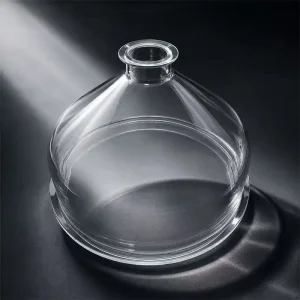
Wholesale Quartz Bell Jar with Excellent Thermal Stability Factories, Products
Configure & Quote
Custom High Purity Quartz Rod / Fused Silica Rod for Semiconductor & Laboratory - Trusted China Suppliers & Factory Suppliers, Factory
Configure & Quote
Wholesale Fused Silica Quartz Plate from China - High-Temperature Resistant Supplier & Factory for Optoelectronic Applications Manufacturer, Manufacturers
Configure & Quote
High-Quality High-Quality Fused Silica Quartz Plates | China Suppliers & Factory for Heat Resistant Solutions Manufacturer, Product
Configure & Quote
High-Quality High-Temperature Resistant Quartz Lamp Holder - China Suppliers & Factory for Industrial Use Manufacturer, Factory
Configure & Quote
Custom High-Quality Heat Resistant Quartz Lamp Holder - China Suppliers & Factory for Industrial Use Supplier, Product
Configure & Quote
Custom High Purity Quartz Rod / Fused Silica Rod - China Suppliers & Factory for Semiconductors and Laboratory Applications Manufacturers, Factory
Configure & Quote
Wholesale Custom Quartz Furnace Tube for Laboratory & Industrial Use | China Suppliers & Factory Direct Supplier, Factory
Configure & QuoteDirect-from-factory quotes, comprehensive GDMS impurity documentation, and drawing-to-part production feasibility reviews from our senior quartz engineering team in Donghai, China within 24 hours.
