Explore factory-certified quartz components fabricated to exact mechanical tolerances for semiconductor diffusion lines, photovoltaic cell sintering, and industrial high-temperature furnaces.






A comprehensive examination of thermodynamic characteristics, raw crystal supply chain economics, and operational parameters defining modern industrial infrared systems.
Electronic-grade SiO₂ with trace metallic impurities (Al, Fe, Ti, Cu) strictly below 15 ppm total.
Near-zero expansion coefficient (5.5 × 10⁻⁷/K) permits extreme quench cycles without fracture.
Optimal infrared energy conversion with directional ceramic/gold back-reflectors.
Continuous structural stability up to 1,100°C, short-term peak operational capacity at 1,250°C.
The global industrial heating sector has undergone a massive paradigm shift away from fossil-fueled thermal oxidation and inefficient resistive convection coils toward precision electrical infrared radiation. At the nexus of this revolution sits the high-purity fused quartz tube heating element. High-purity quartz tubing functions as both a mechanical housing and an optical lens: its broad spectral transmission band spans from approximately 180 nm (deep ultraviolet) through 4.0 µm in the mid-infrared region. As semiconductor fabrication plants migrate to sub-3nm lithographic nodes and photovoltaic wafer manufacturers scale TOPCon, HJT, and tandem perovskite cells to M10 and G12 form factors, the requirement for hyper-pure thermal chambers and ultra-fast thermal cycling emitters has surged.
Upstream manufacturing for quartz heating envelopes relies heavily on concentrated raw quartz crystal processing clusters. While primary ultra-pure natural quartz feedstock originates from high-purity deposits such as Spruce Pine (North Carolina, USA), Donghai County in Jiangsu Province, China, has evolved into the world's preeminent manufacturing, plasma-refining, and precision hot-working capital. Fabricating wholesale quartz tube heating elements requires intense metallurgical and optical discipline. Any alkali trace element contamination—especially sodium (Na), potassium (K), and lithium (Li)—initiates devitrification crystallization kinetics, transforming amorphous fused silica into opaque cristobalite at sustained process temperatures above 1150°C. Modern industrial suppliers must maintain strict cleanroom assembly environments and precision plasma torch fusing capabilities to preserve glass integrity under arduous continuous duties.
For vacuum-sealed halogen quartz tube emitters, residual hydroxyl (OH⁻) content directly determines operational lifespan. High OH⁻ levels reduce the viscosity of quartz at temperatures exceeding 1000°C, causing tube sagging in horizontal burner orientations. Furthermore, trapped OH⁻ molecules dissociate under high-filament thermal radiation, liberating free hydrogen that disrupts halogen chemical regeneration cycles, resulting in premature filament degradation. Southeast Quartz applies proprietary thermal degassing protocols to suppress OH⁻ concentrations below 5 ppm for mission-critical industrial heating tubes.
The efficiency of an industrial quartz heating element is fundamentally governed by the Stefan-Boltzmann law and Planck's distribution law. Unlike convective heating elements that must equilibrate the surrounding atmospheric air before delivering heat flux to the load, a quartz infrared tube directly projects thermal photons to the substrate surface. The emitter core—typically wound tungsten filament, carbon fiber weave, or specialized nickel-chromium (NiCr) iron-aluminum alloy—generates color temperatures ranging from 800 K (dark medium wave) up to 2600 K (short-wave halogen).
Matching the emitter wavelength to the physical absorption band of the processed material is crucial for avoiding severe energetic losses. For example, in water-based polymer coatings, liquid water exhibits pronounced infrared absorption bands near 2.9 µm and 6.0 µm. A medium-wave quartz tube heating element perfectly intersects this resonant vibrational band, evaporating solvents without blistering the underlying substrate. Conversely, rapid thermal processing (RTP) and silicon epitaxy require peak short-wave radiation (0.8–1.4 µm) where silicon’s optical absorption coefficient enables near-instantaneous thermal ramp rates exceeding 150°C per second.
| Heating Technology | Peak Wavelength | Filament / Core Temp | Thermal Response | Primary Industrial Applications |
|---|---|---|---|---|
| Short-Wave Halogen Quartz | 0.8 – 1.4 µm | 1,800°C – 2,400°C | 1 to 3 Seconds | Semiconductor RTP, PV cell contact firing, metal annealing, blow molding. |
| Fast Medium-Wave Quartz | 1.4 – 2.0 µm | 1,400°C – 1,800°C | 3 to 8 Seconds | Plastics thermoforming, automotive paint curing, continuous laminating lines. |
| Carbon Fiber Quartz Tube | 2.0 – 2.6 µm | 1,000°C – 1,400°C | 5 to 15 Seconds | Drying water-based inks, glass bending furnaces, carbon fiber curing. |
| Medium-to-Long Wave Quartz | 2.6 – 4.0 µm | 700°C – 1,000°C | 20 to 60 Seconds | Food dehydration, powder coating curing, textile drying, electronic packaging. |
Strategic hardware architectures designed to maximize thermal containment, lower parasitic factory power consumption, and integrate with automated Industry 4.0 control topologies.
Standard cylindrical quartz tubes radiate uniformly across a 360-degree perimeter, causing 50% of the energy to face away from target substrates. Modern wholesale quartz assemblies integrate direct-applied ceramic oxide or micron-thick 24K gold mirror coatings on the rear hemisphere. This achieves up to 96% directional radiation projection, directly reducing emitter energy waste and oven chassis insulation wear.
Unlike traditional thermal mass heaters that display massive hysteresis, low-thermal-inertia quartz heating elements interface directly with non-contact optical pyrometers and solid-state relays (SSRs). This enables microsecond pulse-width modulation (PWM), eliminating thermal overshoot and preserving precise wafer temperature uniformity within ±0.5°C across large multi-zone process tubes.
Single quartz tubes with spans exceeding 1.5 meters often experience bowing under continuous elevated operating loads. Twin-tube extruded fused silica designs incorporate a central structural bridge, creating a figure-eight profile. This geometric configuration doubles mechanical rigidity, supports internal return conductors for single-ended wiring, and allows power ratings exceeding 150 kW/m².
Global manufacturing facilities face severe regulatory pressure to decommission natural-gas drying tunnels. Fused quartz electric infrared retrofits replace gas burners with compact, zero-emission radiative cassettes. The instantaneous on/off capability eliminates long pre-heat cycles, reducing total facility energy consumption by 35% to 58% across automotive and textile finishing lines.
The failure threshold of a sealed quartz heating element rarely resides in the silica tube itself; it almost invariably occurs at the glass-to-metal electrical boundary. Due to the massive expansion mismatch between tungsten (4.5 × 10⁻⁶/K) and fused quartz (0.55 × 10⁻⁶/K), Southeast Quartz uses ultra-thin feathered molybdenum foil ribbons hermetically welded into the quartz pinch. This prevents thermal shear cracking and oxidation during heavy cycling.
Advanced semiconductor quartz components require tight integration between high-temperature flame working and cold CNC machining. Our facility pairs CNC ultrasonic drilling, grinding, and multi-axis slotting with high-purity hydrogen-oxygen flame annealing. This hybrid process relieves internal residual stress, eliminates micro-fractures, and ensures seamless dimensional fit inside wafer handling systems and precision furnace tracks.
From cleanroom semiconductor wafer lines to heavy industrial continuous drying conveyors, fused quartz assemblies provide high thermal endurance under demanding process conditions.
In low-pressure chemical vapor deposition (LPCVD), atomic layer deposition (ALD), and POCl₃ diffusion environments, heating elements and process tubes operate under a punishing combination of sustained temperatures (900°C–1150°C) and aggressive gases (silane, dichlorosilane, anhydrous HCl, ammonia). Fused quartz offers unmatched chemical resistance against non-fluorinated acids. Our oversized quartz process tubes, slotted quartz boats, and source bubblers isolate silicon substrates from heater filament off-gassing, preventing metallic poisoning and safeguarding carrier lifetime yields.
Automotive original equipment manufacturers (OEMs) use custom fast-medium wave quartz tube arrays for thermoforming carbon fiber reinforced polymers (CFRP) and pre-heating continuous sheet molding compounds (SMC). The rapid infrared ramp-up rate prevents binder resin degradation while softening high-performance polymers (such as PEEK, PEKK, and nylon matrices) in seconds. This allows high-throughput cycle times compatible with modern robotic press automation lines.
High-vacuum electron beam melting (EBM) and direct metal laser sintering (DMLS) rely on sealed quartz radiant heating assemblies for substrate bed pre-heating up to 900°C. Maintaining an elevated, stable bed temperature minimizes residual thermal gradients, preventing warped metal prints during titanium and Inconel powder fusion. The mechanical integrity and low outgassing profile of fused quartz ensure complete vacuum cleanliness without contaminating high-sensitivity parts.
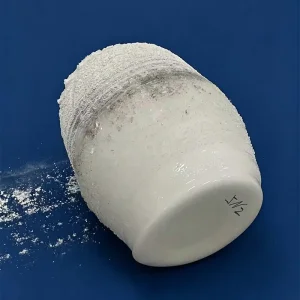
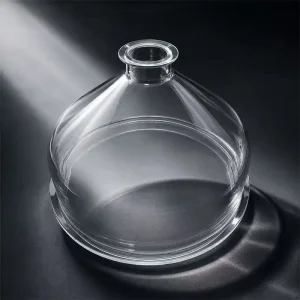
Certified fused silica components produced in our ISO-controlled Donghai facilities, tested via helium mass spectrometry, and packaged for worldwide cleanroom deployment.

In-depth responses covering thermodynamic limits, handling procedures, contamination avoidance, and custom mechanical tolerances.
Submit your 2D blueprints (DWG, PDF) or 3D STEP models. Our senior quartz processing engineers will review dimensional tolerances, material purity requirements, and thermodynamic suitability, providing an itemized quotation within 24 hours.
