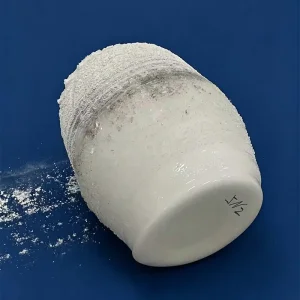
Explore precision-machined quartzware produced directly from Donghai’s advanced crystal manufacturing ecosystem for semiconductor, photovoltaic, and laboratory deployments.

A quartz process boat serves as the mission-critical foundation during high-temperature thermal transitions. Understanding its physical parameters is critical to avoiding batch contamination and thermal stress fractures.
With an exceptionally low coefficient of thermal expansion (CTE of 5.5 × 10⁻⁷/K), our fused quartz boats tolerate aggressive ramp-up rates from room temperature up to 1,200 °C without mechanical distortion or micro-cleavage.
Fabricated using electropolished quartz ingots with total metallic impurity levels below 15 ppm. Fe, Cu, and alkali metals (Na, K, Li) are kept below ppb-level thresholds to prevent thermal migration during gate oxide diffusion.
Wafer pocket profiles, pitch tolerances, and slot widths are micro-milled to ±0.02 mm accuracy. Engineered tooth radiuses prevent edge chipping and slip dislocations during high-speed automated cassette-to-boat transfers.
Positioned at the epicenter of global quartz purification, Southeast Quartz leverages raw material integration, complete precision tooling, and scalable manufacturing economics.
Situated in Donghai County—the primary fused quartz purification capital in Eurasia—we eliminate regional transit delays and maintain full material tracing from high-purity natural silica to purified plasma ingots.
By coupling in-house automated cold processing with skilled master glassblowers for complex manifold assembly, our factory cuts wholesale procurement budgets by 30-45% compared to European or Japanese peers.
Send standard STEP, DWG, or PDF drawings to our engineering hub. We confirm manufacturability, generate tooling paths, and finish small-batch prototype runs in as fast as 7 to 10 days.
Each quartz boat undergoes a HF/DI-water acid bath, class 10,000 cleanroom nitrogen drying, double vacuum-bag poly packaging, and custom-cushioned wooden crating designed for intercontinental air and sea transit.
Enterprise procurement requires verifiable traceability, safety compliance, and comprehensive quality control documentation that satisfies tier-one fab audits.
| Evaluation Parameter | Southeast Quartz Factory Standard | Industry Benchmark Compliance | Inspection Methodology |
|---|---|---|---|
| Purity (Trace Elements) | Total impurities ≤ 15 ppm (Al, Ca, Fe, Na < 2 ppm) | SEMI C10 Standard for Quartzware | Inductively Coupled Plasma Mass Spectrometry (ICP-MS) |
| Hydroxyl (OH⁻) Content | Low-OH grades < 5 ppm; Standard < 25 ppm | ASTM E1048 Near-IR Spectrometry | FTIR Spectroscopic Analysis |
| Hermetic Seal / Weld Integrity | Helium Leak Rate < 1×10⁻⁹ mbar·L/s | ASME BPE / Semiconductor Equipment Guideline | Helium Mass Spectrometry Leak Detection |
| Annealing Residual Stress | Optical path difference < 10 nm/cm | ASTM C148 Polariscopic Examination | Cross-Polarized Birefringence Mapping |
| Dimensional Geometry | Pitch: ±0.03 mm; Slot depth/width: ±0.02 mm | ISO 2768-m (Fine-Toleranced Precision) | Non-Contact 3D Coordinate Measuring Machine (CMM) |
| Environmental & Safety | 100% RoHS, REACH, and Conflict Mineral Compliant | EU Directives 2011/65/EU & (EC) No 1907/2006 | Third-party SGS / Intertek Laboratory Audits |
Fused silica boats act as essential fixtures in clean furnace atmospheres where standard metals, ceramics, or lower-tier glasses fail due to thermal deformation or contamination.
In high-temperature horizontal and vertical diffusion tubes running at 900–1,150 °C, our quartz boats position silicon wafers during phosphorus oxychloride (POCl₃) liquid sourcing, dry oxygen thermal growth, and nitrogen drive-in cycles.
For low-pressure chemical vapor deposition of silicon nitride, polysilicon, and TEOS oxide films. Our quartz designs sustain uniform gas flow across all wafer gaps without inducing dead zones or gas stagnation.
Constructed for high-throughput automated solar cell plants. Tailored to manage thin 130 µm large-format M10/G12 n-type wafers without mechanical micro-cracking, warp failure, or heavy dopant contamination.
Market dynamics are reshaping furnace tool requirements as fabs transition toward smaller nodes, wider wafer diameters, and more aggressive chemical atmospheres.
As advanced nodes push sub-3nm geometries, natural high-purity quartz increasingly gives way to synthetic fused silica (prepared via SiCl₄ combustion), lowering metallic impurities to single-digit ppb levels and preventing crystal phase changes.
Thermal stability is extended through plasma-assisted surface glazing and localized chemical passivations, which slow the cristobalite phase conversion at operating temperatures exceeding 1,150 °C.
To reduce footprint and enhance wafer uniformity, fabs are actively adopting vertical furnace configurations. This transition shifts engineering requirements from traditional horizontal ladder boats toward slotted vertical boats and quartz tower systems.
Direct technical answers addressing material integrity, lifetime expectancy, cleaning procedures, and custom order parameters.
To provide an exact engineering and cost review, please submit a 2D/3D mechanical drawing (PDF, DWG, or STEP format) outlining wafer slot pitch, overall dimensions, pocket depth, and tolerances. Please also specify operating temperatures, cycle frequency, gas chemical composition, and expected order volumes.
Service life depends directly on peak working temperature and ramping speeds. At temperatures below 1,050 °C with proper cleaning maintenance, quartz boats regularly exceed 12 to 24 months of operation. Above 1,150 °C, progressive devitrification (cristobalite crystal growth) will eventually induce stress fractures, requiring scheduled visual checks and proactive recooling regimes.
Quartzware should undergo scheduled etching in a 5% to 10% hydrofluoric (HF) acid bath to remove accumulated surface deposition films, followed by a thorough flush in semiconductor-grade 18 MΩ·cm deionized (DI) water. Avoid manual handling without clean nitrile gloves, as alkali metal salts from fingerprints act as localized nucleation centers for thermal devitrification.
Yes. Our CNC facility utilizes multi-axis diamond cutting and micro-grinding spindles to cut specialized wafer slot profiles—including contoured radiuses, 1°–3° tilt angles for vertical alignment, and custom pitch spacings from 2.38 mm to customized wide-pitch architectures for heavy diffusion loads.
Explore our complete manufacturing series, directly sourced from our Donghai facility with standard helium-leak verification and custom dimensional flexibility.